
Speech pathology at Monash: a new study choice for people passionate about communication, health and inclusion
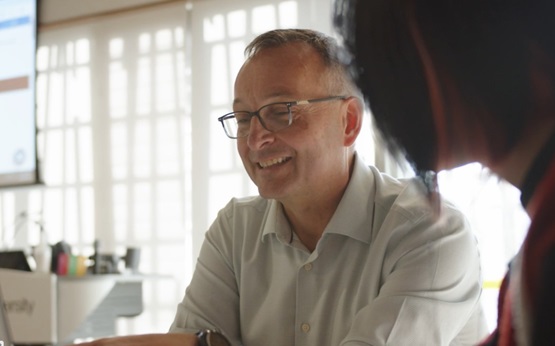
Associate Professor Hans Bogaardt
Starting in 2026, Monash University is introducing the Bachelor of Speech Pathology (Hons), offering a rewarding study option for those interested in helping people with communication and swallowing disorders.
Speech pathologists offer treatments and solutions to people of all ages with difficulties in fulfilling fundamental human needs that require the optimal functioning and coordination of the brain and the muscles, nerves and organs in the head and neck, such as communicating through speech and language, and swallowing food and drinks. Whether impacted by developmental delays, illnesses, or injuries, speech pathologists help people with communication and swallowing disorders to achieve goals that support their well-being, functioning, and inclusion.
We spoke to the new Head of Speech Pathology at Monash, Associate Professor Hans Bogaardt, a leading expert in speech pathology with a distinguished career spanning clinical research, academia, and international collaboration, about what speech pathologists do and where, what to expect studying speech pathology at Monash and the real and lasting impact people can make through their future career.
Q. What type of work do speech pathologists do and where?
A. "A lot of a speech pathologist's work will be with children who have delayed speech and language development. This might be an isolated problem, but sometimes it can be due to disabilities such as autism or cerebral palsy. They might work in a neonatal intensive care unit with sick or premature babies who need help to learn how to suck and swallow milk. They might also work with adults who have lost the ability to talk or swallow due to illnesses such as cancer and stroke, or trauma and injury.
"They work in a diverse range of settings, including private practice, community health, schools, hospitals, rehabilitation, aged care and more. Many people are unaware that this type of specialised, high-impact work, conducted in so many niches across the health system with such a diverse range of clients, is accessible by becoming a speech pathologist. Speech pathology is also a very in-demand career; there's a shortage in Australia and also worldwide. The introduction of the NDIS has especially seen demand for speech pathologists grow, as communication is such a fundamental and critical need for people with disabilities, so it's opened up a lot of opportunities for private practice in this space."
Q.Tell us more about our brand new course - the Bachelor of Speech Pathology (Hons). What can students expect?
A. "We're all very much looking forward to starting the course in February 2026 with our first intake of students. It's a four-year program that prepares students to become qualified speech pathologists, with the ability to assess communication and swallowing needs and develop interventions that support a person or family's goals. We're working closely with our health sector partners to build a comprehensive program that better reflects the needs of our students' future employers and, of course, the needs of their future clients. We're excited to deliver a course that will ensure our students are well-prepared and ready to go as accredited speech pathologists when they graduate.
"We'll start students off with simulated client work, where we employ actors to come and play the role of clients needing speech pathology interventions. This is a great way to start learning about client work, where you can practice and make mistakes in a safe environment. In their third and fourth years, students will undertake placements in the field and begin working with real client groups under the supervision of a qualified speech pathologist. "
"Students will also be studying at our very relaxed Peninsula campus alongside our other allied health students, including physiotherapy and occupational therapy, so there'll be opportunities to learn from each other and collaborate, much like in real-world healthcare settings. They'll also undertake a final year research or industry project on a topic of interest relevant to speech pathology practice or policy."
Q. You've had a long career in speech pathology practice before switching to academia full-time. What are moments from your career that you consider highlights?
A. "One of my dearest memories is working with an elderly man, back in my hometown of Amsterdam, who couldn't eat or drink anymore following a stroke. He could walk and talk, but he couldn't eat or drink for almost two years. He took care of his wife at home, helping her prepare meals and eat, but he couldn't eat himself. So, I developed a new program for people with long-term swallowing problems, and after six weeks, without knocking on my door, he entered my office and said, "Hans, yesterday, I ate a sausage roll!" Within seven weeks of participating in my program, he returned to a normal diet and resumed eating at home with his wife. Every time I tell that story, I still get little goosebumps, and that's more than 25 years ago.
"And once, I had a client who was told by his neurologist that he would never eat or drink again. So we started intensive therapy with this client, and used novel and emerging techniques for that time.
"Eight weeks later, he returned for an appointment with the neurologist, and he told me that he sat in the waiting room, ready to surprise him by drinking a cup of coffee. For six months, every lunchtime, my phone would ring in my office; he would call me and tell me what he had eaten for lunch - baked potatoes, a steak and some salad, and then hang up! So, that's the profound difference a speech pathologist can make, and the memories you'll carry of the people's lives you've changed."
"Another person I recall was a young girl from a lower socioeconomic background with all sorts of problems in her family, who, with the help of speech pathology, overcame her developmental language problem and became the first in her family to go into higher education. Her parents were so proud of her. They were glowing when they shared that accomplishment with us. That is where you, as a clinician, can feel the difference that you make in people's lives. This happened when I was a student on a placement, and I still remember it very well."
Q. What are you most looking forward to when classes begin next year?
A. "I'm looking forward to passing on the baton to a new generation of speech pathologists; it's such a great feeling to do so. I enjoy mentoring students, either undergraduate students or my PhD students, and when I get older, who knows, I may need a speech pathologist myself, so I want my students to be very well prepared!"
Find out more about studying speech pathology at Monash, including entry requirements, course structure, application and fees.
About Monash University
Monash University is Australia’s largest university with more than 80,000 students. In the 60 years since its foundation, it has developed a reputation for world-leading high-impact research, quality teaching, and inspiring innovation.
With four campuses in Australia and a presence in Malaysia, China, India, Indonesia and Italy, it is one of the most internationalised Australian universities.
As a leading international medical research university with the largest medical faculty in Australia and integration with leading Australian teaching hospitals, we consistently rank in the top 50 universities worldwide for clinical, pre-clinical and health sciences.
For more news, visit Medicine, Nursing and Health Sciences or Monash University.
MEDIA ENQUIRIES