
Study leads to new digital toolkit to improve hospital care for dementia patients

Photo - MMP - Michelle McFarlane
People with dementia often receive suboptimal hospital care due to difficulties communicating their needs and preferences in these busy environments. This can lead to poorer outcomes than cognitively normal people when admitted to hospital.
Led by Associate Professor Chris Moran, a National Centre for Healthy Ageing Living Labs study has co-designed a digital solution – a Hospital Admission Kit – that rapidly integrates the pre-admission needs and preferences of a person living with dementia into hospital care.
The Hospital Admission Readiness Toolkit (HART) interface is designed for people with dementia and those supporting them to enter important information about their preferences and routine, and for hospital staff to rapidly review this information and incorporate it into their care plans.
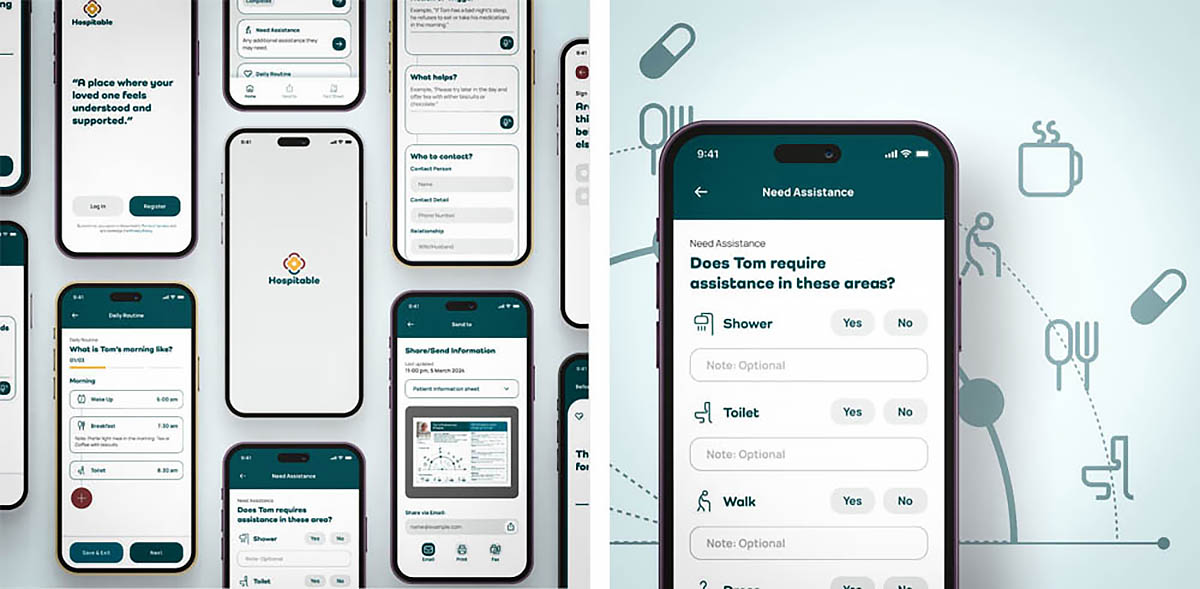 The final toolkit is currently under development.
The key findings from the study, Understanding and integrating the needs and preferences of people living with dementia in the inpatient setting: a qualitative study, have been published in BMC Geriatrics.
The research team identified several factors inhibiting the provision of quality care for patients living with dementia in a hospital setting:
- uncertainty around responsibility for communicating with families to understand needs of a person living with dementia
- unsuitable tools
- lack of opportunities for families to communicate with staff
- resource and environmental constraints.
Associate Professor Moran said integrating the needs of hospital staff and those supporting people living with dementia was crucial in developing the new digital tool.
"Co-design has been integral to this project. We brought together people living with dementia and their carers, health professionals from Peninsula Health, and researchers and designers from Monash University, to work on a solution to significantly improve the experience of a hospital stay for people living with dementia,” he said.
"Our digital ‘Hospital Admission Kit’ does just that. It’s a pre-emptive rather than a reactive solution helping health services staff quickly learn the needs and preferences of people living with dementia.”
The study was conducted at the Acute Care of the Elderly (ACE) Unit at Frankston Hospital in Victoria, an acute hospital with 454 beds within Peninsula Health. A total of 20 interviews were conducted by the research team, including 11 with health professionals and nine with people who were supporting a person with dementia.
Some of the other issues raised with the study team included:
- Participants reported that a lack of time, staff and training, environmental constraints, and a lack of opportunities for families to communicate with staff were barriers to providing quality care.
- Currently used tools were not fit for purpose.
- Staff highlighted the lack of formal training they had undertaken around caring for people living with dementia, instead learning from others and through experience.
- Support people reported that they did not know to whom they should communicate their knowledge of the person living with dementia.
This important project is now seeking funding to support the ongoing development of the toolkit.
Discover more about the Living Labs project, Improving the hospital experience of people living with dementia.