
Call for integrated, multilevel community action to address air pollution and cardiovascular health
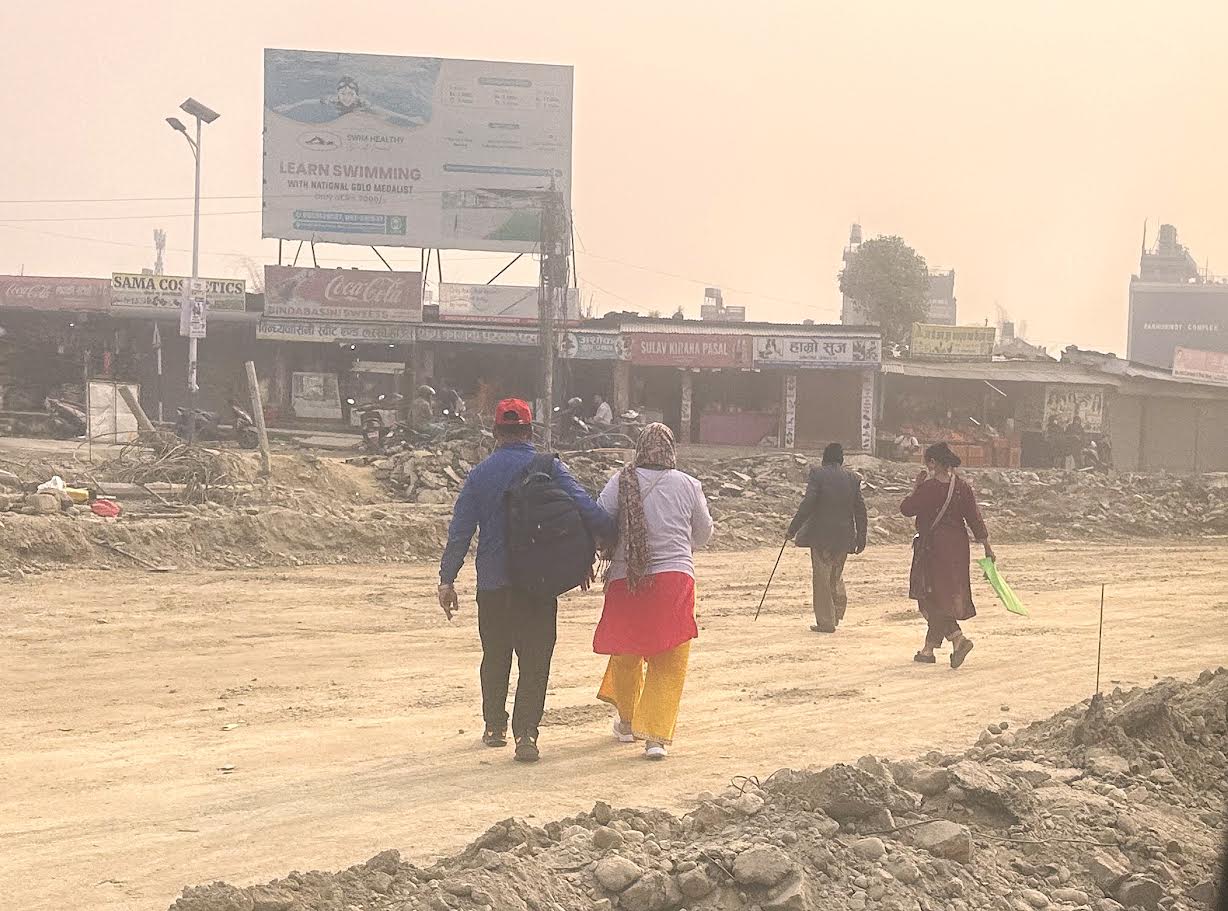
Living day to day amid air pollution in low- and middle-income settings Photo credit: Rajshree Thapa
Air pollution remains one of the leading causes of death worldwide, yet efforts to address its health impacts have largely focused on policy-level interventions. A new commentary published in the Lancet Planetary Health, led by researchers from Monash University (Dr Kiran Bam, Dr Rajshree Thapa, Dr Muideen T Olaiya, Professor Yuming Guo, Professir Monique Kilkenny) in collaborations with researchers and practitioners from Western Sydney University (Dr Shiva Raj Mishra), the University of Tasmania (Professor Mark Nelson), Australia and Nepal-based researchers and partitioners (Mr Kiran Acharya, Mr Navaraj Bhattarai and Mr. Bhagawan Shrestha) highlights the urgent need for individual-, primary care- and community-level approaches (e.g., tailored education on preventing/reducing air pollutants) to complement existing policy measures.
The commentary argues that while regulatory and environmental policies are essential for reducing air pollution, there has been comparatively little attention paid to empowering individuals and communities to monitor, understand and reduce their exposure to harmful pollutants. The authors call for integrated, multilevel interventions that address air pollution from both primary care, community and individual perspectives. They emphasise the importance of engaging communities in risk monitoring, prevention strategies and long-term solutions that support cardiovascular and overall health. The commentary also highlights the need for meaningful community participation in the design and implementation of interventions aimed at mitigating the health effects of air pollution.
Professor Monique Kilkenny from the Department of Medicine, School of Clinical Sciences at Monash Health, said that beyond collecting and analysing data, communities have a critical role in tackling air pollution and its health consequences. “Air pollution is directly associated with cardiovascular disease, and communities must be brought to the forefront of efforts to address this growing public health challenge,” Professor Kilkenny said.
Dr Kiran Bam from the Department of Medicine, School of Clinical Sciences at Monash Health highlighted the importance of monitoring individual exposure to air pollution at the community level and improving public awareness through tailored risk communication strategies.
“We need better approaches to monitor individual exposure to air pollution and to provide communities with clear, personalised information about their risks and the actions they can take to protect their health,” Dr Bam said.
The authors hope the commentary will stimulate discussion about more meaningful engagement with individuals and communities and help drive sustainable, long-term solutions to reduce the health burden of air pollution.
Ultimately, the commentary asserts that clean air should be considered a fundamental right. “Breathing is basic and should not come with cost or harm”.
Authors:
Kiran Bam1, Rajshree Thapa2, Shiva Raj Mishra3,4, Muideen T Olaiya1, Kiran Acharya5, Navaraj Bhattarai6, Bhagawan Shrestha7, Mark R Nelson8, Yuming Guo9, Monique F Kilkenny1
Affiliations:
1Stroke and Ageing Research, Department of Medicine, School of Clinical Sciences at Monash Health, Monash University, Melbourne, Victoria, Australia; 2Eastern Health Clinical School, Monash University, Melbourne, Victoria, Australia; 3 School of Medicine, Western Sydney University, Sydney, Australia; 4Population Health Research and Epidemiology, South Western Sydney Local Health District, Sydney, Australia; 5New ERA, Rudramati Marg, Kalopul, Kathmandu, Nepal; 6 Independent Researcher, Kathmandu, Nepal; 7 FHI 360, Kathmandu, Nepal; 8 Menzies Institute for Medical Research, University of Tasmania, Hobart, Australia; 9 Climate, Air Quality Research Unit, School of Public Health and Preventive Medicine, Monash University, Melbourne, Victoria, Australia