
Decade-long study of injured Victorian drivers finds rise in illicit drug use
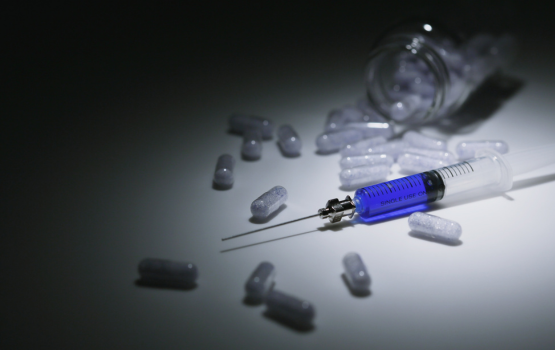
Credit: Aflo Images
A Monash University study of mandatory blood samples taken from 10,000 injured drivers presenting to hospitals in Victoria over the decade to the end of June 2023 revealing that Illicit drugs were present in almost 23 per cent of drivers; psychoactive drugs were present in more than one third of injured drivers; and motorcyclists had the highest prevalence of impairing substances. Ketamine, cocaine and fentanyl were found to increase substantially in injured drivers over the last five years of the study period.
The study, published in the journal Forensic Science International and lead by Emeritus Professor Olaf Drummer AO from the Victorian Institute of Forensic Medicine and the School of Public Health and Preventive Medicine, found that around 38 percent of drivers had a potentially impairing drug detected in their blood on presentation to hospital and at least one common illicit drug with or without ethanol were present in almost 23 percent of drivers.
According to Professor Drummer, alcohol, methylamphetamine and THC from marijuana remained relatively consistent over the decade, present between 11 and 14 per cent of drivers. "However, in contrast, the prevalence of ketamine, cocaine, fentanyl and new psychoactive substances (NPS) increased substantially over this period, reaching 7.0 percent, 1.8 percent, 2 percent and 3 percent in the last five years of the study," he said.
The study also found a substantial proportion of drivers were positive for opioids, antidepressants, and benzodiazepines. Samples were generally taken on average after 2.2 hours post-admission.
Overall, about 38 percent of drivers had a potentially impairing drug detected in their blood on presentation to hospital and at least one common illicit drug with or without ethanol was present in almost 23 percent of drivers. The presence of multiple common illicit drugs (THC, methylamphetamine, MDMA, cocaine, heroin), with or without ethanol, increased from 4.3 percent in the first 5 years to 5.8 percent in the last five years, which may reflect a higher crash risk for those drivers.
In Victoria, around 6500 road users are hospitalised each year following a traffic crash, with a further average of 250 people killed on Victorian roads each annually, of which approximately half are drivers of motorised vehicles, including motorcycles and heavy
vehicles.
According to the National Household Survey of 2022-2023, illicit drugs are used by around 18 percent of the population. The most commonly used illicit drug annually across all ages (above 14 years old) is cannabis (11.5 percent), followed by cocaine (4.5 percent), pain relievers and opioids (2.2 percent), 3,4-methylenedioxymethamphetamine (MDMA) (2.1 percent), ketamine (1.4 percent), methamphetamine (MA) (1 percent) and heroin (0.1 percent).
In 1986, the Victorian Government legislated to make it an offence to have any concentration of THC, MA, and MDMA in drivers of motorised vehicles (Victorian Road Safety Act, 1986). Since mid-2009, Victoria has required drivers attending a place of treatment as a result of a road traffic collision to provide a blood specimen for analysis for these three proscribed drugs, as well as ethanol with a per se blood limit of 0.05 g/100 mL for fully licensed non-commercial drivers and zero limit for probationary drivers and drivers of commercial vehicles.
Approximately 6500 blood specimens are received, via mandatory collection via Victorian legislation, annually from injured drivers attending a hospital. These are tested for the presence of alcohol, THC, MA and MDMA.
To assess the prevalence of other potentially impairing drugs, a consortium involving the Victorian Departments of Justice and Transport, Victoria Police, and the Transport Accident Commission (TAC) through the Road Safety Executive (Victoria) funded this project for 10 years, “with the aim of providing additional intelligence over any changing prevalence or emergence of new drugs over this period to assist in developing strategies to reduce road trauma,” Professor Drummer said.
The study also found:
- Around 38 per cent were single vehicle crashes 64 percent of the drivers were male; with the lowest rate in car drivers (57 percent) and the highest rate in heavy vehicle drivers (98 percent)
- Ethanol at any concentration was present in 15.2 percent of all drivers over the 10 years but decreased from the first 5-year period from 15.8 percent to 14.6 percent
- The highest blood alcohol level detected was 0.468 g/100 mL, while the average was 0.149 g/100 mL, or three times the legal limit
- Drivers of cars had the highest overall prevalence of ethanol (16.5 percent), followed by motorcyclists (11.3 percent), and heavy vehicle drivers had the lowest incidence at 4.7 percent with a similar median blood alcohol level
- Motorcyclists had the highest incidence of THC overall at 15.9 percent, followed by drivers of cars (11.2 percent), vans/light trucks (increasing from 2.8 percent to 10 percent over the study period) and heavy vehicles (4.1 percent)
- Methylamphetamine was present in 12.8 percent of all drivers - 12.6 per cent of car drivers, with motorcyclists having the highest incidence at 15.3 percent, increasing from 13 percent in the first 5-years to 17.8 percent in the second 5 years. Truck drivers had the lowest incidence (7 percent).
Read the full paper
About Monash University
Monash University is Australia’s largest university with more than 80,000 students. In the 60 years since its foundation, it has developed a reputation for world-leading high-impact research, quality teaching, and inspiring innovation.
With four campuses in Australia and a presence in Malaysia, China, India, Indonesia and Italy, it is one of the most internationalised Australian universities.
As a leading international medical research university with the largest medical faculty in Australia and integration with leading Australian teaching hospitals, we consistently rank in the top 50 universities worldwide for clinical, pre-clinical and health sciences.
For more news, visit Medicine, Nursing and Health Sciences or Monash University.
MEDIA ENQUIRIES
E: media@monash.edu