
Monash Medical students bring their vision for a better digital future to New York
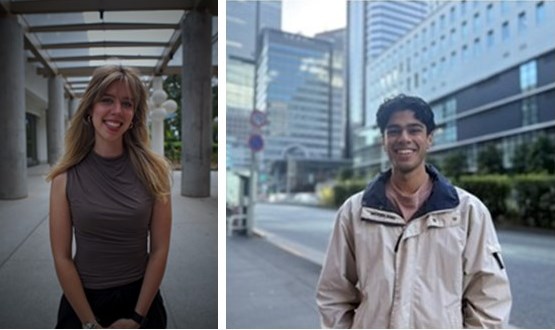
L-R: Izabella Mancewicz, Kunal Gupta
Third-year Monash Medical School students Izabella Mancewicz and Kunal Gupta are among ten Monash University students selected for the 2026 Monash Global Discovery Program.
The award-winning program will see Izabella and Kunal travel to New York City in July for a 10-day study tour hosted by Monash’s prominent New York alumni community.
This year’s theme, ‘In a world shaped by technology and global challenges, how will you draw on what makes us human to build a better future?’, challenged applicants to submit a video response exploring the role of humanity in an increasingly technology-driven world.
For Izabella, the answer lay in who builds technology – and who else is in the room when they do.
Drawing on her experience as Founder and President of Nexus, a community dedicated to making medical technology and artificial intelligence more accessible, Izabella argued that the most consequential innovations come from people who refuse to sit in one lane – who understand both the clinical reality and the technical possibility well enough to build at the intersection.
‘The people building health technology and the people relying on it at the bedside too often aren't in the same room. I'd rather speak both medicine and machine, and build from inside than observe from a distance,’ said Izabella.
Alongside her medical studies, Izabella is an AI researcher with the Cao Lab for Medical AGI/ASI, an Investments Associate at NextGen Ventures, and a Berkeley AI Safety Initiative Policy Fellow.
Reflecting on the opportunity, Izabella said she was looking forward to learning from leaders working across technology, policy and healthcare.
‘Opportunities like the Monash Global Discovery Program allow me to explore how these fields can come together to create meaningful impact and meet inspiring people who are shaping the future,’ said Izabella.
For Kunal, the challenge centred on the impact of artificial intelligence and social media on young people's mental health and wellbeing.
His submission highlighted that more than 70 per cent of Australian young people encounter harmful online content between the ages of 10 and 15, a trend linked to increased rates of cyberbullying, anxiety, depression and suicidal ideation.
To address this, Kunal proposed a digital tool designed to create safer environments on existing online platforms for young people. The software would monitor and filter harmful content while identifying signs of distress, potentially connecting users with appropriate support services.
‘Vulnerability is what makes us human, and I believe this proposal draws on this quality to build a better future,’ said Kunal.
Beyond his medical studies, Kunal has been actively involved in the Australian Medical Students Association (AMSA) Global Health and TORQUE Global Health, student organisations dedicated to exploring a broad range of global health challenges, from emerging healthcare technologies to infectious disease prevention and management.
‘Through collaboration with alumni in New York, I hope to play a part in deciding whether technology should be destructive or constructive,’ said Kunal.