
New decision-making tool helps travellers move from Japanese encephalitis vaccination information to action
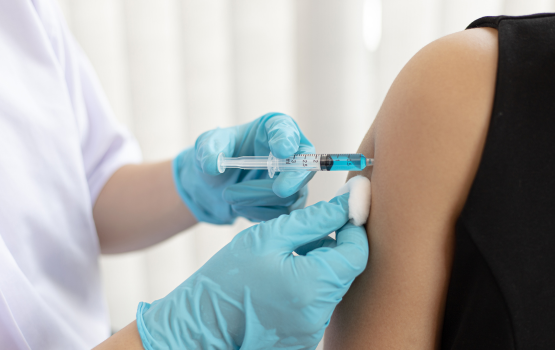
Credit: 89Stocker
For many Australians heading overseas, travel vaccinations can sit at the end of a long to-do list, may cost hundreds of dollars and require repeat trips to the GP for multiple doses, and might not seem all that urgent or necessary, especially for a short trip or one to a familiar, seemingly safe destination.
Travel vaccination brings into sharp focus the kinds of judgements that shape vaccination decisions more broadly, including for routine vaccines. Access to clear, high-quality information, which is not always easy to find, can help travellers navigate complex decisions by weighing up their own circumstances and values alongside nuanced recommendations.
A real‑world test case
Japanese encephalitis (JE) exemplifies a complex vaccination decision. The disease is rare, but when it does occur it can be devastating, with a high risk of long‑term neurological complications or death. Exposure risk varies widely depending on destination, season, activities and how often someone travels. National recommendations reflect this variability, advising vaccination in some situations, while leaving room for case‑by‑case judgement in others. These features make JE a useful real‑world example for examining how people move from vaccination information to a considered decision and action.
To address this decision-making challenge for Australian travellers, our research team in the Infectious Diseases Epidemiology Unit in the School of Public Health and Preventive Medicine developed a purpose-built JE vaccine decision aid in partnership with travellers and healthcare providers. The decision aid was designed to present relevant information clearly and concisely, and to support people to think through how different costs, risks and benefits might apply to their own circumstances.
We then evaluated the decision aid against an existing government information page, in a trial involving more than 800 Australians planning travel to Asia within the following six months. The study examined decisional conflict, which refers to a measure of personal uncertainty about which option to choose when making a decision, and whether participants reported receiving a JE vaccine before travel. Participants were randomly allocated to use either the decision aid, or the government information page.
What we found
Published in JAMA Network Open, the trial results showed the immediate effects were similar across the two groups, with decisional conflict decreasing after participants reviewed their assigned resource. However, among those who completed a follow-up survey after travelling to JE-risk areas, a higher proportion of participants who used the decision aid reported having been vaccinated before their trip, compared with those who used the government information page.
Given that uptake of JE vaccination among travellers is generally low, this pattern suggests that decision support may influence how people act on decisions they reach when vaccination aligns with their circumstances. These findings do not imply that JE vaccination is the ‘correct’ outcome for every individual, and many participants reported that they chose not to be vaccinated. Rather, the results highlight the role of decision aids in supporting decision-making, particularly in situations where recommendations are conditional and trade-offs matter.
As with many real‑world studies, the follow‑up findings should be interpreted with some caution. Not all participants completed follow‑up, and vaccination status was self‑reported, rather than verified through medical records. This reflects real-world decision-making, where follow-up is uneven, and plans and circumstances may change.
Why this matters beyond travel
The implications of this study extend beyond Japanese encephalitis or travel medicine. Across many settings, vaccination decisions are becoming more individualised, as new vaccine options are introduced, recommendations are increasingly nuanced, and policy places greater emphasis on shared decision-making and individual consumer choice.
This shift is intended to better align vaccination decisions with individual circumstances and to support autonomy. However, these laudable goals bring new challenges. Recent reporting in Australia has highlighted declining vaccination coverage, alongside growing concerns about trust and confidence in vaccination, and the effort required to navigate vaccination decisions in an increasingly complex information environment. This suggests that as responsibility for decision-making shifts towards individuals, the cognitive and practical burdens of those decisions are also increasing.
Similar concerns are reflected internationally. Debate around shared decision-making in vaccination policy has highlighted that when ‘choice’ is emphasised without adequate structure or support, responsibility can shift onto individuals in ways that risk widening existing gaps in access and uptake.
More information alone is often therefore not the answer. High‑quality information is essential, but it does not automatically resolve uncertainty, or help people reach decisions they can act on. Tools that help people interpret information in light of their own circumstances can complement clinical advice, support shared conversations, and reduce the risk that vaccination decisions are experienced as too difficult.
An adaptable model for complex vaccine choices
Perhaps the most important contribution of this research lies in the model it demonstrates. The same approach to decision support could be applied to other vaccines where recommendations are nuanced and personal values and circumstances play a central role.
This includes other travel vaccines, such as rabies and yellow fever, as well as newer vaccines where eligibility and funding cover only a subset of those who may benefit, such as shingles and RSV.
By focusing on how people decide, rather than simply what they decide, decision aids offer a way to make shared decision‑making workable in practice, without overwhelming clinicians or placing the burden of interpretation solely on individuals. In a world of expanding and increasingly nuanced vaccine choices, supporting people to make sense of information – and decide what to do with it – may be an increasingly important part of how vaccinations are offered, discussed and delivered.
Access the Japanese encephalitis vaccine decision aid.
Written by Dr Sarah McGuinness and Ms Jennifer Morris. Dr McGuinness is a Senior Research Fellow in the Department of Infectious Diseases Epidemiology Unit in the School of Public Health and Preventive Medicine, and Consultant Physician in the Department of Infectious Diseases at Bayside Health, Travel Medicine Clinic. Ms Morris is an independent consumer advisor.