
Not just mood changes and hot flushes: ‘Brain fog’ in menopause needs the spotlight
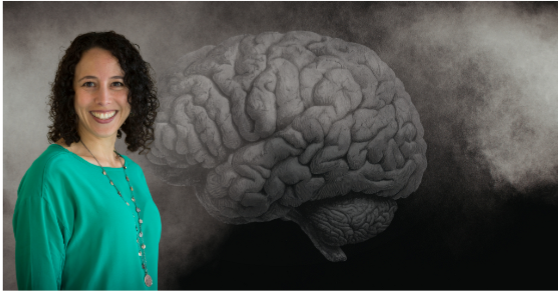
A/Prof Caroline Gurvich
A prominent women’s health researcher from Monash University is calling for urgent attention on a pervasive menopause symptom that is so underresearched people are concerned they have dementia.
‘Brain fog’ is not a medical term, but many women and people assigned female at birth (AFAB) use it to describe their experience of the cognitive challenges of menopause and perimenopause, which can include forgetfulness, difficulty concentrating and challenges with multitasking.
Associate Professor Caroline Gurvich, a clinical neuropsychologist and researcher at Monash University’s HER Centre Australia, said the lack of specific research on this group has led to a blurring of information for doctors on menopause, dementia and attention deficit hyperactivity disorder (ADHD), which is often diagnosed during menopause transition, because symptoms can overlap.
“Many women are concerned they have early signs of dementia, but the cognitive symptoms of menopause are generally not a sign of irreversible decline,” Associate Professor Gurvich said.
“Our synthesis of the existing evidence shows that for most women, these cognitive challenges resolve in post menopause.
“This might be cold comfort for many women in the years leading up to menopause – but greater awareness will likely encourage women to come forward for help, and doctors to weigh up more possibilities.”
Associate Professor Gurvich’s calls follow three new publications she led alongside a team including Professor Aimee Spector at University College London, which scanned existing evidence about brain fog and surveyed women directly on their symptoms and the role of lifestyle factors.
The research recommends improvements for menopause screening, management and treatment that will provide much-needed support for those experiencing brain fog.
“Most clinical management of menopause has revolved around hot flushes and night sweats, but the cognitive challenges need urgent attention,” Associate Professor Gurvich said.
“There are no specific or sensitive assessments for this group to measure functions like memory, attention and language, and no specific clinical guidelines or evidence-based treatments.
“It really is time we reframe what is often thought of as a window of vulnerability in women’s health to a window of opportunity to build brain health and reduce longer-term dementia risk.”
Professor Spector and Associate Professor Gurvich are working with the British and Australian Menopause Societies to develop guidance on cognition and menopause, which will be available early 2026.
“We don’t have any neuropsychological tests right now that are sensitive enough to detect brain fog per se, that could be rolled out easily in GP clinics,” Associate Professor Gurvich said.
“What we want GPs to do is consider factors that might be contributing to cognitive symptoms, such as sleep and mood, as well as conditions that may not be related to the hormonal changes of menopause, such as low iron and autoimmune conditions, that can be picked up through blood tests.”
The research showed that mindfulness techniques could help many women aged 40 to 60 with their symptoms, while the impact of hormone therapy was inconclusive.
The interaction of factors like sleep, exercise and diet also requires further research.
- Read Professor Spector and Associate Professor Gurvich’s invited editorial for the academic journal Australasian Journal on Ageing.
- Read the research paper in the academic journal Menopause.
- Read the review paper in the Journal of the International Neuropsychological Society:
ABOUT MONASH UNIVERSITY’S HER CENTRE AUSTRALIA
Monash University’s HER Centre Australia is uniquely dedicated to specifically understanding and advocating for women’s mental health, using the expertise of its clinicians and researchers to help develop world-first gender-tailored innovative treatments and interventions. Established in May 2022, HER Centre Australia continues decades of work in driving world-leading research, education and treatment for women’s mental health — joining the internationally renowned Multidisciplinary Alfred Psychiatry Research Centre (MAPrc). Our team includes psychiatrists, psychologists, doctors, research professionals, higher degree students, and administration staff — all profoundly dedicated to improving the quality of life for every woman around the globe. Because women’s mental health is everyone’s business.
About Monash University
Monash University is Australia’s largest university with more than 80,000 students. In the 60 years since its foundation, it has developed a reputation for world-leading high-impact research, quality teaching, and inspiring innovation.
With four campuses in Australia and a presence in Malaysia, China, India, Indonesia and Italy, it is one of the most internationalised Australian universities.
As a leading international medical research university with the largest medical faculty in Australia and integration with leading Australian teaching hospitals, we consistently rank in the top 50 universities worldwide for clinical, pre-clinical and health sciences.
For more news, visit Medicine, Nursing and Health Sciences or Monash University.
MEDIA ENQUIRIES