
Project to improve social connection services for older rural Australians receives MRFF funding
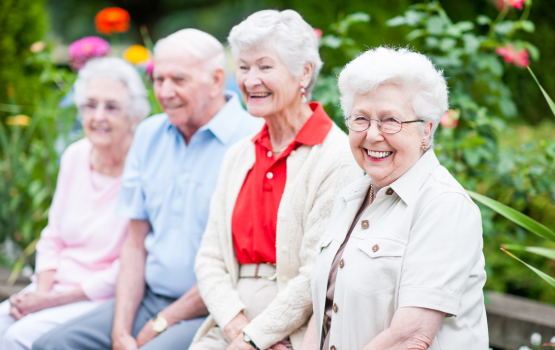
Credit: Fat Camera from Getty Images
A project to reduce inequalities in accessing social connection services among older adults living in rural Australia has been awarded a $2.3 million Medical Research Future Fund Dementia Ageing and Aged Care Mission grant.
Led by Dr Lidia Engel from the School of Public Health and Preventive Medicine’s Health Economics Group, the Reducing Inequalities and Promoting Social Connection to Enable Healthy Ageing Among Older Adults in Rural Australia (RISE) project team will work with local communities to design better services, using new research methods to understand what older adults want, and how services can be made more effective, fair, efficient, and accessible for everyone.
Loneliness is a well-established risk factor for poor health outcomes, particularly among older adults. Two forms of inequality make older rural adults a particular priority for access to social connection services: first, geographic inequality between rural and urban populations, and second, socioeconomic inequality within rural areas themselves. Many rural communities are ‘service deserts’ with few or no programs that promote social connection. Where services do exist, they are often underfunded, unsustainable and poorly aligned with the needs and preferences of older adults, resulting in low uptake and limited effectiveness. A lack of clear, evidence-based guidance on how to design, implement, and sustain social connection initiatives in rural settings continues to hinder efforts to improve health and wellbeing for ageing populations.
The RISE project directly addresses these inequalities by informing the design and delivery of social connection services that are acceptable, accessible, and cost-effective.
The project team includes researchers from the University of Sydney, La Trobe University, the University of the Sunshine Coast and the National Ageing Research Institute. Partner organisations include the National Rural Health Alliance, Independent Living Assessment, Australian Neighbourhood Houses and Centres Association, Uniting AgeWell, Western Victoria Primary Health Network, Ending Loneliness Together and Victorian Men’s Shed Association. The team will collaborate with rural stakeholders to identify and adapt promising service models for real-world implementation.
Uniquely, the project will use pioneering inequality-focused methods from implementation science and health economics to inform service design to improve participation and accessibility. It will integrate co-design principles with stated-preference methods, using discrete choice experiments (DCEs), to capture older adults’ preferences for different service features. The project also includes equity-informed health economic modelling to assess the cost-effectiveness of preferred service models and to support more inclusive investment decisions.
Dr Engel said that she was pleased to receive the MRFF funding. “By addressing both geographic and socioeconomic inequalities, the project aims to support healthy ageing and improve access to social connection services for older adults across rural Australia,” she said. “We look forward to working with communities to provide the evidence and guidance needed to design sustainable local initiatives that make a real difference.”
Find out more about the MRFF Dementia, Ageing and Aged Care Mission