
Towards making precision medicine accessible for brain cancer
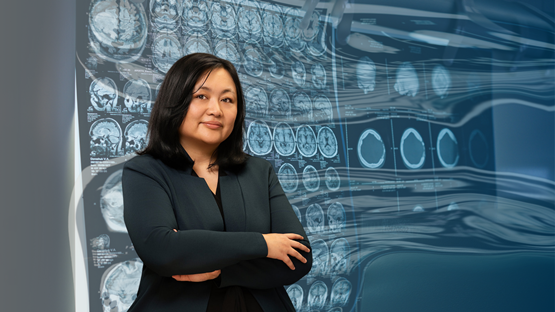
Illustration: Canva
Each year in Australia, an estimated 2,000 people are diagnosed with brain cancer, and around 1,500 lose their lives to the disease. Senior genomic medicine researcher, Associate Professor Tu Nguyen-Dumont, says, "There've been no major advances in treatments for nearly 20 years - radiation and chemotherapy help people live a few more months, but we are a long way from a cure".
Despite being relatively rare compared with other cancers, brain tumours — particularly gliomas, the most common type of primary malignant brain cancer — carry devastating outcomes. Fewer than one in four adults diagnosed with brain cancer will survive beyond five years. For patients and families, the uncertainty surrounding diagnosis, prognosis, and treatment decisions only compounds the emotional and physical toll of the disease.
In recent years, the ability to map an individual’s genes has opened the door to personalised medicine: more precise cancer diagnosis and tailored treatment strategies. Yet while cancers such as breast and prostate cancer have benefited greatly from advances in genomic technologies, rare cancers like brain tumours have not experienced the same rapid translation to clinical practice.
Now, a new national research effort funded by a $1.8 million NHMRC Ideas Grant aims to change that.
Led by Associate Professor Tu Nguyen‑Dumont, the project will harness genomic technologies, artificial intelligence and machine‑learning techniques to bring personalised medicine into routine brain cancer care.
“Our goal is to make precision medicine accessible to all Australians diagnosed with brain cancer,” Associate Professor Nguyen‑Dumont explains. “Every patient deserves the most accurate diagnosis possible, faster treatment decisions, and tools that help them and their clinicians navigate the course of this complex disease.”
The project is structured around three major aims, each addressing a critical point in the patient journey—from diagnosis to long‑term monitoring:
Ultra‑rapid intraoperative tumour classificationTimely diagnosis is essential for guiding surgical and oncological decisions, yet conventional pathology can take weeks and even months for challenging brain tumours. The research team will integrate ultra‑rapid genomic sequencing into the operating theatre, enabling precise tumour classification in real time. This approach not only supports surgeons in making informed decisions during procedures but also alleviates the emotional burden placed on patients and families who must otherwise endure prolonged periods of uncertainty.
“Reducing diagnostic delays can offer patients not just clinical benefits, but also psychological relief at an incredibly stressful moment in their lives,” Associate Professor Nguyen‑Dumont says.
AI‑driven prognostic and predictive modellingFollowing surgery, patients and their clinicians face another layer of uncertainty: predicting how the tumour will behave and when it will come back. Using a multimodal deep‑learning approach that integrates genomic, imaging, and clinical data, the team will build tools that offer personalised prognostic insights and predictive modelling. These models will help tailor surveillance schedules and guide evidence‑based treatment choices.
“AI gives us the opportunity to synthesise complex data in ways that were impossible even a decade ago,” A/Prof Nguyen-Dumont says.
Liquid biopsy for non‑invasive monitoringRecurrent or progressing disease remains a major challenge for brain cancer patients. Traditional imaging cannot always detect tumour changes early enough. To address this, the project will develop a liquid biopsy— a concept coined in 2010 to describe new clinical tools capable of detecting tumour DNA via tests of bodily fluids such as blood — that is enhanced by machine‑learning algorithms. This will allow clinicians to monitor disease burden and tumour evolution non‑invasively, enabling faster intervention and more responsive care plans.
Together, these innovations pave the way for integrated genomics in brain cancer treatment. “Our vision is a future where every person with brain cancer receives care informed by the unique molecular profile of their tumour.”
About Monash University
Monash University is Australia’s largest university with more than 80,000 students. In the 60 years since its foundation, it has developed a reputation for world-leading high-impact research, quality teaching, and inspiring innovation.
With four campuses in Australia and a presence in Malaysia, China, India, Indonesia and Italy, it is one of the most internationalised Australian universities.
As a leading international medical research university with the largest medical faculty in Australia and integration with leading Australian teaching hospitals, we consistently rank in the top 50 universities worldwide for clinical, pre-clinical and health sciences.
For more news, visit Medicine, Nursing and Health Sciences or Monash University.
MEDIA ENQUIRIES