
Dr Rebecca Nealon: Women are far too capable to continue playing the minor role in computing and programming
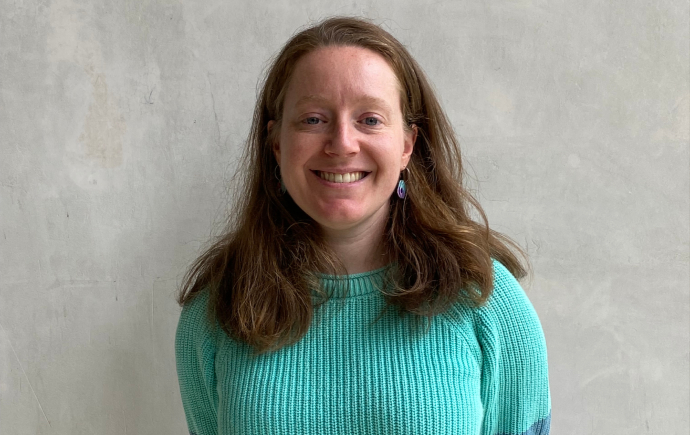
Dr Rebecca Nealon
From the moment she first looked up at the night sky as a child, Dr Rebecca Nealon knew she wanted to be an astrophysicist. “Understanding how the Universe works is the most exciting thing ever,” she says. That early sense of wonder never faded it simply evolved into a career spent decoding some of the most complex structures in the cosmos.
Today, Rebecca studies accretion discs, the swirling, dynamic rings of gas and dust that surround black holes, young stars, and dying stars. These discs are the birthplaces of planets and the engines that power some of the brightest objects in the Universe. “They appear everywhere,” she explains. “If we want to answer questions like ‘How is the Earth made?’, we need to understand how accretion discs behave.”
Her work sits at the intersection of astronomy, mathematics, and computer science. Using advanced numerical simulations, she recreates the physics of these discs to uncover how they form, evolve, and influence the worlds that emerge from them. “Solving a problem that’s never been solved before is the best part of my job,” she says. “I love challenging problems and finding new and clever ways to approach them.”
Rebecca’s research also has a broader impact here on Earth. By improving the efficiency and accuracy of numerical methods, she is helping reduce the computational carbon footprint of astrophysics, a growing concern in an era of increasingly large simulations and data sets. She also uses machine learning to analyse astrophysical data more efficiently, placing her work firmly within this year’s theme of bridging STEM disciplines to create real-world impact.
Her commitment to the future of STEM extends beyond research. Rebecca is deeply involved in outreach, particularly in encouraging girls to explore programming and computational science. “Science benefits from a wide diversity of experiences,” she says. “Trying it is the only way to know if you like it.”
A defining moment in her career came when she became the first-ever recipient of the Emmy Noether Women in Computational Astrophysics Prize talk, an award created to highlight exceptional early-career female researchers. “Being the first made it extra special,” she reflects.
Navigating a male-dominated field has brought challenges, but Rebecca approaches them with clarity and humour. “Allies are my most powerful tool,” she says. “I find people who believe in me and will stand up for me when it counts, and I support them back. Also, when in doubt, I pretend to have the confidence of a man who crosses the road without looking.”
She credits a series of mentors for shaping her journey. “As my career has evolved, so have my needs from my mentors. Their constant support has been key.”
Looking ahead, Rebecca hopes to see more women leading computational science in research, in supervision, and in industry. “Women are far too capable to continue playing the minor role in computing and programming,” she says. “I want this shift to open doors for other minority groups too, and I’ll do everything I can to support that.”
Outside the world of astrophysics, Rebecca enjoys being active outdoors, creating things with her hands, spending time with her family, and the occasional video game. And she shares one fun and telling fact about her field: “The main method I use was invented 49 years ago and is used by hundreds of researchers worldwide. But to my knowledge, only three or four women in permanent roles use it and I’m the only female astrophysicist who develops it significantly.”
Her story is a powerful reminder of why representation matters and why celebrating women in science is essential to shaping the future of STEM.
This piece is part of our International Day of Women and Girls in Science profile series. Read more here.
Further information
Silvia Dropulich
Marketing, Media & Communications Manager, Monash Science
T: +61 3 9902 4513 M: +61 435 138 743
Email: silvia.dropulich@monash.edu