
Not the exception, the standard: how women at Monash Science are redefining what scientific excellence looks like
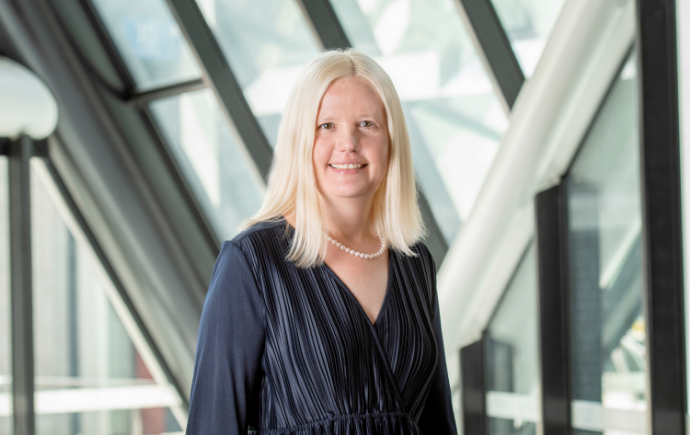
Professor Katya Pas
As the world marks the UN International Day of Women and Girls in Science, Monash Science does so from a position of leadership, momentum and proof. This year, we became the first Group of Eight university in Australia to achieve Athena Swan Silver accreditation, a landmark recognition awarded by Science in Australia Gender Equity (SAGE) at its 10 Year Anniversary Awards Dinner. But this moment is not about a badge. It’s about what happens when equity is treated as infrastructure, not aspiration.
“This accreditation reflects years of sustained, evidence-based action,” says Monash Science Deputy Dean Research Professor Katya Pas. “It tells us that when equity is built into systems, culture and decision-making, excellence follows. This is not symbolic change. It’s structural.”
That impact is already visible.
In the most recent ARC Future Fellowships round, five Monash Science researchers were awarded Fellowships, representing nearly half of the University’s total awards. Women were central to that success. These outcomes are not coincidences or one-off wins; they are the result of deliberate, long-term investment in creating an environment where women can thrive, lead and shape the future of STEM.
Across the Faculty, our researchers are redefining what scientific leadership looks like. Dr Melissa Lee is advancing the mathematics of symmetry, the fundamental language that underpins our universe, while co-leading computation in the new Centre of Excellence in Mathematics of Quantum Era Security and Trust (MathQuEST). Her work shows how ideas once seen as abstract now drive breakthroughs in cryptography, quantum security and AI-accelerated discovery. Her advice to young women entering STEM is direct and fearless: “Go for it. Take every opportunity with both hands.”
Astrophysicist Dr Rebecca Nealon, ARC Future Fellowship awardee in 2025 and inaugural recipient of the Emmy Noether Women in Computational Astrophysics Prize talk, is uncovering how planets form through advanced numerical simulations of accretion discs. Working at the intersection of astronomy, mathematics and computer science, she represents the future of discovery: interdisciplinary, computational and collaborative. As she puts it, “Science benefits from a wide diversity of experiences.”
Associate Professor Kathryn Fitzsimmons, ARC Future Fellowship awardee in 2025, brings a powerful equity and decolonisation lens to earth sciences, pairing world-leading research on desert landscapes with a deep commitment to co-designing projects with Indigenous partners and supporting researchers across the Global South. Her leadership demonstrates that scientific rigour and social responsibility are not competing forces, but mutually reinforcing ones.
Dr Khay Fong exemplifies how curiosity-driven research can translate into real-world impact. Her team’s AI algorithm for detecting microplastics is now being commercialised, showing how women are driving innovation at the intersection of health, sustainability and technology.
Dr Lesley Alton uses ectothermic animals, including Drosophila, to understand how rising temperatures reshape the energetic demands of life. Her ARC Future Fellowship, awarded in 2025, is a testament to the significance of this work. The fellowship supports her project on predicting the energetic costs of climate warming, a study that will shed new light on how animals evolve under environmental stress.
“What connects these researchers is not just brilliance,” Professor Pas says. “It’s the courage and perseverance to ask new questions, the confidence to lead in emerging fields, and the determination to ensure science serves society. That’s the future of excellence.”
Athena Swan Silver accreditation recognises this work at scale: the removal of systemic barriers to women’s advancement, improved representation of senior academic women, meaningful support for caregiving responsibilities, and leadership in Indigenous recruitment. It reflects years of data-driven action and accountability, but also the lived realities of researchers who have navigated male-dominated disciplines, international fieldwork, caring roles and the invisible labour that still too often falls to women.
“Equity is not a side project,” says Professor Pas. “It is the foundation on which sustainable research excellence is built. If we want the best science, we must build environments where the best people can succeed.”
Looking ahead, Monash Science is clear about its responsibility. We will continue to champion women’s leadership in emerging fields, embed equity into every layer of the research ecosystem, and build a STEM workforce that reflects the communities it serves.
The theme of this year’s UN International Day of Women and Girls in Science, From Vision to Impact: Redefining STEM by Closing the Gender Gap, captures exactly where Monash Science stands. The vision is clear. The impact is measurable. And the responsibility is ongoing.
“Our goal is simple,” Professor Pas says. “Every girl who dreams of being a scientist should see Monash Science and know she belongs here. Not as an exception, but as the standard.”
Women at Monash Science are not waiting for the future of science to arrive.
They are defining it.
This piece is part of our International Day of Women and Girls in Science profile series. Read more here.
Further information
Silvia Dropulich
Marketing, Media & Communications Manager, Monash Science
T: +61 3 9902 4513 M: +61 435 138 743
Email: silvia.dropulich@monash.edu