Symposiums
From Molecules to Machines
Reflections on the 2025 Monash Neuroscience Symposium
On Thursday 3 July 2025, the Monash Neuroscience Network hosted its third biennial symposium at the University’s Clayton campus. Themed “Connecting Minds: From Molecules to Machines,” the event brought together over 180 in-person attendees and dozens more online via Zoom, including colleagues tuning in from Monash Malaysia and other international sites.
Bridging multiple disciplines and career stages, the symposium featured a diverse program highlighting neuroscience research from fundamental discovery to translational application. Across the day, sessions explored molecular and cellular mechanisms of brain function, systems neuroscience, computational modelling, neuroimaging, and emerging applications of artificial intelligence in brain research.
Keynote presentations were delivered by:
- Professor Adeel Razi, who offered insights into modelling brain networks and consciousness using generative models and psychedelics as a research tool;
- Mr Cameron Nowell, who demonstrated how sophisticated imaging and analysis workflows can unlock new biological insights;
- Dr Robert Galinsky, who discussed the impact of perinatal inflammation on brain development and the importance of early intervention.
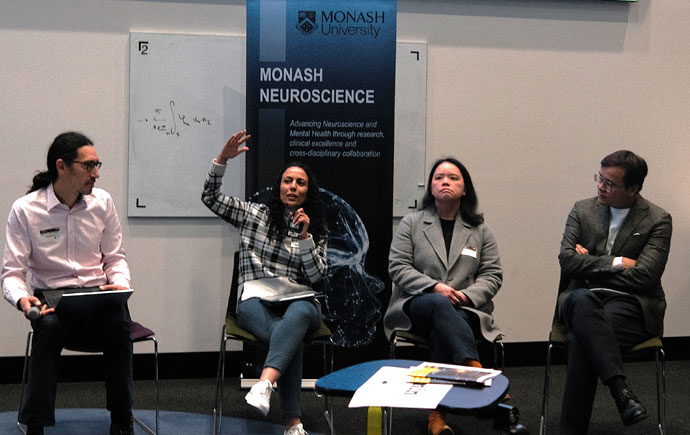
A standout panel discussion on AI in neuroscience featured expert perspectives from Dr Yasmeen George, Ms Gin Tan, and Associate Professor Zongyuan Ge, addressing both the transformative potential and practical challenges of implementing AI in neuroscience research.
A core focus of the event was supporting early- and mid-career researchers (EMCRs), who were strongly represented across both extended and short talks. Notable mentions include:
Dr Lachlan Dalli, (The School of Clinical Sciences), who presented compelling population-based evidence linking recent infections, particularly RSV, with increased risk of paediatric stroke. Dr Dalli was awarded Best EMCR Speaker of the symposium.
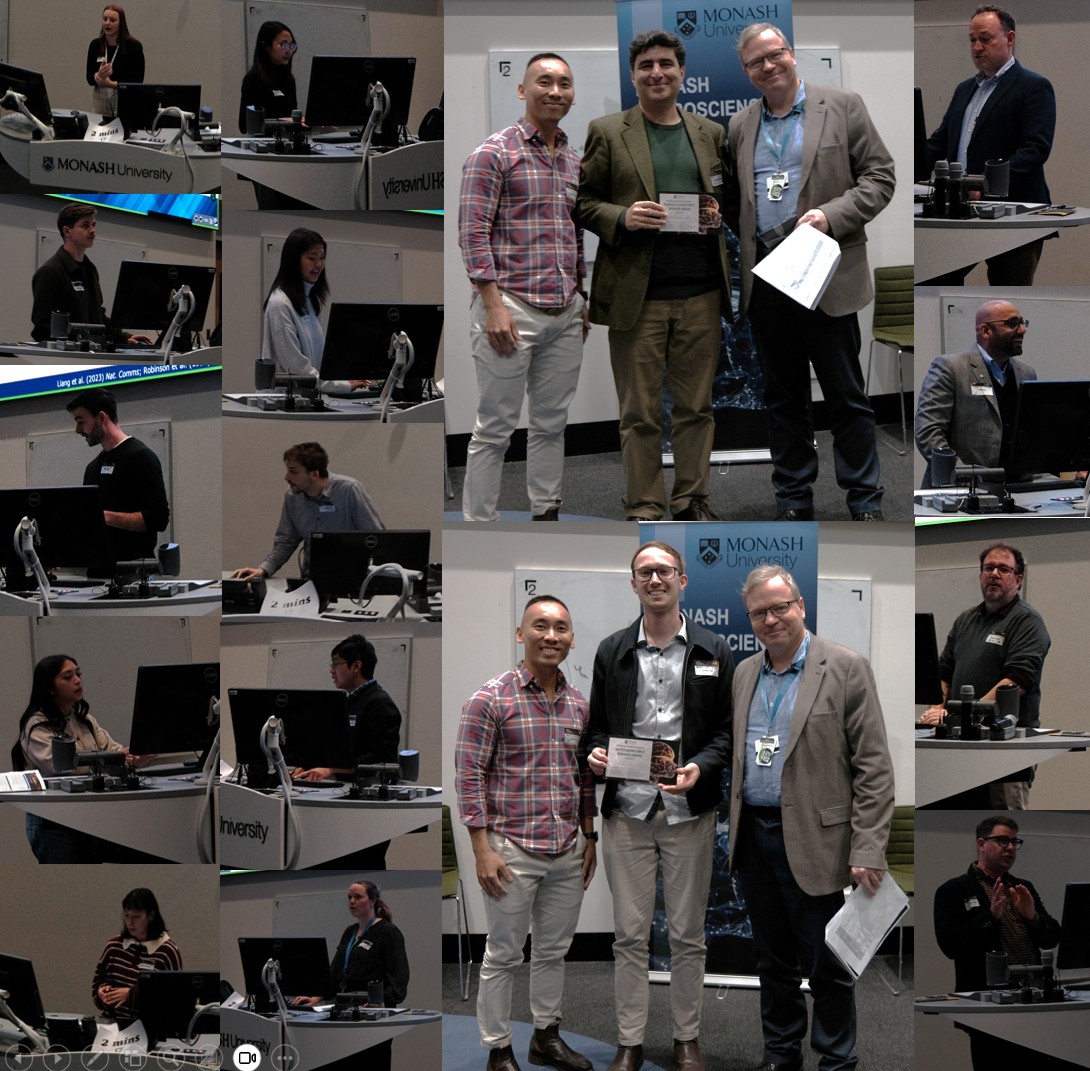
Dr Seyed Aidin Sajedi (School of Translational Medicine), who discussed how environmental exposures may influence MS onset, drawing on global datasets to reveal emerging risk factors (Dr Sajedi received the People’s Choice Award for Best EMCR Speaker.
The symposium also marked the launch of the Monash Neuroscience EMCR Seed Grant Initiative, a new funding scheme co-developed by Monash Neuroscience and the Monash Institute of Pharmaceutical Sciences (MIPS). The initiative is designed to catalyse crossdisciplinary collaboration and support the development of innovative, early-stage research ideas emerging from connections formed at the symposium.
The success of the 2025 Monash Neuroscience Symposium was the result of contributions from across the Monash community. The program was shaped and delivered by researchers, speakers, volunteers, and members of the Monash Neuroscience Executive and EMCR Committees, whose involvement fostered a vibrant and collaborative event.
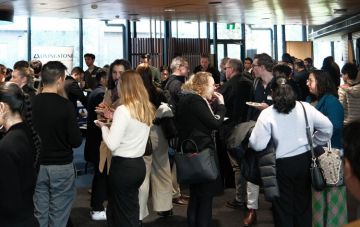
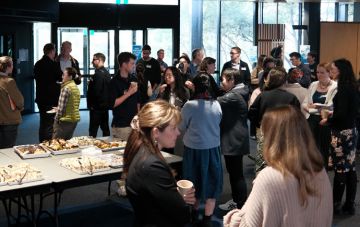
Catering was generously provided by Secret Garden Events, whose fresh and seasonal menu was a highlight for many attendees. The day concluded with a lively networking reception, offering valuable opportunities for informal connection, idea exchange, and cross-disciplinary engagement.
The symposium was supported through financial and in-kind contributions from Monash departments and research institutes, including the Faculty of Medicine, Nursing and Health Sciences (FMNHS), Monash Biomedicine Discovery Institute (BDI), School of Psychological Sciences / Turner Institute for Brain and Mental Health, School of Translational Medicine (STM), Australian Regenerative Medicine Institute (ARMI), School of Clinical Sciences (SCS), and the Monash Institute of Pharmaceutical Sciences (MIPS). Additional support was provided by external sponsors, including Siemens Healthineers, Livingstone International, and UCB Australia, whose partnership helped make the event possible.

-