
World Health Day 2023: Enjoying a healthy older age
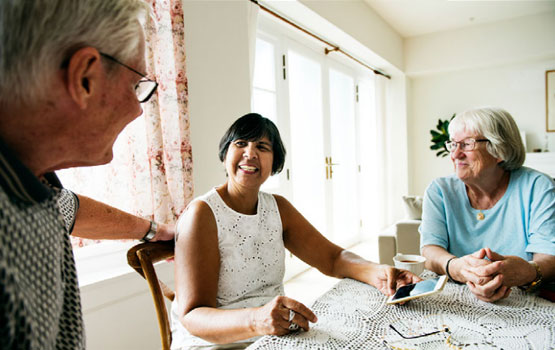
With 1 in 6 Australians aged over 65, the quest to stay healthy, connected and independent as we grow older is one of our most important health and community challenges. And it shouldn’t matter how much you’ve got in your super - the opportunity to enjoy a productive and meaningful older age should be fair and equitable for all .
For World Health Day on April 7, we asked Professor Velandai Srikanth, Director of the National Centre for Healthy Ageing, about his work to promote healthy ageing and what we need to do to improve health outcomes for all older Australians.
What are some of the biggest challenges in tackling healthy ageing?
It depends on where one lives. In high-income settings, where lifespan is now well into the 80s, having purpose and connection, preventing chronic illness and maintaining mobility and independence are significant challenges. In low-income communities, access to sufficient income, housing, nutrition and clean water to help survive hardship and begin to live more productively is critical. The impact of climate change on health and ageing is also concerning as this will affect everyone, everywhere and will amplify existing challenges enormously. We need to be well-prepared for this challenge.
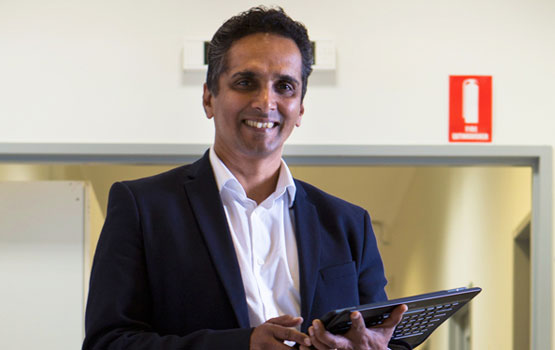
Professor Velandai Srikanth
How important is collaboration in providing new solutions for healthy ageing?
Healthy ageing can only be achieved by tackling issues relevant to health from several perspectives - medical, psychological, lifestyle, social connections and environmental design. We can’t truly enable innovation in healthy ageing without collaboration between different disciplines. Promoting healthy ageing at the population level also requires collaboration between health providers, researchers, industry and governments so that we can deliver the right messages and services to the relevant communities.
What needs to happen in healthy ageing therapies and services to achieve improved health outcomes for all?
We must keep in mind the most essential needs of people in their quest to age healthily - building communities with social connection, having support to maintain relative independence in their preferred homes, making health care less fragmented and easier to access, ensuring that the needs of the most vulnerable and disadvantaged are addressed and not forgotten and increasing investment by governments, industries and philanthropy into healthy ageing R&D.
What are some of the biggest achievements in healthy ageing that you’ve been involved with or are working on now?
I am working with many outstanding people dedicated to solving challenges in healthy ageing - such as dementia, frailty, homelessness, alcohol and other drugs, and social care systems. I have been given the opportunity to develop and grow the National Centre for Healthy Ageing, which hopes to bring together some of the best minds in the field, supported by fantastic data and technology infrastructure, and united in their quest to make a difference in health-related to ageing now and for future generations.
Learn more about the National Centre for Healthy Ageing, a partnership with Peninsula Health.
Explore our healthy ageing research.
About Monash University
Monash University is Australia’s largest university with more than 80,000 students. In the 60 years since its foundation, it has developed a reputation for world-leading high-impact research, quality teaching, and inspiring innovation.
With four campuses in Australia and a presence in Malaysia, China, India, Indonesia and Italy, it is one of the most internationalised Australian universities.
As a leading international medical research university with the largest medical faculty in Australia and integration with leading Australian teaching hospitals, we consistently rank in the top 50 universities worldwide for clinical, pre-clinical and health sciences.
For more news, visit Medicine, Nursing and Health Sciences or Monash University.
MEDIA ENQUIRIES
E: media@monash.edu