
New Fellows of the Australian Academy of Health and Medical Sciences for 2024

Professor Jane Fisher from the School of Public Health and Preventive Medicine, Professor Elizabeth Hartland from Hudson Institute of Medical Research and Professor James Whisstock from the Monash Biomedicine Discovery Institute have been elected as new Fellows of the Australian Academy of Health and Medical Sciences (AAHMS) for 2024, the nation’s learned academy for the most influential experts in health and medicine.
Fellows were elected in recognition of their outstanding achievements and exceptional contributions to the health and medical sector, and were acknowledged for their clinical, non-clinical, leadership, industry and research contributions. Monash medicine alumni Professor Sharon Goldfeld AM and Professor Stephen Tong were also among the 31 newly elected Fellows for 2024.
“Being elected as a new Fellow of the Australian Academy of Health and Medical Sciences is a significant achievement that recognises outstanding careers and the desire to make a difference to the community through health and medical research," said Executive Dean of Monash Medicine, Nursing and Health Sciences Professor Christina Mitchell AO. "Our warmest congratulations to Professor Fisher, Professor Hartland and Professor Whisstock and our alumni on their recognition this year.”
Learn more about our new Fellows:
Professor Jane Fisher AO

Professor Jane Fisher AO is an academic clinical and health psychologist and expert in the public health aspects of women’s health, mental health and global health. She is the Finkel Professor of Global Health at the School of Public Health and Preventive Medicine. She is nationally recognised for her research into the links between mental health and reproductive health, related to fertility and infertility, pregnancy and the postpartum period.
Professor Fisher has made substantial contributions through epidemiological studies and intervention trials in clinical and community settings in Australia and low and middle-income countries to knowledge about the social determinants of mental health problems across the life course among older and younger adults, adolescents, and children; and of how these can be addressed directly in primary care, clinical practice, and public policy. Her sustained and ongoing contributions to advancing health and medical science are demonstrated in her research and capacity-building in Australia and the Indo-Pacific region.
Since 2007, she has continuously received competitively awarded funding from the NHMRC or the ARC as either lead or co-investigator. Her translational capabilities have been recognised in implementation and evaluation projects supported by federal and state governments, clinical services and non-government organisations.
Despite career interruptions, Professor Fisher has a total of 477 peer-reviewed publications, book chapters, and technical reports, which have together been cited more than 21,400 times. She has secured competitively awarded grants of AUD $109.4million and completed commissioned research of more than AUD $2.5 million including for WHO, Australian and Victorian Government departments, Breast Cancer Network Australia, Burnet Institute, Jean Hailes for Women’s Health and Melbourne IVF.
Professor Fisher chaired the NHMRC Expert Committee on Mental Health and Parenting, is an expert advisor to the Victorian Department of Health on perinatal mental health screening, and a member of the advisory group for the annual National Women’s Health Survey. She sits on the Masada Private Hospital Medical Advisory Committee (2016-), chaired the Psychosocial and Epidemiological Research in Reproduction Group for the Royal Women’s Hospital and Melbourne IVF (2009 - 2023), and sat on the Royal Women’s Hospital Research Committee (2003-2019), and the Epworth Healthcare Voluntary Assisted Dying Expert Advisory Group (2018 -2020).
Her research about the social determinants of mental health problems experienced by people in low-income countries and marginalised populations led directly to the inclusion of maternal mental health in the World Health Organization (WHO), UNICEF, World Bank Group Nurturing Care Framework. She was then invited to Chair the WHO Guideline Development Group for the Nurturing Care Framework (2018-2019) and was subsequently invited to Co-Chair the WHO Guideline Development Group for Postnatal Care (2020-2022). She was appointed to USAID’s Momentum Technical Consultation Group on Perinatal Mental Health (2021-) and has recently been appointed to the WHO Expert Committee on Perinatal Mental Health (2023-).
In Vietnam, Professor Fisher has worked with the Research and Training Centre for Community Development since 2000 in a co-developed multi-stranded research program to build evidence about the health of women, girls, and young children in poor rural communities. Building on this evidence, they developed the successful community-based Learning Clubs intervention, which improved the cognitive development of two-year-olds and the caregiving milieu and was cost-effective. The findings are now informing strategies to improve early childhood development in marginalised groups occupying low socioeconomic positions in Australia. Together, these demonstrate her capacity to undertake complex research, including community-based trials successfully in diverse settings.
Professor Fisher was appointed Officer in the Order of Australia for her contributions to women, mental health, and the community in January 2019. In 2017 she was awarded the Marcé Medal by the Australasian Marcé Society for Perinatal Mental Health for her extraordinary contribution to the field of perinatal mental health through research, clinical practice, teaching, and mentorship. In 2022 was awarded the John Cox Medal for exceptional contribution to understanding perinatal mental health problems globally and to the International Marcé Society for Perinatal Mental Health.
Professor Elizabeth Hartland AM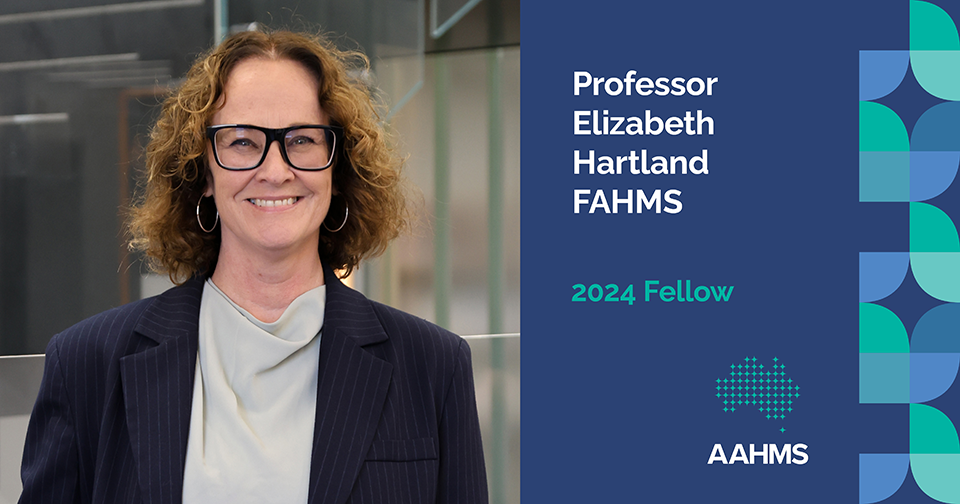
Professor Elizabeth Hartland AM is the CEO and Director of the Hudson Institute for Medical Research. An international leader in the fields of microbiology and immunology, Professor Hartland’s long-standing research interest is in the pathogenesis of infections caused by bacterial pathogens, with a focus on the inflammatory response to infection and microbial immune evasion.
Professor Hartland has made significant contributions to the understanding of underlying host and bacterial molecular mechanisms that determine the outcome of bacterial interactions with human cells and the development of disease.
Her research program is focused on the cell intrinsic mechanisms of innate immunity and how these may be harnessed to fight infections such as Legionnaire’s Disease, melioidosis, dysentery and E. coli diarrhoea. Her goal is to define the host targets and biochemical functions of bacterial virulence ‘effector’ proteins that block cell intrinsic innate immune responses, thereby allowing bacterial pathogens to replicate and spread. This knowledge can complement the use of antibiotics by optimising the innate immune resistance to infection to block bacterial replication.
Professor Hartland has received more than $42M in grant and fellowship funding as a sole or joint investigator from both national (NHMRC and ARC), as well as international funding bodies such as the Human Frontiers Science Program. In June 2024, Professor Hartland was awarded a Member of the Order of Australia (AM) for services to medical research, particularly microbiology, and tertiary research.
Professor James Whisstock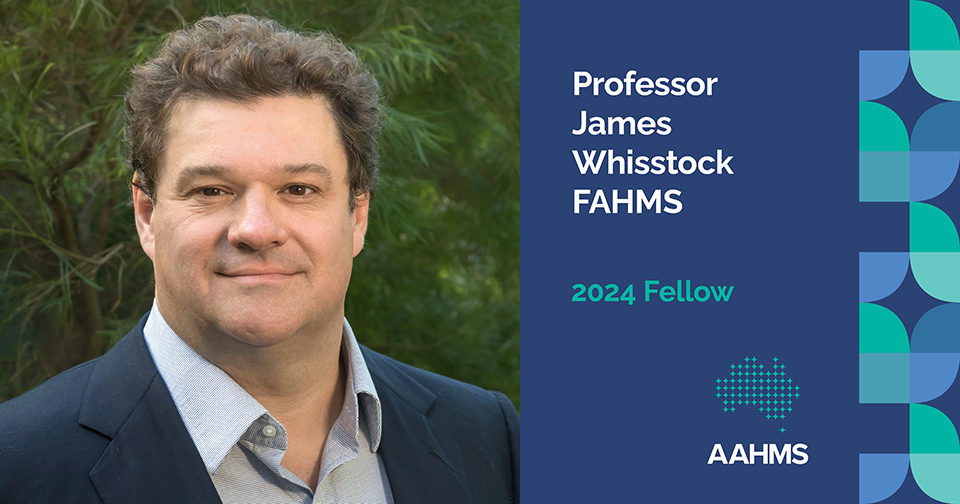
Professor James Whisstock is Deputy Dean Research of Monash Medicine, Nursing and Health Sciences and a structural biologist at the Monash Biomedicine Discovery Institute. Throughout his career, he has been supported by a series of fellowships, including a National Health and Medical Research Council (NHMRC) Senior Principal Research Fellowship, an Australian Research Council (ARC) Laureate Fellowship and an ARC Federation Fellowship. Previously his leadership roles have included Scientific Head of EMBL Australia and Director of the ARC Centre for Excellence in Advanced Molecular Imaging. In 2019 and again in 2024, Professor Whisstock was appointed as a Distinguished Honorary Professor of the Australian National University, a position associated with the John Curtin School of Medical Research.
Professor Whisstock is recognised for discovering that perforin belongs to the cholesterol-dependent cytolysin class of bacterial pore-forming toxins. These initial, completely unexpected findings answered a long-standing question in immunology and revealed how perforin-like proteins function to form pores, how certain mutations in patients result in diseases such as haematological cancers and hemophagocytic lymphohistiocytosis, and how the function of perforin-like molecules is tightly controlled. This work has been published across 42 papers, including in journals Nature, Science, Nature Communications and PNAS and has been recognised globally with >4500 citations, 7 invited reviews and 10 invited talks at international meetings.
Professor Whisstock’s work has informed other fields of immunology, for example in understanding the mechanism of function of the pore-forming Gasdermin pyrotopic death effectors. His work has been highly cited, has led to the updating of immunology textbooks and has collectively provided a long sought after molecular framework for studying and understanding cell killing by immune cells. These discoveries have also provided a clear path for the ongoing development of perforin and related molecules.
The significance of his research on perforin and related molecules was recognised with the award of an ARC Federation Fellowship in 2008, an ARC Laureate Fellowship in 2018 and the Australian Academy of Science Gottschalk Medal in 2010.
As head of the Whisstock Laboratory, Professor Whisstock has mentored and supported numerous early and mid-career researchers, including 27 PhD candidates and 48 Honours students. Members of his team have been awarded 6 ARC Discovery Early Career Research Awards, 11 NHMRC Early Career Fellowships, an NHMRC Senior Research Fellowship and two ARC Future Fellowships, and have gone on to hold significant leadership positions nationally and internationally.
Over the course of his career, Professor Whisstock has been a chief investigator on 77 grants valued at more than $126m, with 43 as lead chief investigator. His program leadership includes directing two multi-CI NHMRC program grants and leading and directing the $40 million ARC Centre of Excellence in Advanced Molecular Imaging. In 2022 Professor Whisstock led the team that received a $1million Ramaciottti Medal to build the Monash Ramaciotti Electron Microscopy (EM) Centre. Established in 2015, the centre was Australia’s first high throughput electron microscopy facility and is now a node of the Microscopy Australia national research capability. The centre has attracted over $50 million of investment and will serve Australian scientists for decades to come.
In 2016, Professor Whisstock was appointed as Scientific Head of EMBL Australia, following which he won long-term National Collaborative Research Infrastructure Strategy funding for the EMBL Australia associate membership, and led the drive to double the size of the Partner Lab Network. Through his efforts, EMBL Australia has financially supported over 200 young researchers to visit EMBL headquarters in Europe to facilitate the creation of a highway of international collaboration.
For a full list of 2024 AAHMS New Fellows, visit their website.
About Monash University
Monash University is Australia’s largest university with more than 80,000 students. In the 60 years since its foundation, it has developed a reputation for world-leading high-impact research, quality teaching, and inspiring innovation.
With four campuses in Australia and a presence in Malaysia, China, India, Indonesia and Italy, it is one of the most internationalised Australian universities.
As a leading international medical research university with the largest medical faculty in Australia and integration with leading Australian teaching hospitals, we consistently rank in the top 50 universities worldwide for clinical, pre-clinical and health sciences.
For more news, visit Medicine, Nursing and Health Sciences or Monash University.
MEDIA ENQUIRIES