
Pioneers in the field: MERQ turns 10
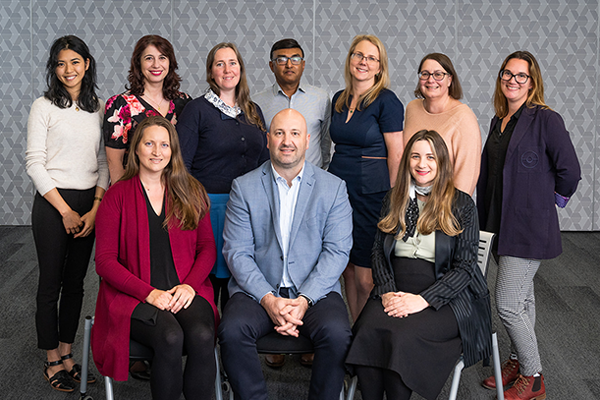
Our Medical Education Research and Quality (MERQ) Unit is celebrating 10 years of creating evidence to support best practice in training the health and medical workforce of the future.
Unit Head Professor Dragan Ilic and Professor Basia Diug both established the team in 2014. Here they share their reflections about the niche they’ve found and filled, and some of the ways their work has helped Monash’s health and medical education evolve.
--
Both Professor Ilic and Professor Diug came from medical research backgrounds – Dragan with a PhD in prostate cancer screening, and Basia with a PhD in drug epidemiology and stroke prevention. But both found a niche in education, supported by a shared passion for integrating evidence-based approaches not just into healthcare practice, but into the fabric of the teaching behind it.
“I think we both gravitated towards this idea around the same time, as we were both passionate educators in a research-intensive School.” says Basia. “I could see so much enthusiasm among our teaching staff, and some good practices, but they were siloed. One educator might seemingly have a novel teaching approach or insight and apply it to great effect, but there no structured processes to share it. And there was also no real evidence that it was an effective teaching approach, or how it impacted on the student experience.
“When we started looking around at other Universities, we realised that in Australia there was little being done in this space.”
After some initial planning, they pitched their idea about creating an evidence-base to drive the quality of our health and medical education to our then Head of School, Professor John McNeil AO, and the Medical Education Research and Quality Unit was born.
“We’ve pioneered this field in Australia,” says Dragan. “I’m incredibly proud of that, and how our findings have been directly translated into the way Monash teaches its undergraduate and postgraduate courses across the Faculty of Medicine, Nursing and Health Sciences, and how our research has improved our diverse curricula.”
Today, MERQ consists of a team of 16 staff and is supported by a broad community of practice. Over the course of the last decade, it has held 36 expert seminars, generated over 260 journal publications, and seen over 26 research projects funded.
“I’m particularly proud of the tight partnerships we’ve formed with groups the Monash Education Academy, and the number of Higher Education Academy fellowships we have received.”
MERQ has two main activities: pedagogical research, and quality improvement teaching practices. Professor Diug leads quality improvement, while Professor Ilic oversees research.
Quality improvement
The MERQ team today includes educators with an interest in quality improvement, and professional educational designers who inform our approaches to teaching.
They’ve implemented a School wide approach to Teaching Associate Coaching, created a Unit Coordinator Community of Practice, assisted on major teaching software transitions, created teacher training resources, and led general educational practice upskilling activities across the School.
“I think we’re recognised as real innovators in this space. We’ve historically supported risk and been bold enough to support change to try new teaching approaches. That’s really important in this space, especially as educational technologies evolve so rapidly.”
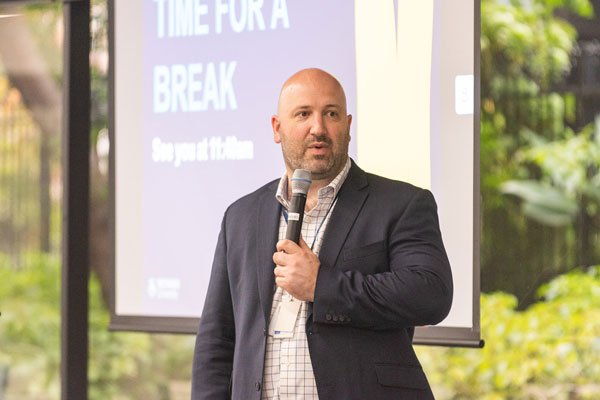
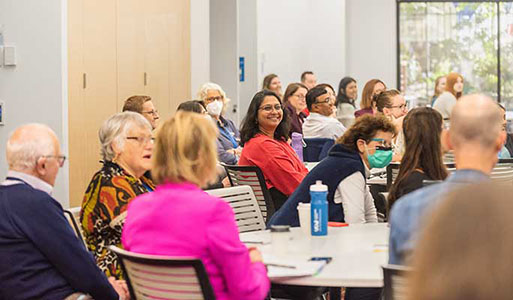
A landmark activity first run in 2015 was the annual Teaching Challenges and Innovation Symposium, designed to break down siloes and share knowledge internally among lecturers. Each year around 100 lecturers from our School come together to hear from leading experts on medical education, share challenges and workshop solutions.
“Right from the start we had strong support from the Faculty via Professor Wayne Hodgson, who was the Deputy Dean of Education at the time. He was in a position to share our innovation around the Faculty, and also share what he was seeing elsewhere with us,” says Basia.
The team have developed a reputation as leaders in this field, and formed strong working relationships with the Council of Academic Public Health Institutions of Australasia (CAPHIA). These days they’re regularly invited to contribute to events run by organisations like the International Association for Health Professions Education, The Australian and New Zealand Association for Health Professional Educators, and their international counterparts including the Global Network for Academic Public Health, and Association of Schools and Programs of Public Health. MERQ team members also contribute to relevant funding and accrediting bodies, and a number hold editorial positions across leading journals like BMC Medical Education, Journal of Continuing Education in the Health Professions, and Healthcare Professions Education – Frontiers in Medicine.
Research
The team undertakes research falling under four main themes:
- Graduate attributes and employability
- Cost and value of health professions education
- Assessment and analytics
- General scholarship in medical education
“Graduate employability is very important,” says Professor Ilic. “The fees you pay for an education are an investment in your future career. We need to honour that investment, by ensuring what we teach is effectively equipping students to meet workforce needs, and to know whether they are in fact ending up in the types of jobs they want.
“Many of our research themes are quite interconnected, and assessment research is closely aligned to this. Our research has helped the Faculty redefine programmatic assessments, and make changes to ensure assessments are authentic, and tied to real world workplace skills and activities.”
Cost and value research has been a personal passion for Dragan himself over the years, and he’s worked with many others across Monash to develop and grow the Society for Cost and Value in Health Professions Education as the international driver of research in this space.
“This kind of research helps Universities and medical colleges make the most out of finite funding, which is an issue that affects us all. For instance, one of the first projects we undertook as a group was to provide evidence around the true cost and value of developing and delivering online units, both in terms of finances, and around student experience and perception.”
Ensuring research findings feed directly back into our School’s teaching is never far from the minds of the MERQ team, and assessments across the Monash Faculty of Medicine, Nursing and Healthcare have benefitted from this.
A few years back the team reviewed the delivery of OSCEs for Monash medical students, an assessment event where students must engage in 12-16 short practical sessions. The team found that the student performance could be accurately predicted with fewer sessions, which underpinned the Faculty’s decision to reduce the overall number, saving time, money and stress for all involved.
The team also generates evidence that directly supports students, such as their research to identify students who are struggling to keep up, especially in the online setting where direct contact may not be as frequent. “We’ve spent time finding out what characteristics of students can be used to flag potential difficulties, and put in place support pathways to ensure we catch them early.”
“It’s been a productive ten years, and we couldn’t have done it without a lot of financial support, particularly from within our Faculty, Monash Education Academy and the Monash-Warwick Alliance. We’re also very grateful to government funding that we’ve received over the years including from the Office of Learning and Teaching and the Australian Research Council,” says Dragan
Basia concludes, “We are very proud of the impact we have made, the MERQ team and community of practice we have built. Together we can continue to teach tomorrow’s health workforce using the best evidence available for the best possible way.”
Click here for more news from the School of Public Health and Preventive Medicine