
Patient-centred research recognised with major State awards
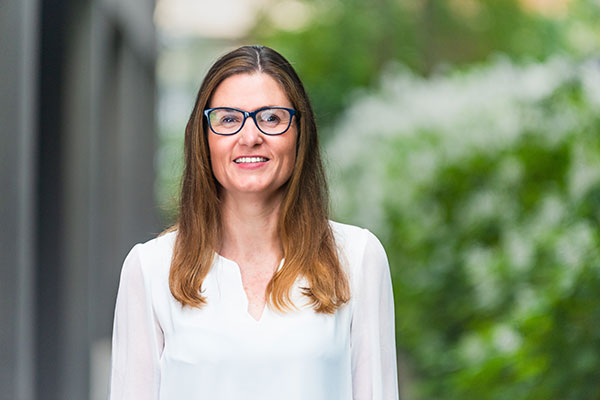
Today we celebrate a remarkable achievement as Dr Lisa Higgins is announced as the winner of the 2024-25 Victorian Premier’s Award for Health and Medical Research Excellence, as well as the 2024 Clinician Researcher Award in the same prize scheme, for her groundbreaking work on the long-term health outcomes of critically ill COVID-19 patients.
Dr Higgins is a clinical trialist and health economics specialist with the Australian and New Zealand Intensive Care Research Centre, housed within our School. Her award-winning analysis was part of the REMAP-CAP trial, a complex international clinical platform trial led by Monash University, that rapidly pivoted in 2020 to evaluate treatments for critically ill patients hospitalised with severe COVID-19. While many trials focused on short-term outcomes such as survival to hospital discharge – this was also a primary goal of the wider REMAP-CAP trial – Dr Higgins had a bigger question on her mind: What happens to these patients after they survive?
She used long-term data gathered for the study to investigate nearly 5,000 patients enrolled in REMAP-CAP, looking beyond simple hospital survival to assess six-month mortality, quality of life, and disability. These longer-term, patient-centred outcomes offer a deeper and more nuanced understanding of how treatments affect not just whether patients survive, but whether they survive well.
REMAP-CAP itself is no ordinary trial. Launched in 2015, it was designed to be flexible and scalable, in preparation for future pandemics. When COVID-19 hit, it became one of the key global trials testing multiple treatments simultaneously in real-time across over 300 hospitals in 25 countries. It was identified by the UK Chief Medical Officers as one of the three essential COVID-19 trials for the country, and results informed global health practice and policy for treating the virus in critically ill patients.
Among Lisa’s long-term findings were several that have shaped clinical practice worldwide. Treatments such as interleukin-6 (IL-6) receptor antagonists and antiplatelet agents were shown to improve survival and quality of life at six months. In contrast, treatments like hydroxychloroquine, which was widely used early in the pandemic, were found to cause harm. Other therapies, including the much-vaunted convalescent plasma, showed little or no long-term benefit.
Crucially, her work was the first to demonstrate a clear link between the short-term clinical improvements that many trials measure and the longer-term, patient-focused outcomes that truly matter to survivors and their families, as they navigate recovery and return to daily lives.
She says, “As intensive care researchers, it’s easy to focus on the period when patients are critically ill. However, very little is known about what happens for survivors after they leave hospital – understanding this is essential as a goal of treatment is not just for patient to survive but for them to survive well. Helping to determine treatments that improve outcomes that matter to patients is an incredibly rewarding experience.”
“I’m so proud of this award, and I’m humbled by the expertise, hard work, support and friendship that’s been a hallmark of the REMAP-CAP team over the last five years. Their desire to reduce the burden of this virus is extraordinary, and I couldn’t have done this without them.”
Her results were published in the highly respected medical journal JAMA, where the accompanying editorial praised the research as a “substantial step” in closing two major gaps: understanding outcomes beyond a few weeks, and measuring not just survival but also quality of life. The editorial went on to say, “The investigators deserve the highest praise for executing an expansive, forward-thinking initiative that has produced a wealth of evidence under intense pressure.”
Since its publication two years ago, Dr Higgins’ study has been cited more than 119 times, has an exceptional field-weighted citation index of 29.32, and has been viewed over 92,000 times. She’s been invited to present at several major international conferences, including the Society of Critical Care Medicine in the USA, Critical Care Reviews in Ireland, and the World Congress of Intensive and Critical Care in Türkiye.
For Lisa, the recognition is a moment of personal and professional pride – but also a testament to the power of health economics and patient-centred research in shaping better, evidence-informed care. This prize reminds us that behind every trial statistic is a person, and that the real goal is bigger than just survival – it’s recovery, and a life worth living.
Click here for more news from the School of Public Health and Preventive Medicine