
New research shows impact of home environments on early childhood development across East Asia and the Pacific
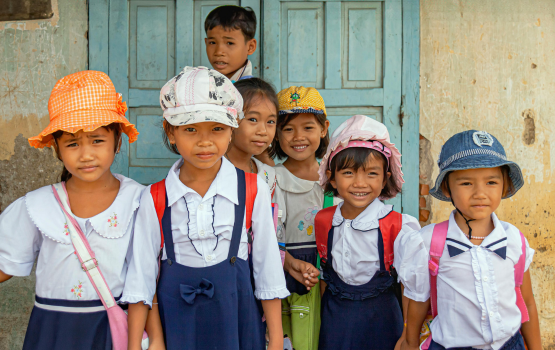
Credit: Man Fong Wong from Pexels
Two new studies by researchers in the Global and Women’s Health unit in the School of Public Health and Preventive Medicine have shed light on how home environments shape the development of children aged two to five years in the East Asia and Pacific region.
Drawing on a systematic review and a national population-level study from Vanuatu, the findings highlight the importance of country-specific evidence to guide early child development (ECD) policy planning.
Early childhood development refers to the period of a child’s life between conception to age eight, widely recognised as the most important stage of human development. It lays the foundation for lifelong learning, health, and wellbeing and is central to achieving global commitments such as the United Nations’ Sustainable Development Goals.
The systematic review, published in Child: Care, Health and Development and led by PhD candidate Sally Popplestone, synthesised observational studies examining home-based learning opportunities and responsive caregiving among children aged two to five years in low and middle-income countries across the East Asia and Pacific region. The review showed that children exposed to richer learning environments and more responsive caregiving tend to have higher developmental scores. However, the evidence base remains uneven. Pacific Island nations and low-income settings were underrepresented, and substantial variation in measurement tools limits comparability across countries.
The population-level study, published in PLOS Global Public Health and also led by Ms Popplestone, provides evidence on the associations between the home environment and preschool-aged child development, using data from the 2023 Vanuatu Multiple Indicator Cluster Survey. The study found that children with greater access to learning materials, more positive parenting and responsive caregiving had higher developmental scores. Various sociodemographic factors are also associated with higher scores.
These two new studies complement the research team’s 2024 study, which examined how the home environment related to the development of preschool-aged children in Fiji.
Across all three studies, the evidence suggests that the home environment plays a pivotal role in shaping children's development during the preschool years. The findings point to several implications that should be considered in the context of the East Asia and Pacific region, a vast region facing various socioeconomic constraints.
These include developing harmonised indicators for responsive caregiving, early learning and child development; strengthening caregiver education, parenting support, and access to learning resources; and tailoring programs to subgroups identified as having lower development scores.
“The East Asia and Pacific region is one of the fastest-growing regions and is home to around one quarter of the world’s children, yet economic progress is uneven,” said Ms Popplestone. “Many children face significant challenges linked to poverty, including incomplete nutrition, limited healthcare, inadequate caregiving and few opportunities for early learning. Despite global evidence showing strong links between the home environment and child development, research within this region – particularly for children aged two to five years – remains limited and uneven.”
“The preschool years are a critical but still understudied stage of development,” she said. “Countries across the region are investing in early childhood, but country-specific data is needed to help guide effective ECD planning.”
“These studies show what's working, where the gaps are, and where investment is most needed to support preschool-aged children across the region. They also provide a strong empirical foundation for governments and development partners seeking to advance ECD in the East Asia and Pacific region.”
About Monash University
Monash University is Australia’s largest university with more than 80,000 students. In the 60 years since its foundation, it has developed a reputation for world-leading high-impact research, quality teaching, and inspiring innovation.
With four campuses in Australia and a presence in Malaysia, China, India, Indonesia and Italy, it is one of the most internationalised Australian universities.
As a leading international medical research university with the largest medical faculty in Australia and integration with leading Australian teaching hospitals, we consistently rank in the top 50 universities worldwide for clinical, pre-clinical and health sciences.
For more news, visit Medicine, Nursing and Health Sciences or Monash University.
MEDIA ENQUIRIES
E: media@monash.edu