Education Awards
Close


This Award recognises and celebrates outstanding contributions to the Faculty of Science teaching programs made by individuals or teams. Awardees have demonstrated outstanding approaches to teaching and/or the support of learning that influences, motivates, and inspires students, excellent development of curricula, resources, or services reflecting a command of the field, high-quality evaluation of practices that lead to improvements in teaching and learning, and influential innovation, leadership or scholarship that shifts the dial on teaching, learning, or the student experience.
The nominee is:

Associate Professor Reef is an outstanding educator whose excellence in teaching has transformed her units and, through her leadership, much of the curriculum of the School of Earth, Atmosphere and Environment, and the Faculty of Science. Ruth’s commitment to student engagement, innovative teaching methods, and high levels of student satisfaction make her an outstanding and deserving recipient of this award.
This Award recognises outstanding innovation driven by technologies or curriculum that improve student engagement, teaching, learning, or assessment. Nomination is open to all academic staff, professional staff, and teaching associates of the Faculty of Science. Awardees have demonstrated outstanding approaches to teaching and learning through curriculum or technological innovation, development of curricular resources or services, evaluation practices that bring positive change and influential innovation, leadership, or scholarship that shifts the dial on teaching, learning, or the student experience.
The nominees are:
Dr Wee Wei Yee, School of Science, Malaysia - Winner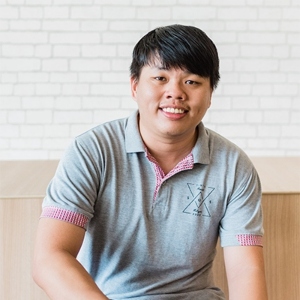
Dr Wee Wei Yee implemented innovation in learning and teaching by developing an educational board game, Learnux, to facilitate learning Linux command lines by Monash students. He won the gold medal for the educational category in ITEX 2020 and INNOVATOR 2022 and has used Learnux to conduct Linux-related workshops.
Dr Hendrika Duivenvoorden, School of Biological Sciences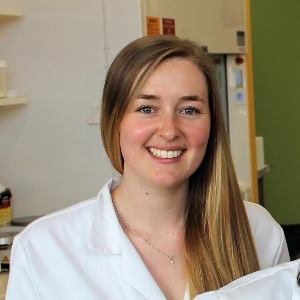
Dr Hendrika Duivenvoorden is one of the very best and most valued educators in the School of Biological Science. Her work improving GEN2041 serves as an exemplar of best practice, as evidenced by the subsequent uptake of her approach across multiple additional units both within and outside of Biological Sciences and the inclusion of her lecture structure in Teach HQ.
Dr Md Zobaer Hasan, School of Science, Malaysia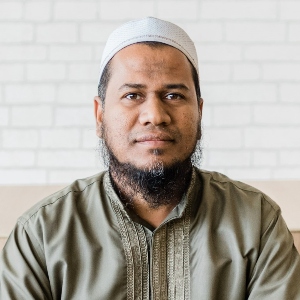
Dr Md Zobaer Hasan is a statistician and has introduced the HTML5 package (H5P) as an interactive tool to enhance student engagement and learning experiences in statistics units.
Dr Andy Hammerlindl, Dr Jian He, Associate Professor Anja Slim, Professor Todd Oliynyk, School of Mathematics - Winner
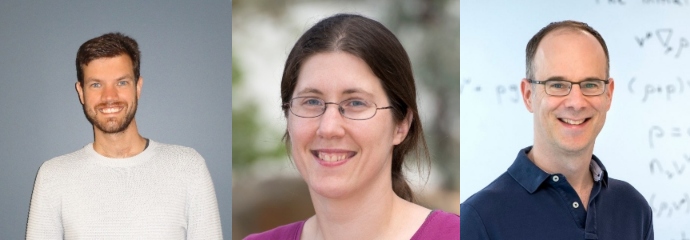
The ENG1005 teaching team introduced fundamental changes to the unit that improved student learning outcomes and satisfaction. Key innovations include a directed lesson-based approach to student learning, improved active learning opportunities, the incorporation of complex engineering applications, and the introduction of computer algebra based quizzes that are discipline appropriate.
This Award recognises and celebrates outstanding contributions to the Faculty of Science teaching programs made by early career academics or professional staff, as individuals or teams.
The nominees are:

Through his empathetic approach to student learning and engagement, alongside targeted changes based on critical evaluation of student feedback, .Dr Vidor has significantly improved the student perspectives of the complex third-year genetics unit GEN3040 within only a single semester of taking over as unit coordinator.
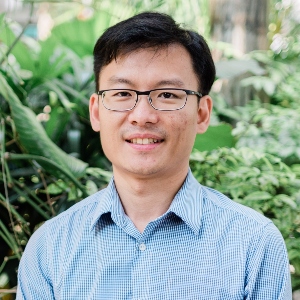
As the sole lecturer for BTH2732 at Monash University Malaysia, Patrick revolutionised the curriculum by integrating practical lab sessions and innovative initiatives like AMR surveillance. He equipped students with essential skills and knowledge through meticulous resource curation and research-led approaches, garnering recognition and impacting educational innovation in antimicrobial resistance.

Cameron has been extremely energetic and proactive in working to uplift and improve unit CHM2922. He has reimaged the delivery of the traditionally unpalatable section of the course and has also addressed issues in labs, including finding an effective solution to the problem of aligning course content with the lab program.
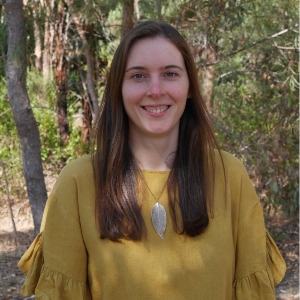
Ellen has brought with her a level of enthusiasm and in-depth subject knowledge (EAE3051) and is also an outstanding researcher and dedicated teacher. She is focused on building positive student-teach relationships and supporting student engagement through carefully designed assessments in class activities.
This award recognises outstanding contributions to honours supervision and celebrates exceptional contributions to the Faculty of Science.
The nominee is:
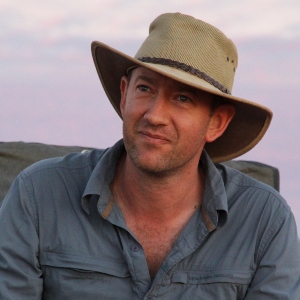
Professor Tomkins is a geologist who applies the principles of metamorphic and igneous petrology to a variety of fields of geoscience where traditional petrologists rarely venture. Andrew’s many Honours students consistently find careers in research and industry where they benefit from his teaching, mentorship, and novel approach to research.
This award recognises the incorporation of Indigenous knowledge and viewpoints in education, or programs that increase the opportunities for Indigenous students to study Science.
The nominees are:

Through Georgia’s research and teaching activities, she endeavours to find ways to bring Indigenous and scientific knowledges together on equal terms. Georgia designed and conducted workshops on Indigenous plant knowledges, which aim to challenge students to reflect critically on the relationship between science and Indigenous knowledge.

Andrew has made extensive contributions to embedding Indigenous Perspectives into science curriculum through his leadership as the unit coordinator of SCI2030, Indigenous Science: Science through the eyes of Australia’s First People. Andrew’s dedication to promoting the science perspectives of Aboriginal and Torres Strait Islander people is considered to be an exemplar of best practice in embedding Indigenous perspectives into curricula. It embodies Monash University’s goals of recognising and appreciating Indigenous experiences and knowledge as a path to achieving educational excellence.
This award recognises initiatives that make the learning environment more inclusive, or specifically include and teach diversity in the development of scientific knowledge.
The nominee is:
Team Category: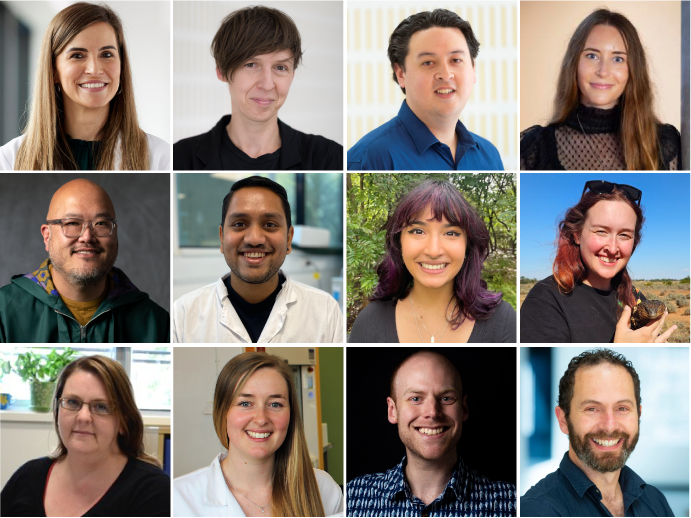
Professor Francine Marques, on behalf of the School of Biological Sciences EDI committee (Associate Professor Kay Hodgins, Dr Tom Hiscox, Dr Scarlett Howard, Professor Bob Wong, Dr Rikeish Muralitharan, Naomi Drago, Jess Herbert, Caroline Molloy), Dr Hendrika Duivenvoorden, Dr Callum Vidor, and Professor Damian Dowling.
The team developed a statement for ‘Inclusive Language in Biology’. It focuses on the reassessment of the language and terminology used towards a more inclusive way to teach biology. The statement was implemented across the SoBS and applied to a large unit, BMS/GNA2042 ‘Human Genetics’, receiving positive feedback from students.
This award is designed to recognise learning and teaching support programs and services that make an outstanding contribution to the quality of student learning and the quality of the student experience. The programs and services that receive this Award must have demonstrated their effectiveness through rigorous evaluation that will set benchmarks for similar activities at Monash.
The nominee is:
Professor Robert Bryson-Richardson, Dr Hendrika Duivenvoorden, Dr Callum Vidor, Dr Peter Boag, Dr Desirée du Sart, Jen Lickiss
The Master of Genome Analytics team was established to train the next generation of genome curators. The team drew on expertise from three faculties and five schools, and formed a collaboration with Illumina, the global leader in genomics, to comprehensively prepare students for this profession, resulting in high graduate employment.
These Awards recognise and celebrate the achievements of Science students in a wide range of areas, from academic performance through to service to the community.
Students are nominated by one of the science-based clubs for their contribution to the student and staff community in the Faculty of Science.
The nominee is:
Naomi Drego - Winner
Throughout her time as President of the Biological Society, Undergraduate-Representative to the Schools EDI Committee. and Science Peer Mentor, Naomi has helped build an interconnected community within the School of Biological Sciences. She has supported students through her advocacy and the creation of an engaging community that welcomes all students.
Students may self-nominate, or be nominated by another student or staff member, around the broad category of leadership. This may include social inclusion, social justice, or enterprise efforts towards charitable or not-for-profit groups.
The nominees are:
Brigitta Gunawan - Winner
Brigitta, National Geographic Young Explorer and founder of 30x30 Indonesia, leads environmental education initiatives to advance marine protected areas globally. Over 1,500 people from more than 90 locations worldwide have directly participated in her digital activations, workshops, and habitat restoration events to advocate for 30x30, collectively planting 200 mangroves and 600 corals.
Samuel Marcus - Commedation
Samuel, a science global challenges third-year student, receives a commendation for the young science leader award for his exemplary volunteer dedication to non-profit organisations. His involvement in governance and operations with St John Ambulance and Life Saving Victoria demonstrates strong leadership, passion for community service, and humanitarianism.
Genevieve Berg

Genevieve Berg, is nominated for her excellent contribution to the construction industry through environmental innovation. Her Ballot Bin initiative shows great potential for reducing cigarette litter on-site through educating, encouraging, and creating an incentive for responsible disposal.
Zarah Wessels

Zarah Wessels, is the volunteer social media manager and general committee member for the not-for-profit Earthcare St Kilda. Zarah’s leadership is highlighted through her involvement in various environmental initiatives by creating environmental education materials and supporting other committee members, as well as her dedication to conservation research.
Students may self-nominate, or be nominated by another student or staff member, around the broad category of science communication. This may include: cultivating a science-based blog, impactful micro-blogging or social media science profile, vodcast, podcasts, or other website activities with broad readership/engagement, developing science communication workshops, events, resources, and/or communities of practice.
The nominee is:
Brendan Cohen - Winner
Brendan is motivated to use the power of storytelling and multi-media to help bridge the gap between field research and public knowledge. With experiences at companies such as the National Geographic Society and The Nature Conservancy, Brendan aims to work in wildlife filmmaking, creating positive impact on an international scale.
This award celebrates the achievements of our top students.
Daniel Sebastian Arnould
Annalisa Calvi
Morgan James Chadwick
Wan Lin Chin
Jay Deng
Michael Gitonobel
Elizabeth Guzenko
Reece James Harrison
Chelsea Ruth Scott-Hayward
Sarah Xin Hua He
Natalie Jo Hooper
Naomi Soraya Kah
Indra Kusumah-Kasim
Nicholas Koppert
Mason Chuen-Lai Lam
Daniela Lambrechts
Luke Page
Emily Anita Palit
Anthony James Pisani
Chirandith Deelaka Suraweera
Nicholas Wu