
Research Awards
Research Excellence by an Early Career Researcher
View

This Award recognises research excellence by early career researchers who are within five years of the start of their research careers.
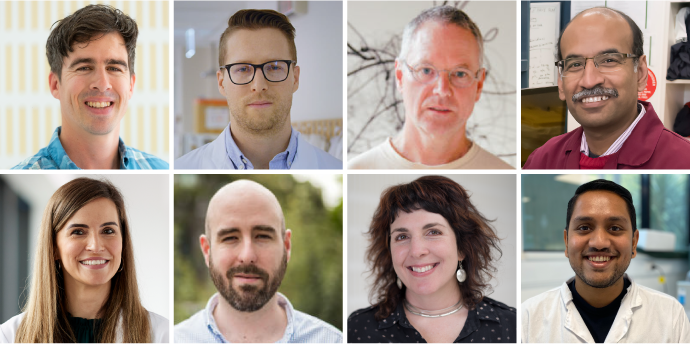
The nominees are:
-

Dr Cameron Bentley earned his PhD from Monash University and later worked as a Senior Research Fellow at the University of Warwick, supported by Endeavour, Marie Skłodowska-Curie, and Ramsay Memorial Fellowships. Currently a lecturer and ARC DECRA Fellow at Monash University, Dr Bentley’s research combines electrochemical imaging with co-located microscopy and spectroscopy to solve structural problems in electromaterials science. He has published over 60 peer-reviewed articles and received the 2020 Early Career Analytical Electrochemistry Prize and the 2023 Alan M. Bond Medal.
-
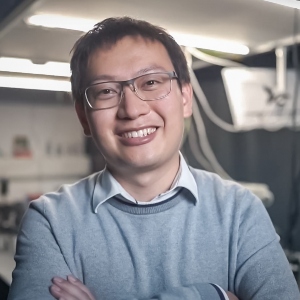
Dr Haoran Ren is a DECRA Fellow and leads the Structured Nanophotonics Group at Monash University. Over the past five years, he has secured more than $2 million in research funding, including Monash Uplift Grants, a DECRA Fellowship, a Discovery Project, and fellowships from Macquarie University and Humboldt. Dr Ren is also an Associate Investigator for the ARC Centre of Excellence for Transformative Meta-Optical Systems. He has published 30 first- and corresponding-authored papers in leading journals such as Science, Nature Photonics, and Advanced Materials. His numerous awards include the SPIE Best Paper Award, Rising Stars of Light, and the ANZOS Geoff Opat Early Career Researcher Prize. Dr Ren has delivered over 30 invited talks at major international conferences and serves as Chair of the OPTICA Photonic Metamaterials Technical Group.
-

Dr Matthew Snelson is an Accredited Practicing Dietitian and National Heart Foundation Postdoctoral Fellow, currently based in the Hypertension Research Laboratory at Monash University since 2023. His research focuses on the role of diet and intestinal permeability in hypertension. Prior to this, Dr Snelson worked in the Department of Diabetes at Monash University, where his research explored how diet impacts diabetic kidney disease through gut microbiota modulation. He completed his PhD in 2019 at Monash University and has published 35 peer-reviewed articles. He has received 19 national and international awards and delivered numerous presentations at conferences. Dr Snelson is also the immediate past president of the Australasian Human Microbiome Research Network.
-
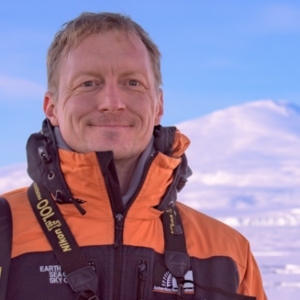
Dr Matthias Dehling’s research explores species community diversity and their responses to environmental changes. He applies innovative analytical approaches, blending cutting-edge techniques with deep knowledge of natural ecosystems, from the Amazon rainforest to Antarctica. Dr Dehling has pioneered the integration of network ecology with functional, phylogenetic diversity, and macroecology, improving understanding of species' roles in ecosystems and how disturbances impact ecological communities. His work appears in top-tier journals such as Science and Nature Communications. Dr Dehling joined Monash University in 2022 as a Research Fellow in the ARC Special Research Initiative “Securing Antarctica’s Environmental Future,” applying his unique methodology to study Antarctic diversity.
-

Dr Yuval Sadeh is a research fellow at the School of Earth, Atmosphere and Environment, and is affiliated with NASA-Harvest. His work focuses on global food security through advanced remote sensing technologies. Specialising in crop yield forecasting, segmentation, and change detection, he has developed an innovative approach to yield prediction, particularly for data-scarce environments. His research provides critical insights into agricultural yields in conflict zones like Africa and Ukraine, reshaping how satellite data informs food security decisions. Yuval’s work offers both scientific advancements and practical solutions that can profoundly impact global agriculture.
-
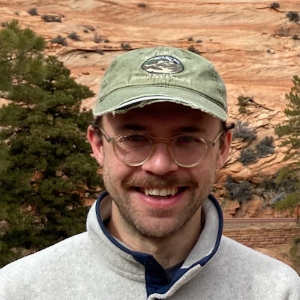
Dr Andrew Gunn specialises in the evolution of planetary surfaces, with a focus on Earth and Mars’ wind-blown landscapes. His work combines theory, simulations, experiments, and remote-sensing to decode how sand dunes reflect millennia of climate history in places like Australia’s red centre and Mars' north pole. Dr Gunn completed his PhD at the University of Pennsylvania in 2021, followed by a postdoctoral fellowship at Stanford University. He joined Monash University in 2022 and is a Chief Investigator on three ARC grants. His research has been published in top-tier journals and covered by The Conversation and the Smithsonian Magazine.
-
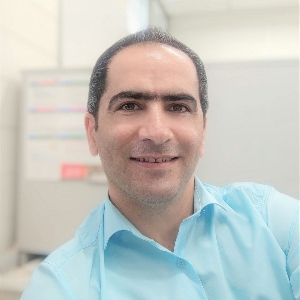
Dr Yousef Zoleikhaei is a postdoctoral research fellow at Monash University. His expertise lies in geochemical and geochronological methods applied to sedimentary basins and paleogeography. Completing his PhD in 2023, Dr Zoleikhaei’s research has significantly refined tectonic models for Gondwana’s northern margin and advanced sediment recycling methods. His work, published in leading geoscience journals, has bolstered Monash’s research profile. Beyond his research, Yousef plays a key role in managing the mineral processing and analysis laboratory, supporting postgraduate students in their work.
-

Dr Melissa Lee is a Lecturer and ARC DECRA Fellow at Monash University, specialising in group theory, the abstraction of symmetry. Since obtaining her PhD from Imperial College London in 2021, her research has resolved several longstanding open problems. Her work, including collaborations on the Monster group, has been widely cited. Dr Lee serves as the President of the Australian Algebra Group and is an editor for two peer-reviewed journals. Her research and leadership have established her as a significant contributor to the field of mathematics.
-
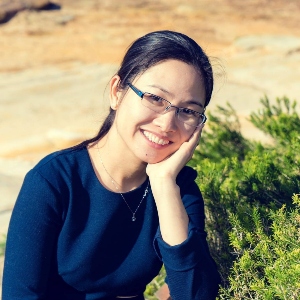
Dr Ngan Le is a mathematician specialising in partial differential equations (PDEs) and stochastic PDEs. Her research addresses gaps in traditional PDE models, building new mathematics for non-linear and irregular systems. Dr Le’s work has broad applications, including in magnetism and turbulence. She integrates tools from analysis, probability, and computational mathematics. Her outstanding publication record and citation counts reflect her impact, and she has secured significant external funding, including three ARC Discovery Projects since completing her PhD.
-
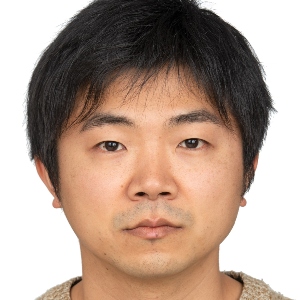
Dr Ryosuke Hirai is a stellar astrophysicist known for his work on binary systems, core-collapse supernovae, and stellar mergers. His development of advanced numerical tools, including a 3D magneto-hydrodynamics code, has been widely adopted. Dr Hirai completed his PhD at Waseda University in 2017 and has held prestigious fellowships at Oxford and RIKEN. He is a rising leader in Australian astronomy, serving as Program Chair of the ARC Centre of Excellence for Gravitational Wave Discovery and a member of several national committees. His research continues to make significant contributions to astrophysics.
Award for Research Engagement and Impact
View
This award recognises excellence by researchers who have achieved, or are currently achieving, outstanding economic and/or societal impacts.
The nominees are:
-
Associate Professor Jeremy J. Barr (School of Biological Sciences), Professor Anton Peleg (Biomedicine Discovery Institute, Monash School of Translational Medicine & Alfred Health), Dr Fernando Gordillo Altamirano (Monash School of Translational Medicine & Alfred Health), Dr Dinesh Subedi (School of Biological Sciences)
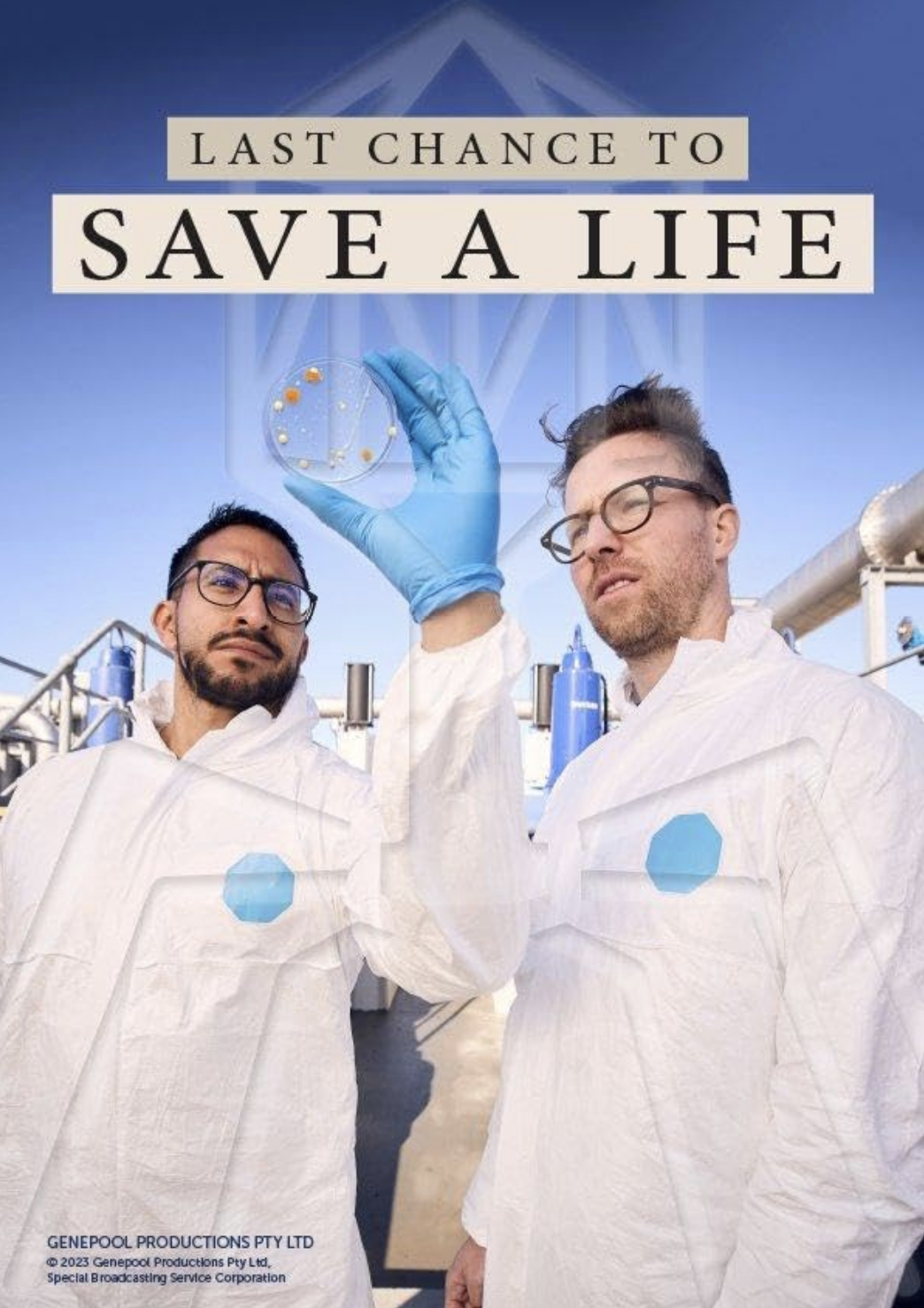
Associate Professor Jeremy J. Barr, Professor Anton Peleg, Dr Fernando Gordillo Altamirano, and Dr Dinesh Subedi are key members of the VICPhage team, which has established Victoria’s first clinical phage therapy service. This program targets patients with life-, limb-, or function-threatening antibiotic-resistant infections where no other treatments are available. VICPhage is a bench-to-bedside initiative involving phage research and clinical product development at the Monash Phage Foundry, with phage therapy administered and patients followed up by the clinical team at The Alfred Hospital. The team’s groundbreaking work was showcased in the 2024 SBS documentary Last Chance to Save a Life, which highlights the potential of phage therapy to save lives. This 100-year-old treatment offers hope in the battle against antibiotic resistance, providing a new option for patients when conventional therapies fail. The documentary is available for streaming on SBS.
-

Dr Kimberley Reid’s research focuses on rainfall patterns and their impacts, contributing vital insights into extreme weather events. Her work not only advances scientific understanding but also informs public communication, including providing expert testimony at the Victorian Parliamentary Inquiry into the 2022 Floods. Recognised for both her research and engagement, Dr Reid has been nominated for two Walkley awards and a Quill award, highlighting her excellence in science communication. She continues to bridge the gap between scientific research and practical, real-world applications.
-
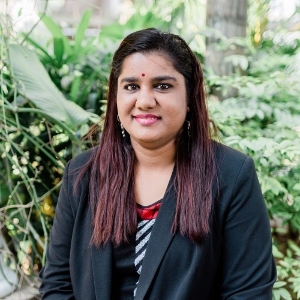
Associate Professor Pushpamalar Janarthanan is a leading expert in biomaterials, known for her groundbreaking work on extracting cellulose from sago biomass to create carboxymethylcellulose (CMC). Her 2006 article laid the foundation for developing pharmaceutical-grade CMC for vegetarian capsules, addressing both market demands and environmental concerns. With over 1466 Scopus citations and an h-index of 22, her research portfolio spans 20 articles and numerous patents. As a principal investigator under the Fundamental Research Grant Scheme (FRGS), Associate Professor Pushpamalar has had a significant impact on sustainable innovations in the pharmaceutical industry.
Publication Award
View
This award recognises an outstanding and innovative research paper published by one or more researchers in the Faculty. The award is for a single article, monograph, or book consisting of original research, and published within the 10 calendar years preceding the year of the award.
The nominees are:
-
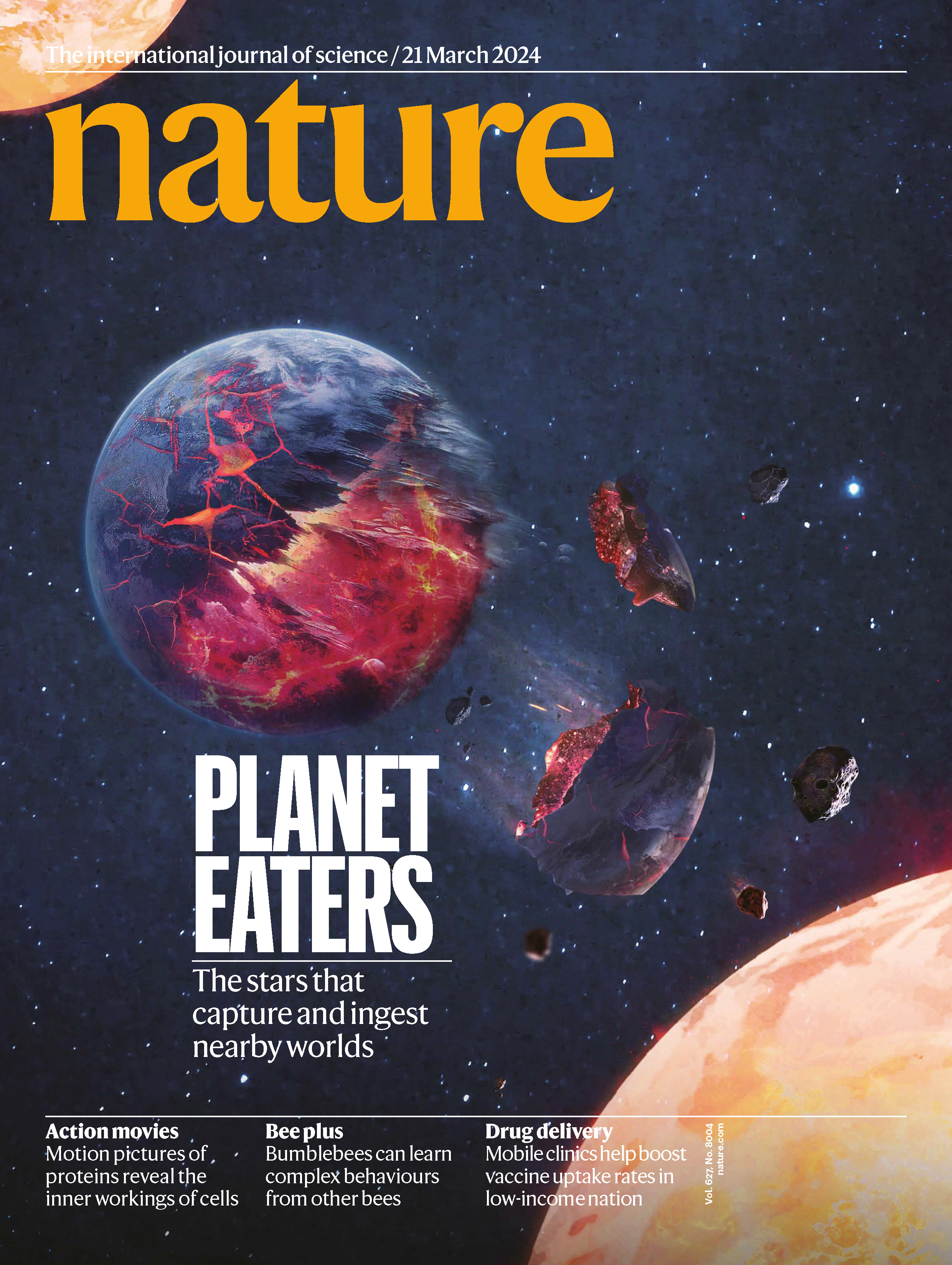
Dr Fan Liu’s paper, At Least One in a Dozen Stars Shows Evidence of Planetary Ingestion, was published in Nature (2024). This groundbreaking study reveals the first clear evidence of planetary ingestion in main sequence stars and offers critical insights into star-planet interactions, challenging existing theories of planetary engulfment.
Citation: Dr Fan Liu, et al. Nature. 2024;627:501. https://www.nature.com/articles/s41586-024-07091-y
-

Professor Dustin Marshall co-authored a ground-breaking study, Fish Reproductive-Energy Output Increases Disproportionately with Body Size, published in Science (2018). This work has had a profound impact on both fundamental biology and applied fisheries science, offering new insights into the reproductive strategies of marine species.
Citation: Barneche DR, Robertson DR, White CR, Professor Dustin Marshall. Science. https://www.doi.org/10.1126/science.aao6868
-
Professor Francine Marques, along with her colleagues, has conducted pioneering research on the influence of maternal diet and gut microbiota on the predisposition to cardiovascular disease in offspring. The study, Maternal Diet and Gut Microbiota Influence Predisposition to Cardiovascular Disease in Offspring, was published in Circulation Research (2024). It includes a wide range of contributors and has made a significant impact by exploring the early-life determinants of cardiovascular health.
Citation: Jama HA, et al. Circ Res. 2024;135(4):537-539. https://www.doi.org/10.1161/CIRCRESAHA.124.324614
-
Dr Lee Miles co-developed CRIMP, a CRISPR/Cas9 insertional mutagenesis protocol and toolkit, which represents a significant advancement in targeted genomic integrations. This research, published in Nature Communications (2024), has enabled the creation of highly efficient disease models in zebrafish, streamlining drug screening and genetic modification processes.
Citation: Dr Lee Miles, Calcinotto V, Oveissi S, et al. Nat Commun. 2024;15:5011. https://www.doi.org/10.1038/s41467-024-49341-7
-

Dr Ariaan Purich co-authored a study, Record Low Antarctic Sea Ice Coverage Indicates a New Sea Ice State, which highlights the alarming decrease in Antarctic sea ice since 2016. This research, published in Communications Earth & Environment (2023), suggests that ocean warming has led to a new state of Antarctic sea ice, with far-reaching impacts on global ecosystems.
Citation: Dr Ariaan Purich, Doddridge E. Commun Earth Environ. 2023;4:314. https://www.doi.org/10.1038/s43247-023-00961-9
-

Professor Zihua Guo’s paper, The Zakharov System in 4D Radial Energy Space Below the Ground State, was published in the American Journal of Mathematics (2021). This work is a key contribution to understanding the Zakharov system, a PDE describing wave propagation in charged particles, and opens new avenues for further study.
Citation: Professor Zihua Guo, Nakanishi K. Am J Math. 2021;143(5):1527–1600. https://www.doi.org/10.1353/ajm.2021.0039
-

Associate Professor Daniel Mathews published The Sensitivity Conjecture, Induced Subgraphs of Cubes, and Clifford Algebras in the Journal of the European Mathematical Society (2022). This work advances our understanding of combinatorial mathematics and has significant implications for theoretical computer science.
Citation: Associate Professor Daniel Mathews. J Eur Math Soc (JEMS). 2022;24(12):4201-4205. https://www.doi.org/10.4171/jems/1180
Award for Research Community
View
This award is designed to reward excellence by individual researchers, research professionals, and/or research teams whose contributions through service, mentorship, leadership, and involvement in the university, or in their discipline, or beyond have enabled research excellence and research impact, on a broader scale than an individual contribution.
The nominees are:
-
Associate Professor Daniel Mathews and Professor Jessica Purcell, Associate Professor Norman Do, Dr Andy Hammerlindl, Dr Dionne Ibarra, Dr Jian He, Dr Josh Howie, Dr Sakshi Jain, Dr Marisa Cantarino, Dr Michelle Strumila, and Dr Yovani Villanueva, School of Mathematics
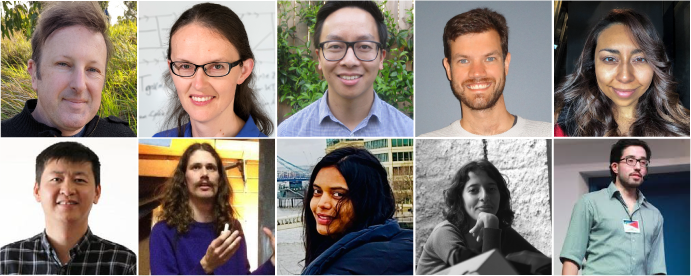
The Monash Topology Group consists of four continuing academics, five postdoctoral researchers, two teaching fellows, and 12 PhD students, all building a community of mathematics at Monash and throughout Australia. The group has run a weekly seminar continuously since 2016, which expanded to include all of Australia in 2020. The resulting Australian Geometric Topology Webinar, an online seminar attracting speakers and participants from around the world, continues to run every other week. Monash Topology has helped build a global research community by organising international workshops, receiving competitive funding for six workshops near Melbourne since 2021. PhD students are also building community. They collaborated with peers in Sydney and Brisbane to create the student community “Graduate Talks in Geometry and Topology,”, culminating in a one-week conference in 2022. Topology group members have been central to fostering community among undergraduates, forming the Gender Equity in Mathematics mentoring program in 2022.
-
The Research Committee has revitalised the School's seminar series by implementing new guidelines to enhance speaker and host engagement and achieve gender equity in our invited speakers list. We designed a feedback and incentive system that has significantly increased participation from PhD students, Early Career Researchers (ECRs), and lab groups (more than 40 attendees on average for nine seminars so far this year, with an average of 17 attendees providing feedback, mean score of 9.1/10).Through these efforts, we've created a more inclusive and interactive seminar environment (more than 50 per cent of women across 40 seminars over two years) that fosters interdisciplinary connections and a broader appreciation of diverse research topics. This has been crucial in strengthening our School’s research culture and promoting sustained engagement with academic events.
NEW! Researcher of the Year Award
View
The Researcher of the Year Award is designed to reward an individual who has achieved exceptional research outcomes in the previous one to two years. This award celebrates individuals who have not only achieved a pivotal research outcome but also embody the Monash University values and exhibit exceptional leadership both internally and across the wider research community.
The nominee is:
-
Professor Marshall has led a research group in the School of Biological Sciences since 2012 and studies the causes and consequences of variation in biological size, approaching the subject from both fundamental and applied perspectives. His research spans a diverse range of approaches, including empirical life history studies, theoretical modelling, meta-analyses, high-throughput metabolic phenotyping, and biogeographical modelling. Initially focused on marine invertebrates, his work now encompasses a wide variety of study systems, from algae and phytoplankton to E. coli, fish, and mammals. His work has appeared in top journals, 200+ journal publications, including papers in Science, PNAS, Current Biology and Nature Ecology & Evolution, with over 14,000 citations. Additionally, he has served as the editor of four journals—Ecology Letters, Oikos, Evolution, and Functional Ecology—and until 2019, was the Deputy Editor-in-Chief of Oikos.
NEW! Research Team of the Year
View
The Research Team of the Year Award is designed to reward a team who has achieved an exceptional research outcome in the previous one to two years. Monash University is dedicated to research that spans the spectrum from discovery to impact, including challenge-led transdisciplinary teams and pure research teams. This award has been designed accordingly to reward research teams who have not only achieved a pivotal research outcome but those who also embody the Monash University values and exhibit exceptional collaboration both internally and across the wider research community.
The nominee is:
-
Associate Professor Ailie Gallant and Professor Julie Arblaster, Sook Chor, Professor Dietmar Dommenget, Stephen Gray, Professor Christian Jakob, Silvana Katragadda, Associate Professor Shayne McGregor, Dr Ariaan Purich, Professor Michael Reeder, Professor Steven Siems, Professor Liz Ritchie-Tyo, Dr Martin Singh, Alice Wilson, Dr Holger Wolff, and a large number of talented and dedicated postdocs and students!

The Weather and Climate Group is a high-performance team who work closely to advance knowledge of, and engagement with, climate and atmospheric science. Spanning a range of career stages, the diverse team of academic, professional, and technical staff produces world-leading research with real-world impact.
The team’s academic success is reflected in a strong publication record in leading journals and a high citation rate – over 9000 combined citations in 2023 alone. All academic team members are Chief Investigators on at least one of four current ARC and National Research Initiatives that have combined funding of approximately $140 million. Team members have received awards from the Australian Academy of Sciences and the Australian Meteorological and Oceanographic Society.
The team’s strong reputation for scientific and engagement excellence makes it a “go to” for expert opinion on climate change and weather hazards from government agencies, private industry, and the media.