Research Excellence by an Early Career Researcher 2025
This Award recognises research excellence by early career researchers who are within five years of the start of their research careers.
The winner(s) and nominees are:

This Award recognises research excellence by early career researchers who are within five years of the start of their research careers.
The winner(s) and nominees are:
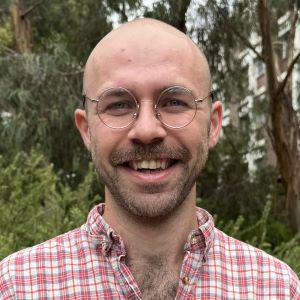
Andrew is an emerging international expert in arid landscapes, who was awarded the 2024 AGU Luna Leopold Early Career Award and the 2023 ISAR Early-Career Research Award. He has published 18 peer-reviewed papers in four years, including lead-author papers in Nature Communications, Geology, and Geophysical Research Letters. Andrew’s H-index is 11, growing at 2.1/year, above the 85th percentile for his field. He is CI on three ARC and two NCI grants totalling $1.46M, and he co-wrote two grants supporting his PhD/postdoc ($1.13M).

Melissa is a Lecturer and ARC DECRA Fellow at the School of Mathematics, specialising in group theory, the abstraction of symmetry. Since earning her PhD from Imperial College London in 2021, she has solved key open problems and contributed to research on the Monster group. Her work appears in top journals and is widely cited. As President of the Australian Algebra Group and journal editor, Melissa is a leading figure in pure mathematics research and academic leadership.

Ariaan is an internationally recognised climate scientist with 35 publications in top-tier journals, including Nature Climate Change and PNAS. Her work has earned over 3,800 citations and an h-index of 26, with a field-weighted citation impact of 5.4, well above global averages. Ariaan collaborates widely, with half her papers involving international co-authors. Her research consistently demonstrates high impact and innovation, and she maintains an exemplary track record for her career stage.

In evolutionary and ecological genomics – the study of how genomic variation shapes organismal adaptation to environmental pressures – the pre-eminent research output is the peer-reviewed journal article. Earlier this year Paul co-led a study in Nature Ecology & Evolution which revealed just how quickly plants can evolve when introduced to new regions.

Rebekah’s research focuses on designing metal-based therapeutics to combat neglected tropical parasites. She pioneered novel antimony and gallium complexes, revealing parasite-selective inhibition and advancing metal-ligand synergy. Her work highlights the versatility of metals in drug design and their biochemical targeting. Beyond research, Rebekah contributes actively to undergraduate teaching, developing materials and delivering lectures in Bioinorganic Chemistry. Her strong SETU results reflect her excellence in both academia and education, making her a valued member of the Faculty.

Evgeni is a theoretical astrophysicist specialising in gravitational dynamics, compact object mergers, and planet formation. He has 41 publications (15 lead-author, two single-author), including a lead-author Nature paper, and over 1000 citations (h-index 18). His work appears in top journals like ApJ, MNRAS, and ApJL. He’s delivered 45+ seminars and 30+ conference talks, and was invited to speak at major workshops and schools across Europe and Australia, reflecting his growing international impact.

Yi-Xian researches tropical atmospheric dynamics, focusing on convective quasi-equilibrium to understand extreme rainfall. His work appears in top journals like Geophysical Research Letters, Journal of Climate, and Journal of the Atmospheric Sciences. He emphasises theory-driven, analytical approaches over case studies, using frameworks like vertical mode decomposition. Yi-Xian collaborates internationally with institutions in the USA, Japan, and Taiwan, contributing significantly to data analysis, interpretation, and coding in globally recognised climate science research.