
Professor Kellie Tuck’s new mission: shaping the future of chemical safety on the global stage
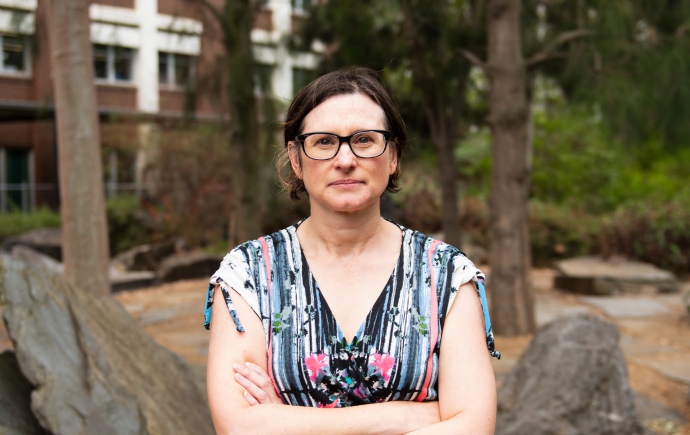
Professor Kellie Tuck
Professor Kellie Tuck joins the OPCW's Advisory Board to promote ethical chemistry education, inspired by her visit to the Hiroshima Peace Memorial Museum. She aims to prevent the misuse of chemical knowledge and ensure chemistry serves humanity positively.
For more than three decades, Professor Kellie Tuck has lived and breathed chemistry.
From the quiet hum of laboratories at the Monash University School of Chemistry to the wider world of chemical synthesis and medicinal chemistry her career has been defined by the pursuit of discovery.
Now, she finds herself at the heart of the Organisation for the Prohibition of Chemical Weapons, serving on its Advisory Board on Education and Outreach, helping to shape the ethical foundations of chemistry for future generations.
Her journey to this global stage wasn’t predetermined.
“I’ve always wanted to make a difference, to make the world a better place,” she says.
But it was a visit to the Hiroshima Peace Memorial Museum in 2011 that cemented her drive to link chemistry with a humanitarian mission.
“Schoolchildren walked through and were taught about what happened to their country and why it should never happen again,” she recalls.
“That really stuck with me. I want to communicate why we can’t let certain things happen again. I want to use my skills to educate the next generation of chemists on why remembering what has happened is so important.”
Established alongside the Chemical Weapons Convention (CWC) in 1997, the OPCW has played a pivotal role in eliminating chemical weapons worldwide, a mission that earned it the Nobel Peace Prize in 2013. As of 2023, all 193 signatories to the Convention had successfully destroyed their chemical weapon stockpiles.
But the work is far from over. Now, the challenge lies in ensuring these weapons are never reintroduced.
Professor Tuck’s new role is central to this mission.
The Advisory Board on Education and Outreach is tasked with informing how chemistry curricula worldwide can incorporate lessons on chemical ethics and responsible science.
With technology and scientific advancements moving at a breakneck pace, she believes it is more crucial than ever to instil awareness of chemistry’s dual-use nature—its potential for both ground-breaking innovation and devastating harm.
“The world is changing in terms of where we are technologically and scientifically,” Professor Tuck explains.
“Things that were unthinkable 50 years ago are now possible. With that progress comes responsibility. We must ensure that chemists—especially young scientists just starting their careers—understand the impact their work can have on the world.”
Her appointment to the board was no accident.
A long-time member of the Royal Australian Chemical Institute (RACI) and the Royal Society of Chemistry UK, Professor Tuck came across the opportunity in an RACI notice and applied. Among multiple Australian applicants, she was selected for her expertise in both research and education.
At Monash University, she leads a research group focused on medicinal and supramolecular chemistry, sustainable surfactants, and lanthanide-based detection systems. Her collaborations span academia, industry, and government, including partnerships with Unilever and the Defence Science and Technology Group.
Despite her extensive experience, joining the OPCW was an eye-opening moment for her.
“I was surprised at how little we talk about chemical weapons in academic settings. It made me realise that we need to integrate this discussion into chemistry education. It’s not enough to teach students how to make molecules; we need to teach them the responsibility that comes with that knowledge.”
Beyond research, Professor Tuck has earned multiple teaching and mentoring awards, a testament to her commitment to education. Now, she brings that same passion to the global arena.
For Professor Tuck, the work is about more than just policy and pedagogy; it’s about safeguarding the future.
“The world has already seen the horrific consequences of chemical warfare,” she says. “We can’t afford to be complacent. Chemical weapons have been eliminated, but that doesn’t mean they won’t return. We have to stay vigilant, and education is the key to prevention.”
The Advisory Board on Education and Outreach will not only work to improve chemistry curricula but also develop strategies to engage the public and policymakers.
Professor Tuck hopes to use her position to advocate for more comprehensive education on chemical ethics, particularly at the university level.
“Most global chemistry programs don’t have dedicated coursework on the ethical implications of chemistry,” she notes. “That needs to change. Students should be learning about the history of chemical weapons and the importance of international treaties alongside their organic chemistry.”
As she steps onto the world stage, her mission is clear: to ensure that chemistry remains a force for good, that the lessons of history are not forgotten, and that science continues to serve humanity rather than harm it.
“It’s easy to think that science exists in a vacuum, but it doesn’t,” she says. “Science shapes the world. It has the power to heal, to innovate, to create—but also to destroy. As chemists, we have a duty to make sure our work never contributes to harm. And that starts with education.”
For Professor Kellie Tuck, chemistry has always been about discovery. But now, it’s also about protection—ensuring that the knowledge she has spent her life building is used not for destruction, but for the betterment of humanity.
Further information
Silvia Dropulich
Marketing, Media & Communications Manager, Monash Science
T: +61 3 9902 4513 M: +61 435 138 743
Email: silvia.dropulich@monash.edu