
Was Darwin wrong? Hermaphrodites found to be more energy efficient than animals with two sexes
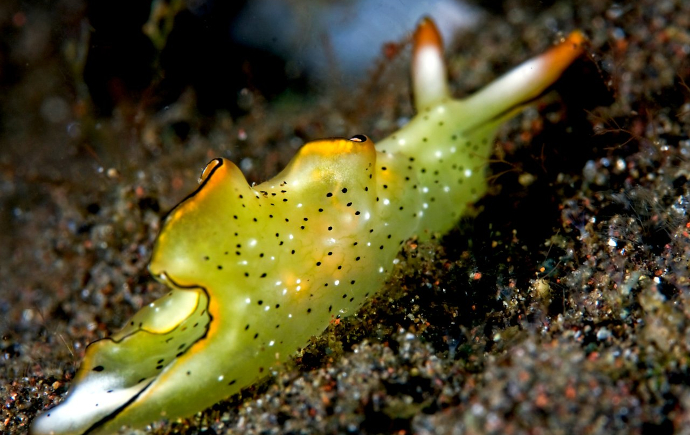
Caption: Study opens new questions about how mating systems evolve and how sexual diversity shapes ecosystems across the world’s oceans
Credit: Rebecca Tse
A 150-year-old assumption dating back to Charles Darwin has been upended by new Monash University research published Proceedings of the Royal Society B.
Darwin, and many scientists since, argued that hermaphroditism, where one organism produces both eggs and sperm, must carry a higher energetic cost, explaining why it is far less common in animals than plants.
But a global analysis of 536 marine invertebrates has found the opposite to be true.
“We were honestly shocked,” said lead author Dr George Jarvis, a recent PhD graduate from Monash University’s School of Biological Sciences.
“On average, hermaphrodites use about 27 per cent less energy than species with separate sexes. That’s like skipping breakfast every day for the rest of your life and still thriving.”
The research team accounted for body size, temperature, mobility and evolutionary history, all major drivers of metabolic rate.
“Even after controlling for all these factors, hermaphroditic animals consistently had lower resting metabolic rates,” Dr Jarvis said.
“It completely flips the long-standing assumption that combining the sexes comes at a biological cost.”
Hermaphroditism offers clear reproductive benefits: any encounter with another of the same species can lead to mating without needing to find a compatible sex partner. But this study reveals that the benefits likely extend far beyond convenience.
“Metabolic rate underpins everything, how fast you grow, how long you live, and how quickly populations can expand,” said senior author Professor Dustin Marshall.
“If hermaphrodites are fundamentally more energy-efficient, then their life histories and population dynamics could differ in profound ways.”
Lower metabolic rates suggest that hermaphroditic species may grow more slowly but achieve larger population sizes and longer lifespans than species with separate sexes.
“This is the first large-scale test of Darwin’s idea, and our findings challenge it,” Professor Marshall said.
“It looks like hermaphroditism isn’t rare in animals because it’s costly. In fact, it might be rare for entirely different, and still poorly understood, reasons.”
The study opens new questions about how mating systems evolve and how sexual diversity shapes ecosystems across the world’s oceans.
Further information
Silvia Dropulich
Marketing, Media & Communications Manager, Monash Science
T: +61 3 9902 4513 M: +61 435 138 743
Email: silvia.dropulich@monash.edu