
Australia’s climate is shifting at breakneck speed, and a Monash expert is helping explain why
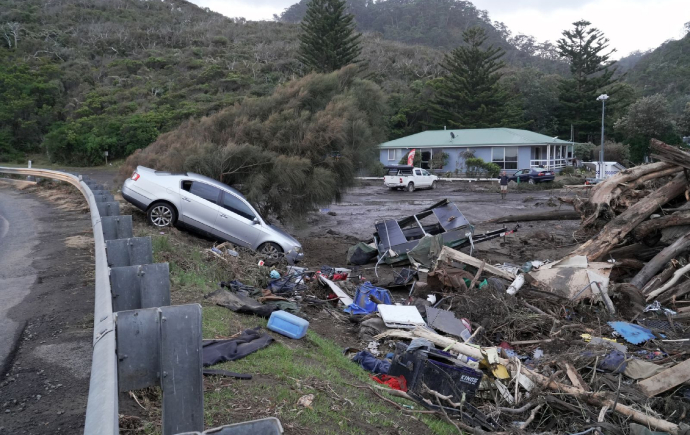
Australia’s climate is now operating on a different baseline.
Credit: Victoria State Emergency Service, and the photographer Tim Young
Australia’s 2025–26 summer delivered some of the most abrupt and damaging swings between extreme heat, fire weather and flooding on record. A new national report released by the Climate Council, Breakneck Speed: Summer of Climate Whiplash, provides the clearest picture yet of how rapidly these extremes are accelerating.
Monash University Adjunct Professor (Practice) Andrew Watkins, from the School of Earth, Atmosphere and Environment, is a co‑author of the report. A former Head of Climate Prediction at the Bureau of Meteorology and a lead author of Australia’s first National Climate Risk Assessment, Professor Watkins brings decades of expertise in climate drivers, extreme weather and seasonal forecasting.
Professor Watkins said the defining feature of this summer was not just the severity of individual events, but the speed at which conditions flipped.
“We saw catastrophic fire danger, flash flooding and record‑breaking heat occurring in rapid succession,” Professor Watkins said. “The pace of these transitions is accelerating, and that’s what makes this summer so significant.”
He said the report shows that Australia’s climate is now operating on a different baseline.
“What used to be rare is increasingly becoming routine,” he said. “Even during a La Niña when we would normally expect cooler conditions, we saw extreme heat records fall across multiple states. That tells us the background climate has fundamentally shifted.”
The report documents major impacts across the country, including:
- catastrophic fire conditions across Victoria followed days later by flash flooding
- record heatwaves in South Australia and inland New South Wales
- flash drought conditions emerging within weeks
- unprecedented rainfall and flooding across Queensland and the Northern Territory.
Professor Watkins said these rapid swings are placing increasing pressure on emergency systems, infrastructure and communities.
“When extremes arrive back‑to‑back, the impacts compound,” he said. “Fire crews, health systems, local councils and households are all being asked to respond to events that are faster, more intense and less predictable.”
Professor Watkins has also played a key strategic role in the development of the Monash Climate Change Science Hub, including delivering the keynote address at the Hub’s launch, where he presented the findings of the National Climate Risk Assessment.
The full Climate Council report is available at: Breakneck Speed: Summer of climate whiplash | Climate Council
Further information
Silvia Dropulich
Marketing, Media & Communications Manager, Monash Science
T: +61 3 9902 4513 M: +61 435 138 743
Email: silvia.dropulich@monash.edu