
Dr Melissa Lee: When you finally crack a problem you’ve been working on, it makes the struggle feel worthwhile
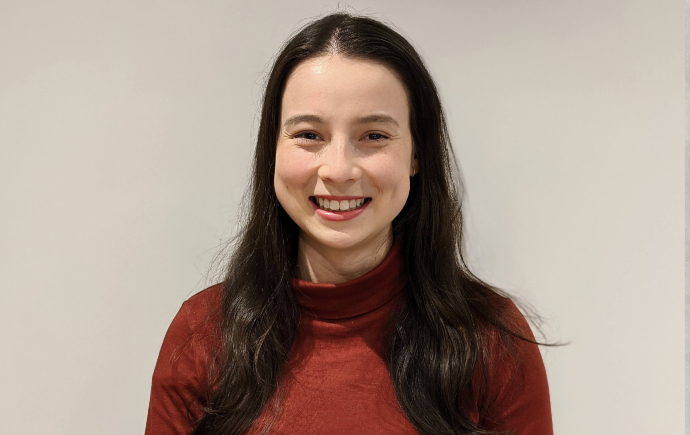
Dr Melissa Lee
For Dr Melissa Lee, mathematics is more than numbers, it is the language of symmetry, structure, and the hidden patterns that shape our universe. A leading researcher in group theory, Melissa studies the deep mathematical principles that underpin everything from molecular structures to models of the cosmos. “Symmetry is a fundamental organising concept in our universe,” she explains. “Group theory helps us understand it.”
Her work sits at the frontier of pure mathematics, where the problems are challenging, abstract, and often unsolved for years at a time. “The most exciting moments are the rare breakthroughs,” she says. “When you finally crack a problem you’ve been working on for months or even years, it makes the struggle feel genuinely worthwhile.”
Melissa is also the co‑lead of computation in the newly funded Centre of Excellence in Mathematics of Quantum Era Security and Trust (MathQuEST), a national initiative shaping the mathematical foundations of cybersecurity in the quantum age. Pure mathematics, she notes, often becomes tomorrow’s applied science. “Abstract ideas about symmetry have ended up central to cryptography, coding theory, materials science, and theoretical physics. Solving tomorrow’s problems today is one of the cool things about maths.”
Her research is increasingly intersecting with artificial intelligence. After attending a joint workshop between MATRIX (Creswick) and MFO Oberwolfach (Germany), she began exploring how AI might accelerate mathematical discovery. “It’s an emerging field,” she says. “I’m excited about what these tools could unlock.”
A defining moment in Melissa’s career came in 2023, during her first year at Monash, when she and two colleagues solved a high‑profile problem related to the famously complex Monster group. “It gained us quite a bit of notoriety,” she laughs. The result appeared on Wikipedia and opened doors that accelerated her career.
Her journey through a male‑dominated field has brought challenges, including instances of sexism and harassment. But Melissa is clear about how she responds now that she is more senior: “I use my position to call out such behaviour and support those who’ve been subjected to it.” She credits strong mentors, especially Professor Cheryl Praeger AC, one of Australia’s most influential mathematicians, for shaping her development. “I’ve learned a great deal from her.”
Melissa’s advice to young women entering science is direct and encouraging: “Go for it. Take every opportunity with both hands and find mentors who will support you and cheer you on.”
Looking ahead, she sees both promise and complexity. AI may accelerate mathematical discovery, but she worries about its impact on critical and creative thinking. “My role is to balance engaging with new tools while fostering the rigorous, independent problem‑solving that drives real breakthroughs.”
Outside of research, Melissa enjoys puzzles of all kinds, crochet, and rock climbing, a fitting mix of logic, creativity, and challenge. And she shares a fun fact that reveals her love of patterns beyond mathematics: during her PhD in London, she set herself the goal of seeing every Shakespeare play. “I managed about 30 out of 39,” she says. “I’m still working on finishing them off!”
Her story is a reminder that mathematics is not just about answers, it’s about curiosity, persistence, and the joy of uncovering the structures that shape our world.
This piece is part of our International Day of Women and Girls in Science profile series. Read more here.
Further information
Silvia Dropulich
Marketing, Media & Communications Manager, Monash Science
T: +61 3 9902 4513 M: +61 435 138 743
Email: silvia.dropulich@monash.edu