
From PFAS to climate risk: environmental challenges demand a new kind of leader
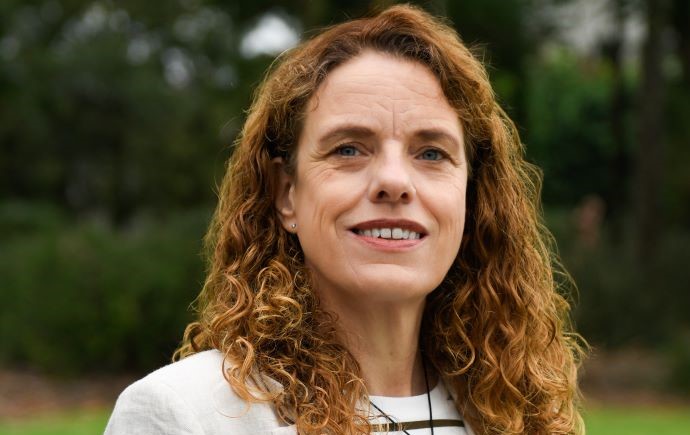
Professor Annette Bos
PFAS (per- and polyfluoroalkyl substances) contamination. Climate adaptation. Biodiversity loss. Renewable energy transitions. Circular economy.
These challenges may appear very different, yet they share a defining characteristic: none can be solved through science alone. Today’s environmental problems sit at the intersection of science, policy, governance, economics and community priorities, and they are accelerating faster than institutions and society can respond.
According to Professor Annette Bos, the recently appointed new Course Director of Monash University’s Master of Environment and Sustainability (MES), replacing Professor Bob Wong, the next decade will belong to professionals who can navigate this complexity. “Environmental challenges, like any other complex problem, do not sit within neat disciplinary boundaries,” she said. “Solving them requires people who can collaborate across many dimensions.”
For Professor Bos, who is also the Faculty of Science Associate Dean Sustainability and Society, this is not a new insight. More than a decade ago, she was among the specialist academics who helped shape the vision for the MES when Monash launched Australia’s first interdisciplinary master’s degree of this kind.
At the time, environmental education was still largely organised around individual disciplines, even as global challenges were becoming unmistakably interconnected. “We had long understood that future environmental leaders would need more than technical expertise,” Professor Bos said. “They would need the ability to understand complex systems, engage diverse stakeholders, interpret evidence, influence policy and drive meaningful change.”
Now, as Course Director, she sees that original vision not only validated, but more urgent than ever. Sustainability is moving from the margins to the centre of decision making across sectors as diverse as finance, health and infrastructure, but not yet at the pace these challenges demand.
Cases such as PFAS demonstrate why sustainability can no longer be treated as a peripheral concern. Recent landmark legal proceedings initiated by the Australian Government against manufacturing company 3M have drawn national attention to the long term environmental, health and economic impacts of these “forever chemicals”. PFAS reflects the ingenuity of modern chemistry. It is engineered for durability and widely used, in everything from non-stick cookware and waterproof clothing to electronics and firefighting foams. Their effectiveness led to their widespread adoption. But their persistence has come at a cost: long-term impacts on human and environmental health that were not fully anticipated, and which are now being confronted at scale, including through legal action.
That persistence is what makes PFAS such a complex, multi-dimensional challenge. These compounds can remain in soil, groundwater and waterways for decades, creating challenges that extend well beyond environmental science. Questions surrounding PFAS involve chemistry, toxicology, public health, regulation, governance, community trust, risk management, economics and legal accountability, simultaneously.
“PFAS is an important example of the complexity and uncertainty that increasingly defines environmental decision making,” Professor Bos said. “Understanding the science is essential, but science alone doesn’t determine outcomes, particularly in contexts where evidence is still evolving. We also need to consider governance, regulation, communication and broader social and economic implications, and be prepared to drive transformative change across systems.” For her, PFAS highlights why sustainability leadership today requires more than subject matter expertise. “The science helps us understand the problem, but responding effectively requires collaboration across government, industry, communities, regulators and policymakers, and the ability to navigate uncertainty while driving transformative change. That’s the kind of complexity our graduates are trained to navigate.”
The same pattern, complex problems being addressed through collaboration, is reshaping the sustainability sector more broadly. Climate adaptation is increasingly managed between scientists, policymakers, planners and communities. Renewable energy transitions are being driven by technological innovation alongside economic, regulatory and social considerations. Biodiversity conservation increasingly relies on partnerships across government, industry and local communities. These sustainability problems require integrated solutions which challenge and break through current cultures, structures and practices in our economies and societies. This requires a new generation of skills, including integrated problem-solving, systems thinking, futures thinking and both intra- and interpersonal competencies.
This shift is also reflected in what employers are seeking. Sustainability is becoming central to how organisations manage risk, respond to emerging challenges and create long term value. Across government, industry, consulting, NGOs and international development agencies, there is growing demand for professionals who can work across traditional boundaries, innovate and help organisations navigate increasingly complex sustainability challenges. Graduates of the MES are already contributing to areas including environmental management, sustainability strategy, policy development, conservation, international development and corporate sustainability.
As Course Director, Professor Bos sees her role as ensuring the program continues to evolve with the world it serves. “My vision for the course is to continue developing graduates who are not only capable of understanding sustainability challenges, but of responding to and leading solutions to them. We need people who can work across disciplines, translate knowledge into action, and bring diverse groups together around complex problems. More broadly, we need graduates across fields who can continue to innovate and create solutions that benefit society and the planet, while learning from the lessons these challenges have shown us.”
More than a decade after its launch, the MES remains focused on preparing graduates for exactly that. The need for leaders capable of understanding complexity, connecting disciplines and turning knowledge into action has never been more urgent.
Discover how our master’s programs are making an impact here.
Further information
Silvia Dropulich
Marketing, Media & Communications Manager, Monash Science
T: +61 3 9902 4513 M: +61 435 138 743
Email: silvia.dropulich@monash.edu