
19 March: National Close the Gap Day
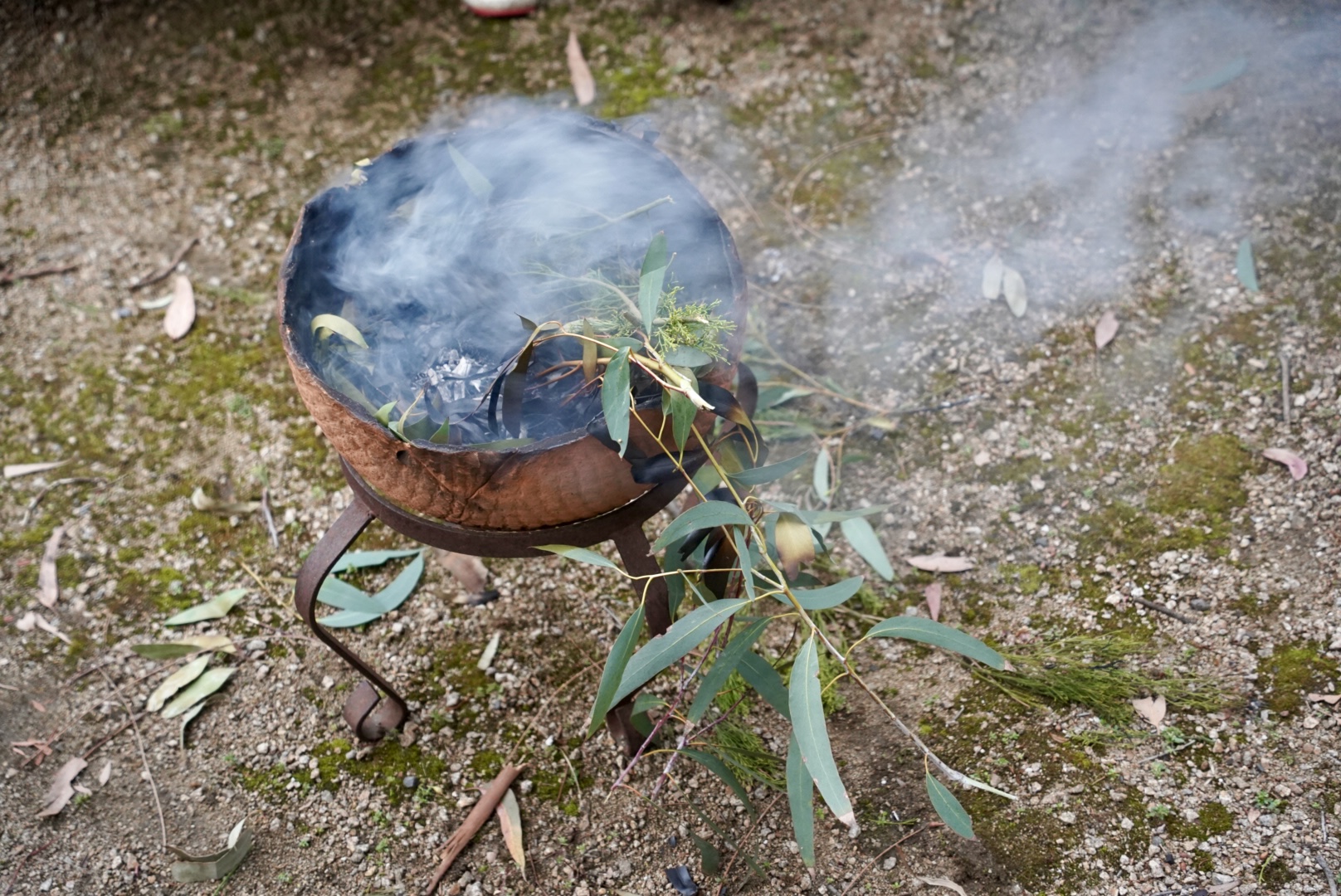
Cleansing on Boonwurrung Country. Photo by Luke Hodge (DVC Indigenous portfolio)
National Close the Gap Day is an important moment for all of us at Monash to reflect on our shared responsibilities, our commitments, and the work still ahead of us.
Today, communities across the country are calling for renewed action to address the inequities outlined in the National Agreement on Closing the Gap - inequities that continue to limit the opportunities for many Aboriginal and Torres Strait Islander peoples to live health, fulfilled and self-determined lives.
Despite two decades of frameworks, the reality remains clear - only 4 of the 19 targets are currently on track. Incremental change is not delivering the meaningful outcomes our communities deserve.
We know that deficit thinking - measuring Indigenous lives against Western benchmarks, or framing our peoples are needing to "catch up" - does not reflect the strength, excellence and resilience of cultures that have grounded this continent for more than 65,000 years. This mindset continues to hold back national progress and distracts from the structural reform that is required.
True progress must be Indigenous-defined. Success must be shaped by our communities' priorities and knowledges - connection to Country, culture, community, identity, wellbeing and self-determination - alongside health, education and employment outcomes.
And for Closing the Gap to deliver what it promised, Indigenous leadership must be central in policy design, governance, and decision-making. We know that programs designed without us, or delivered to us rather than with us, routinely fail to meet community needs. Sustainable change comes from Indigenous-led solutions and genuine partnership.
At Monash, this aligns with our commitments in Impact 2030, our revised Aboriginal and Torres Strait Islander Framework (2019-2030), to recognise respect and include Indigenous peoples, cultures and knowledges in everything we do, and to contribute to a future built on equity, truth-telling and transformation.
We're continuing to advance Indigenous leadership, research and advocacy through the Office of the Deputy Vice-Chancellor (Indigenous), Indigenous Congress and the Yoorrook Taskforce.
Today is a reminder to keep listening, to deepen our partnerships, and to ensure our actions reflect our words. Monash will continue to champion Indigenous-led initiatives, invest in Indigenous leadership, and work alongside communities to advance self-determined futures.
Change is possible - but only when Indigenous voices lead it. And all of us have a role to play.
National Close the Gap Keynote Event: Universities as Partners in Justice, Equity and Healing
With this year's theme ‘Community Voices: The Pathway to Justice, Equality and Healing’ we were honoured to host a keynote address from Sheree Lowe, Executive Director Social and Emotional Wellbeing, Victorian Aboriginal Community Controlled Health Organisation (VACCHO).
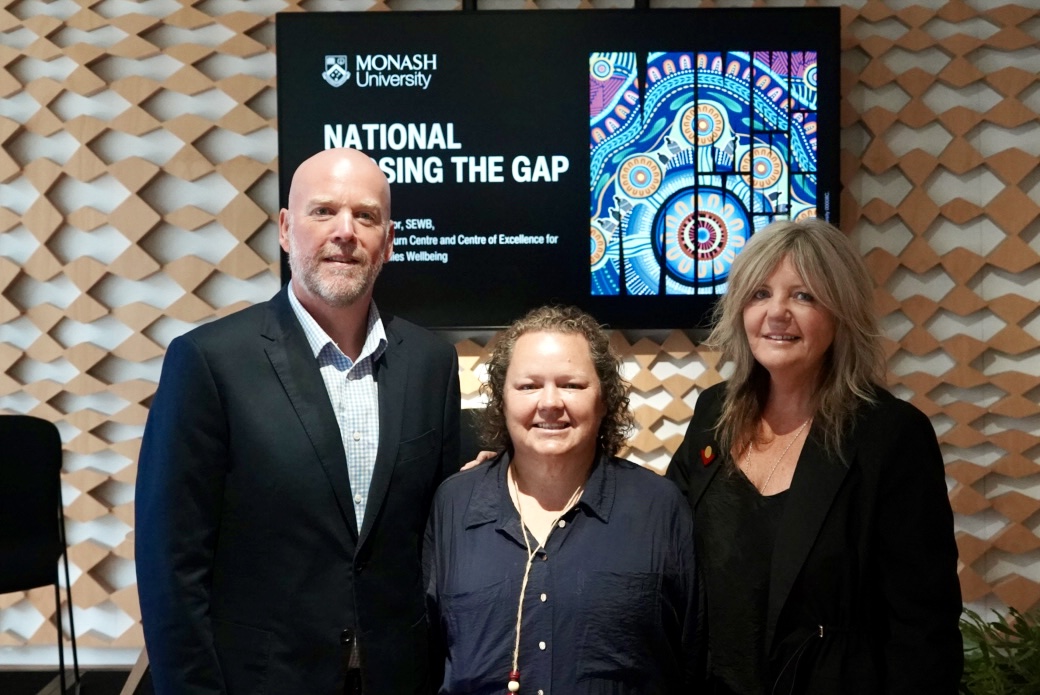
Deputy Vice-Chancellor (Indigenous) - Professor Tristan Kennedy, Executive Director VACCHO - Sheree Lowe, Senior Boonwurrung custodian - Caroline Martin | Photo by Luke Hodge (DVC Indigenous Portfolio)
Sheree is a Djab Wurrung and Gunditjmara woman with strong ties to Southwest Victoria - and has lived most of her life on Wadawurrung Country. With over 20 years of advocacy in Victoria's Aboriginal community, Sheree's career includes consulting for PwC on cultural safety and organisational transformation.
Central to the address was the role universities play and a call for Indigenous leadership to be embedded in all stages of decision making, emphasising that sustainable, impactful change can only be achieved through genuine partnership with community, Indigenous‑led solutions and strengthened Indigenous governance.
“We must acknowledge that Closing the Gap cannot be achieved through targets alone and it will not be solved by reports that sit on shelves collecting dust, or strategies that are designed without the voices of the people they are meant to serve.”
“Self-determination is not a barrier to progress - it is the pathway to it. A united vision for genuine change means moving beyond consultation to co-design and beyond engagement to shared decision-making, and beyond funding programs to investing in systems that work for Aboriginal people, not against them.”
Sheree also spoke to the power of truth-telling and “truth-listening”:
“For Aboriginal communities, truth telling is about ensuring that our histories are not erased and our voices are not sidelined. But it’s also about creating a future where our children do not have to keep explaining the past over and over again - a future where Aboriginal history is simply understood as Australian history.”
“Where every child learns the full story of this country - not the comfortable version, the honest version - because honesty is the foundation of respect - and respect is the foundation of justice.”
“So, when we talk about truth telling, we are not talking about reopening old wounds, we are talking about finally acknowledging them – and that is how healing begins.”