
Funding grant for NCHA research changing how hospitals support older people experiencing homelessness
Experiencing homelessness often has devastating impacts on a person’s health and wellbeing, leading to frequent visits to hospital emergency departments. Yet rarely in those busy settings are they asked about their housing situation.
Addressing that gap in health professionals’ knowledge and involving people with lived experience of homelessness were key priorities driving a pilot National Centre for Healthy Ageing Living Lab project, led by Monash University’s Professor Suzi Nielsen, Professor Elizabeth Sturgiss and Nilakshi Gunatillaka and supported by project partners at Peninsula Health, Launch Housing and Bolton Clarke. Their outstanding work has recently attracted a significant funding boost from The Jack Brockhoff Foundation to expand the project.
The Foundation’s generous AUD$575,000 Bold Futures Grant will help support The Deep End Living Lab: Transforming how Australian hospitals support older people experiencing homelessness project over the next three years.
Starting in January 2026, the project will bring about systemic change for routinely discussing housing during health care consultations and lead to improved recognition and support for older people experiencing housing issues in hospital settings.
Professor Nielsen said the research team will address these challenges by leveraging established collaborative partnerships with key housing and health sector agencies involved in the foundational work informing the intervention.
"We know there can be barriers to raising sensitive topics in healthcare settings. Our early work has already mapped these challenges and we are excited to now be able to develop the tools to change this," Professor Nielsen said.
The researchers thanked the Jack Brockhoff Foundation for sharing their vision of making effective changes to vulnerable people’s lives and enabling an expanded project to have even greater community impact and scalability.
Ms Gunatillaka said: “The investment by the Jack Brockhoff Foundation in our new project is so exciting because it reinforces the positive role that research can play in changing health outcomes and practices.
“We have always placed the voice of lived experience at the centre of our decision-making on research design and data collection and this boost in funding support will build on that outreach with this vulnerable community.”
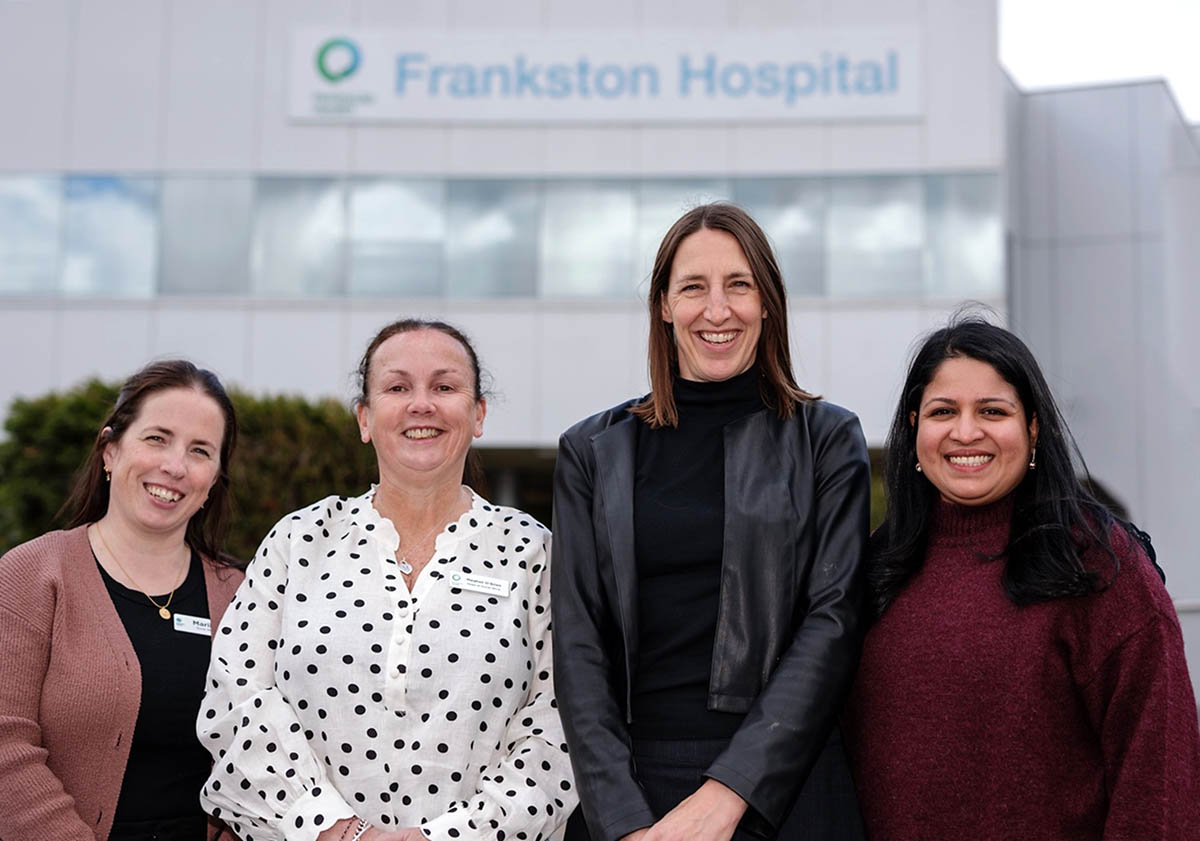
L-R, Marilyn Connolly, Deputy Director of Social Work, Peninsula Health; Megan O’Brien, Head of Social Work, Peninsula Health; Professor Suzanne Nielsen, Deputy Director, Monash Addiction Research Centre & Lead Researcher, National Centre for Healthy Ageing (NCHA); Nilakshi Gunatillaka, Research Program Manager, Monash University & Researcher, National Centre for Healthy Ageing (NCHA)
The research team also acknowledged the vital role of the National Centre for Healthy Ageing (NCHA), a partnership between Monash University and Peninsula Health, which is dedicated to transforming health and care for ageing Australians.
“We couldn't have accomplished this [Jack Brockhoff Foundation grant] without NCHA’s outstanding support and initial funding to do the foundational work,” Ms Gunatillaka said.
“NCHA Living Lab’s pivotal role in providing the initial seed grants that enabled the development of our strong partnerships, supported evidence-building, and informed policy and practice recommendations — laid the foundation for this success.”
NCHA Director, Professor Velandai Srikanth congratulated The Deep End Living Lab team on attracting further funding to continue their research.
“The Deep End Living Lab team exemplifies the excellent work underway in our Living Labs Research Program, which is the engine room of our innovation, tackling some of the most complex challenges in healthy ageing,” Professor Srikanth said.
“Both Professor Suzi Nielsen and Nilakshi Gunatillaka are leading lights in researching the impact that homelessness has on a person’s health and wellbeing.
“NCHA is very proud to see this initial pilot program expand, and we look forward to the positive impact it will have on improving outcomes for older Australians.”
What’s next?
The Deep End Living Lab: Transforming how Australian hospitals support older people project begins in early 2026.
The three key strategic objectives of the new project include:
- Designing a training and resource package to improve health professionals’ knowledge and confidence in discussing housing, adapting clinical care, and providing support and referrals in collaboration with frontline health workers, people with lived experience of housing instability, and housing sector workers.
- Conducting an implementation trial of the training package to establish feasibility and acceptability in a real-world hospital setting at Peninsula Health, a foundation partner of NCHA.
- Expanding existing partnerships to include hospital networks and housing support services from across Victoria to plan for state-wide scale-up.
Better integrating Australia’s health and housing sectors could disrupt patterns of disadvantage within our community – including those linked to homelessness – but there’s limited evidence on how to achieve this. This program of work will deliver new knowledge and practical guidance to make this integration possible.
Acknowledgements
This project is undertaken in partnership with Peninsula Health, Launch Housing and Bolton Clarke.
The researchers acknowledge the invaluable contributions of the lived experience experts who have shared their knowledge and are shaping this work in the hopes of benefitting their communities.