
Research seminar series: The sociotechnical dynamics of negative emissions, carbon removal, and solar geoengineering
| Event Name | Research seminar series: The sociotechnical dynamics of negative emissions, carbon removal, and solar geoengineering |
|---|---|
| Start Date | Feb 23, 2023 2:30 pm |
| End Date | Feb 23, 2023 3:30 pm |
| Duration | 1 hour |
| Description | Download presentation slides here Despite a long history of climate agreements since the Rio Earth Summit in 1992, greenhouse gas emissions have continued to grow over time, only temporarily slowed down by the first year of the COVID-19 pandemic in 2020. Negative emissions technologies (also known as carbon removal) may be employed to remove carbon dioxide from the Earth’s atmosphere. Negative emissions technologies are assigned (to a varying extent) an increasingly critical role within the range of strategies and trajectories that aim to reduce global temperature change or meet the longer-term targets embedded in the Paris Agreement. Solar geoengineering technologies (also known as solar radiation management) such as stratospheric aerosol injection, could serve as an emergency measure to slow the risk of global warming, or create a stop-gap period of adjustment that gives countries time to adapt to the impacts of climate change. Both sets of negative emissions and geoengineering options could become widely deployed by mid-century. But their emergent benefits, risks, and impacts on justice, equity, and future climate pathways is uncertain. Drawn from a rich collection of original data as a part of the GENIE project, this presentation offers a meta-analytical framework where social science, engineering, and physical science disciplines merge for a comprehensive mapping of these prospective energy and climate transitions. It will explore the environmental, technical, social, legal, ethical and policy dimensions of greenhouse gas removal and solar radiation management. GENIE aims to produce a comprehensive scientific assessment for evidence-based policymaking to address climate change, and to expand our toolkit for a zero-emissions future. This event will be held both in-person and online. Register here to attend in-person or here to attend onlineAny queries, contact us: msdi-enquiries@monash.edu
MSDI and Climateworks Centre present The sociotechnical dynamics and social plausibility of net-zero emissions research seminar series. Professor Sovacool's presentation will be followed by Professor Wiener's at 4pm. Find out more here. About the speakerProfessor Benjamin Sovacool
Professor Sovacool works as a researcher and consultant on issues pertaining to energy policy, energy justice, energy security, climate change mitigation, and climate change adaptation. More specifically, his research focuses on renewable energy and energy efficiency, the politics of large-scale energy infrastructure, the ethics and morality of energy decisions, designing public policy to improve energy security and access to electricity, and building adaptive capacity to the consequences of climate change. This seminar is kindly supported by the Monash Energy Institute. |

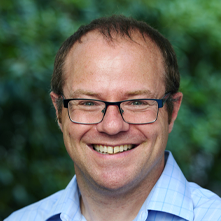 Professor Benjamin K. Sovacool is Professor of Earth and Environment at Boston University in the United States, as well as Professor of Energy Policy at the Science Policy Research Unit (SPRU) at the University of Sussex Business School in the United Kingdom. He is also University Distinguished Professor of Business & Social Sciences at Aarhus University in Denmark.