
Monash University researcher’s contribution to Australian Book Review’s Indigenous Issue
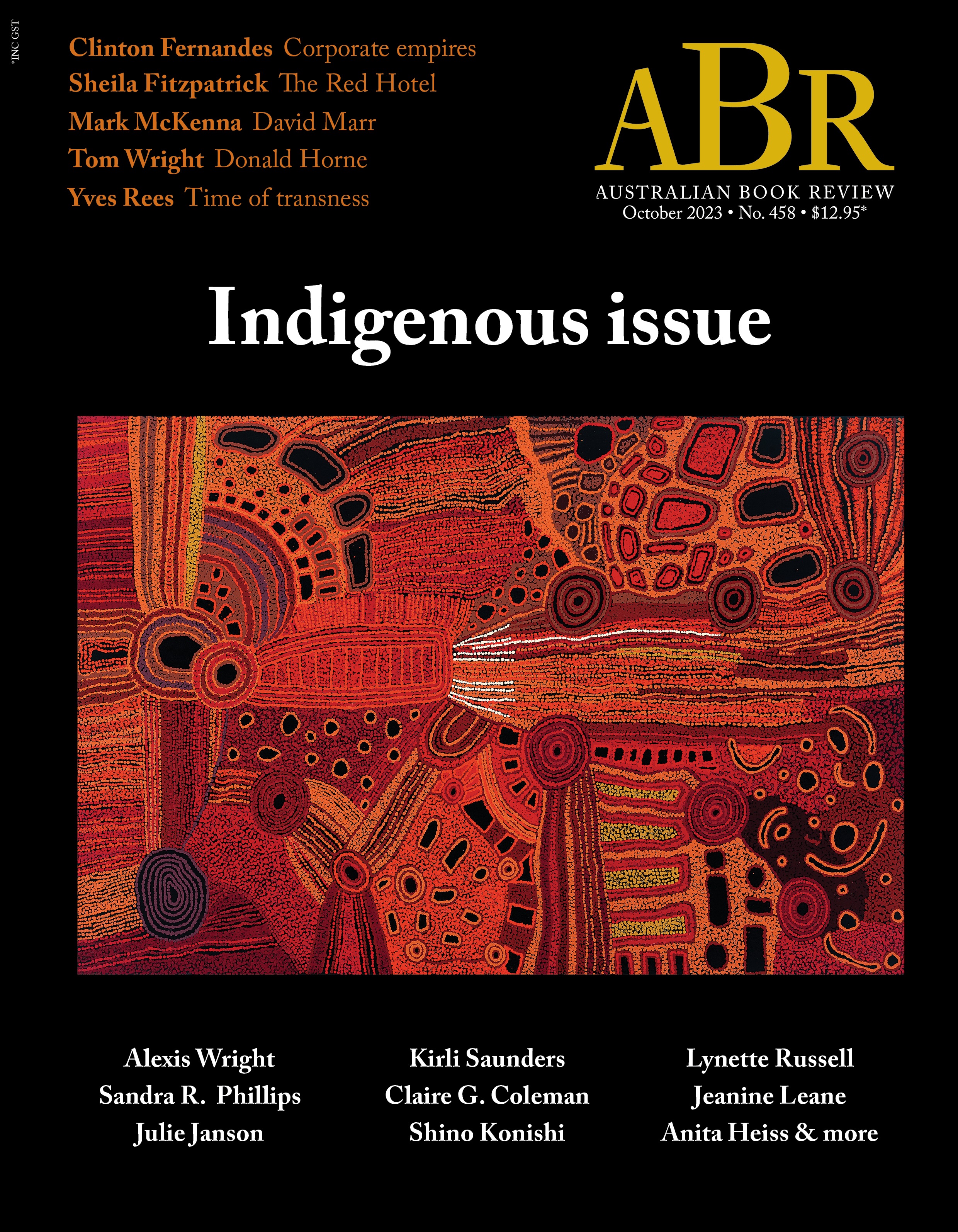 Monash University’s Professor Lynette Russell AM, from the Monash Indigenous Studies Centre, has lent her voice as guest editor to the Australian Book Review’s (ABR) special Indigenous Issue.
The issue features the strongest-ever representation of First Nations reviewers, commentators, interviews, poems and books in ABR’s history.
Professor Russell, in her opening editorial, said the special Indigenous Issue, in a magazine that has been at the forefront of Australian critical culture since 1961, raises thorny questions about what parts of Australian culture have been historically omitted.
“The ABR commenced to highlight Australian culture and output, albeit one that was not inclusive of cultural activity occurring across Australia - most notably, among Indigenous people. In this issue, we’re taking stock and giving a voice to Indigenous reviewers, commentators, poets and interviewees,” Professor Russell said.
Two weeks out from the historic Voice to Parliament referendum, Professor Russell has also collaborated with Professor Melissa Castan on an essay – Ancient sovereignty shining through: A Voice to parliament, not a Voice in parliament – addressing the many myths and misinformation that have been propagated about the Voice.
Professor Castan, the Director of the Castan Centre for Human Rights Law at Monash University’s Faculty of Law, said the Voice will not damage Australia’s democratic institutions, but rather enhance them.
“The Voice will not be a third chamber of parliament. It will have no role in passing legislation; that will remain in the hands of elected representatives in the Federal Parliament, as required by the Constitution,” Professor Castan said.
Professor Russell said the Voice will allow Parliament to be better informed about the impact of proposed laws on First Nations people.
“The Voice does not create special rights for Indigenous people. It will help inform how initiatives that directly impact First Nations people can best work to improve outcomes. Ultimately it will ensure that the silence and omissions of the past can be addressed in the future,” Professor Russell said.
Print and digital copies of ABR’s Indigenous Issue are now available to purchase from the ABR’s website.