
Cammi Murrup-Stewart
Dr. Cammi Murrup-Stewart
Senior Lecturer, Gukwonderuk Indigenous Health Workforce
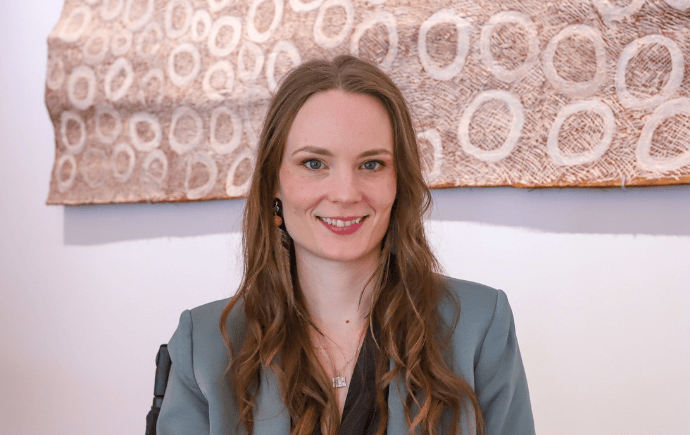
Dr Cammi Murrup-Stewart is an Aboriginal woman with strong ties to Wurundjeri Country and a family history shaped by the Stolen Generation policies. As a Senior Lecturer and researcher at the Gukwonderuk Indigenous Health Workforces Centre at Monash University, Cammi leads the Murrup Bung-allambee Indigenous Psychology Group, focusing on the social and emotional well-being of Aboriginal youth. Her research highlights the strategies young mob use to enhance their mental health and well-being, grounded in Indigenous methodologies. With a background in sociology, anthropology, and psychology, Cammi’s work amplifies the voices of Indigenous peoples and other marginalised communities, while also supporting Indigenous students pursuing higher education.
With over eight years of experience in international and local community development and health sectors, Cammi holds a Bachelor and Masters in International Development. Among her many accolades, she received the 2020 Premier’s Award for Health and Medical Research – Indigenous Researcher. As someone who lives with multiple disabilities and chronic illnesses, Cammi is a passionate advocate for greater accessibility and inclusion in all aspects of society.
Can you explain a bit about your role at Monash University?
I’m currently a Senior Lecturer at Monash University, and I’ve been with the university since 2017. I started as a PhD student through the Gukwonderuk Indigenous Health Unit and then moved into a teaching and research position in the School of Psychology. More recently, in August, I took on a secondment with the Gukwonderuk Indigenous Health Workforce Centre, where I continue my research as well as focus on initiatives around Indigenous higher degree research (HDR) engagement. Additionally, I co-founded the Murrup Bung’allambee Indigenous Psychology Group, which is dedicated to promoting Indigenous perspectives and approaches in the field of psychology.
What do you most enjoy about your role?
I really enjoy the diversity of my role. I work across various areas, like curriculum transformation, Indigenous psychology, and promoting cultural responsiveness in the psychology curriculum. One of my favourite parts is the Indigenous HDR engagement program. It involves supporting graduate students through writing retreats, yarning circles, and helping them present their research at conferences. There’s a lot of focus on creating a sense of belonging, which is so important in academia. It was a real honour to receive the Premier’s Award for Health and Medical Research (Aboriginal Researcher winner 2021), recognising the impact of this work with Indigenous communities.
Could you describe your current research and its significance?
I lead the Wawu Indigenous Connections Practices Grant, which focuses on helping Indigenous people who feel disconnected find ways to reconnect with their culture and communities. This reconnection is vital for their social and emotional well-being. I’m also working on research projects that look at the impact of the justice system on Indigenous communities and ways to support Indigenous students to feel a sense of belonging in higher education. All of these projects are about creating meaningful change for Indigenous communities, whether it’s through policy, education, or support systems. I’ve been fortunate to share this work on a global platform, such as being a panellist for Lancet Psychiatry’s ‘Spotlight on Mental Health: Context and Culture in Mental Health’ webinar, where I discussed the intersection of culture and mental health in Indigenous populations.
Have there been any memorable moments in your research career that stand out?
One that stands out is a professional development event for Indigenous PhD students where N'arweet Aunty Carolyn Briggs gave us some powerful advice. She told us that our primary responsibility as young Indigenous researchers is to complete our research. That encouragement really helped me focus and reminded me of the importance of our work. Another memorable moment came during my PhD research when young participants shared insights that completely shifted the direction of my study. It was a lesson in staying open and learning from community because they hold the knowledge we need. Presenting at the Healing Our Spirit Worldwide Conference in 2023 in Canada was also a special moment, as it allowed me to engage with global Indigenous communities and share insights on well-being and healing practices.
How do you communicate your research findings to both academic and non-academic audiences?
I use a multi-layered approach. I present my work at academic conferences and publish in journals, but it’s equally important to share research in a way that’s accessible to the community. With the Murup Bung’allambee Indigenous Psychology Group, we’ve developed a community report series that translates our research into visual, easy-to-understand formats. These reports are shared with community organisations and in public spaces, ensuring that the research has practical applications, like improving programs or helping initiatives secure better funding.
How do you approach the process of designing and conducting your research?
I approach research with a mindset of humility, knowing I don’t have all the answers. I prioritise Indigenous voices by involving co-design working groups, consulting community reference groups, and having conversations with Indigenous scholars and community members. It’s crucial to engage the community from the very beginning and ensure that their input drives the research. I also seek guidance from Elders to draw on their wisdom and make sure my research is culturally respectful and meaningful.