
Katrina Johnson
Katrina Johnson
Senior Lecturer and Co-director, Master of Indigenous Business Leadership
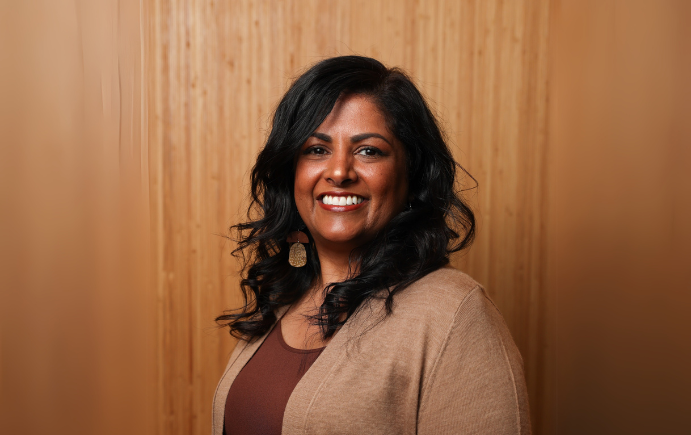
Katrina Johnson is a proud Gooreng Gooreng woman with Pakistani and Sri Lankan heritage. She grew up in Bundaberg and later moved to Shepparton with her parents at 15 years old, where she was mentored by Yorta Yorta leader Dr. Paul Briggs OAM. He taught her about leadership, business, and economic reconciliation, especially through initiatives like the First Nations Credit Union, Rumbalara Football Netball Club and the MyMoola program, which helped Indigenous peoples buy their first homes. She then earned an executive MBA at Melbourne Business School to fill a gap in qualified Indigenous leaders in community organisations.
Katrina’s career began as a journalist, then a business consultant, working with at-risk youth and developing educational programs. This led to her involvement in designing the Master of Indigenous Business Leadership program at Monash University, where she is now a senior lecturer and program co-director.
What do you hope students will gain from the Master of Indigenous Leadership?
The main goal is for students to graduate with qualifications that allow them to step into leadership roles across Australia, making decisions, not just advising on them. Whether they aim to become department heads, executive directors, board directors, or launch their own businesses, we want them to lead on their terms. We’re building a future where Indigenous leaders will take their rightful place at the table in all sectors, government, business, non-profit, and entrepreneurship.
Beyond that, we want our students to gain the confidence to navigate both Indigenous and Western business frameworks. They'll learn to draw from their heritage and history to conduct business, while also mastering how to do business in the corporate and government spaces. It’s about building their skills and skillsets to make decisions based on both traditional and modern business principles.
Our program also encourages students to pursue further research, which will continue to benefit Indigenous communities. By developing skills in business finance, leadership, and critical thinking, students will be ready to ask the tough questions, whether it’s managing large organisations or negotiating with big corporations. Ultimately, we want to equip and enable them to drive change and make a meaningful impact in their communities, shaping the future of Indigenous business leadership.
Can you share more about the work you do with various communities and the projects you're involved in?
I live and work in the United States, and I travel frequently around the country to collaborate with various Indigenous communities, particularly those impacted by colonisation. My work often involves partnering with colleagues from institutions like Harvard University, where I previously served as a teaching fellow. On a global scale, I work with Indigenous communities to explore leadership models and frameworks aimed at creating power within these communities, helping them lead change.
One of the most impactful projects I’m involved in is an annual study tour to Canada. We spend two weeks visiting key Indigenous business owners, universities, and communities to learn how they’re using business and leadership to address issues of colonisation and oppression. We also look for opportunities to collaborate and share knowledge, understanding that solutions in one community might apply to others. This solidarity extends to other regions, like Africa and the U.S., where Indigenous peoples face similar struggles. It’s a chance to build collective intelligence that benefits everyone.
Are you currently working on any research projects?
Yes, my research is still evolving. I’m focused on how Indigenous nations are using economic and business leadership to reclaim the prosperity we once thrived in before colonisation, to rebuild their communities, and create new paths forward through collaboration. It’s about respecting the wisdom of our ancestors while adapting it to current challenges and future opportunities.
A major area of interest for me right now is decolonising business education. I’m exploring ways to meaningfully increase the presence of Indigenous knowledge into business curricula and spaces, especially in business schools. One line of thought is to create spaces where Indigenous people not only feel like they belong, but are acknowledged and respected for their intelligence and knowledge and can lead and grow without restraint or hindrance. This requires our institutions and non-Indigenous colleagues to make room for others to lead by learning from and respecting Indigenous perspectives and practices. For First Peoples to be truly first, others need to step aside and let us lead. Collaboration is the key. By working together, we can build a more respectful and inclusive environment that benefits everyone..
Have there been any particular moments in your career that shaped or impacted you?
There have been many, especially moments of exclusion based on my heritage and colour of my skin. One story that stands out is when I was in Year 10, and my career coordinator suggested I drop out of school because, as an Aboriginal person, I wasn’t considered smart enough for university. That moment was a turning point for me. I dug my heels in and decided that if they thought I couldn’t, I would prove them wrong. I finished school, graduated, went to university and kept pushing forward.
In my career, I’ve faced similar moments. I was told by some that there were people in organisations waiting for me to fail because I was Aboriginal. But instead of discouraging me, these moments only fueled my determination. When I applied for my MBA, I was told it would be a “hard sell” to the selection panel, however, I insisted that my unique experiences and diversity brought value to the table.
My mum always told me that no one should define what I can or can’t do based on the colour of my skin. That advice has stayed with me, and it’s become a guiding principle in my work and life. It’s why I’m so passionate about encouraging students and colleagues alike to never accept limitations, no matter the challenges they face.
Is there someone you particularly admire or look up to?
Yes, my grandparents, Percy and Phyllis Appo. They didn’t have access to formal education due to the White Australia Policy, but they were determined to educate their eight children. At a time when many Aboriginal people were excluded from opportunities and lived in extreme oppression, they understood that education was the key to breaking the cycle of poverty and oppression. They worked tirelessly to provide this for their children, setting an example for all our family.They were also incredibly generous with their time and resources, always willing to share with others. From them, I learned the importance of sharing your success and using what you have to help others. Their example taught me that no matter how hard things are, you never stop striving. You continue to work toward your goals, regardless of the obstacles. Their resilience is something I carry with me every day, and it’s something I try to instil in my relationships with students and colleagues. I have learned from my Elders and people like Paul Briggs, that if you’re convinced something can benefit the community and future generations, you don’t ever stop striving to make it happen, even if you won’t see the fruits of your labour because we lead to serve others both now and in the future. I’m not here to build an empire, I’m here to build on legacies others have gifted me.