
The Incubator

At Monash, our research is driven by excellence, purpose and impact.
The Incubator aims to address the three global challenges outlined in Impact 2030 by fostering interdisciplinary collaborations between Monash researchers and international partners. Alongside direct funding, the scheme provides each project with wrap-around support to enhance activities and maximise research impact.

2026 program
Following a competitive selection process, funds were awarded to 16 project teams across two funding windows. The 2026 Incubator projects involve 129 Monash research and professional staff from 9 different faculties, centres, and institutes, with more than 60 external collaborators. Each project team is dedicated to solving an international, interdisciplinary research challenge and engages external partners with our global campus network.
BOLSTER
Supports advanced interdisciplinary research missions with established international partnerships and networks. Monash's support aims to elevate and expand their international research impact by deepening their relationships with existing partners; connecting with new or prospective partners; providing avenues to apply their research in different settings; and identifying opportunities to increase their scale.

Circular@Scale
Using the lessons from our local impact, and those developed through international collaborations, this project activates the community of circular expertise with priority partnerships to deliver impact at scale, accelerating the necessary circular transition in the region.
Chief Investigators:
Martin Geissdoerfer
Glen Croy

Critical Minerals Initiative
Driven by our commitment to achieve Net Zero, this Initiative fosters growth in the multidisciplinary research necessary to address critical knowledge gaps, drive strategic partnerships with Governments and Industry, enable a strategic approach to our STEM infrastructure investments and leverage our global Campus network.
Chief Investigators:
Andy Tomkins
Adrian Neild

HalloStroke: Scaling up a community support ecosystem for stroke care
Stroke is a leading cause of death and disability globally: one in four people will have a stroke, with the majority of the global burden of stroke (89%) in low- and middle-income countries. This project provides social and health-based support to stroke survivors and their family carers living in rapidly-ageing countries in South-East Asia: Indonesia, Vietnam and Malaysia.
Chief Investigators:
Narelle Warren
Juliana Sutanto
BOOST
Supports interdisciplinary research missions with established international partnerships and networks. Monash's support aims to help teams in applying their research in diverse contexts, identifying avenues for broader collaboration and growth.

Taming the Algorithmic Deluge
Medicine is awash with disease prediction algorithms (nearly 100,000 to date) yet few are validated, implemented, or trusted in practice. Drawing on expertise in biostatistics, philosophy, data science, epidemiology, medicine, and the sociology of knowledge, we will uncover the epistemic, cultural, and institutional drivers of this “algorithmic deluge.” Through qualitative and cross-disciplinary work, this project builds tools to guide and incentivise higher-quality, clinically useful models that translate into pragmatic improvements in health.
Chief Investigators:
Taya Collyer
Robert Sparrow
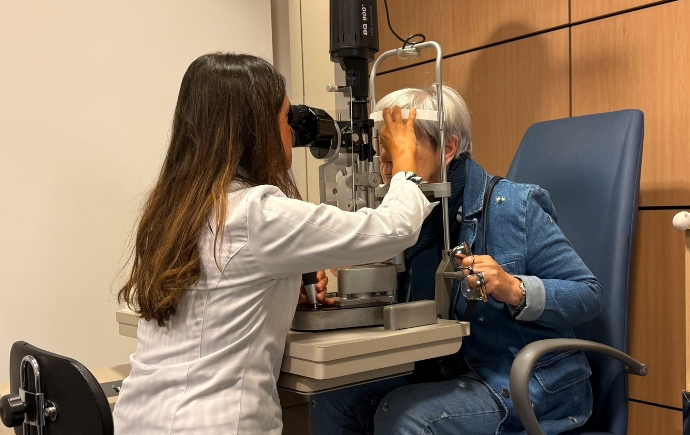
Creating a dementia-friendly eyecare workforce in Southeast Asia
Current research shows avoidable sight loss is prevalent amongst people living with dementia, addressable by improving access to community eyecare. This project upskills the community eye health workforce in Malaysia and Indonesia to provide dementia-friendly eyecare, by delivering its evidence-based locally-tailored training. The project will also embed eye health information into dementia caregiver skills training.
Chief Investigators:
Marianne Coleman
Yulisna Sari

Addressing manosphere related harm
Combating the spread of misogynistic ideologies targeting boys and young men through social media demands urgent action. A shared challenge faced by schools globally is how to engage young men in educational initiatives to address gender-based violence when the manosphere encourages them to see themselves as “victims” of gender equality movements and to dismiss or ignore any accountability for harmful behaviours. This solutions- focused project will strengthen the global evidence based on effective interventions and equip educators with evidence-based, actionable strategies and resources to engage boys and young men and counter these dangerous narratives and build healthier, more inclusive school environments.
Chief Investigators:
Naomi Pfitzner
Stephanie Wescott

Human Rights Risk Forecasting Model
This project advances human rights protection through predictive analytics, building on the Monash IP Observatory–UN OHCHR partnership (since 2020). While the current collaboration provides real-time internet shutdown monitoring (used in 90+ UN reports), this initiative develops a Human Rights Risk Forecasting Model. By integrating machine learning, satellite imagery, and socio-political indicators, the model will anticipate human rights violations before they occur—enabling proactive rather than reactive action to supports the UN’s prevention agenda.
Chief Investigators:
Simon Angus
Zarina Vakhitova

Understanding heat stability of critical medicines in a warming climate
This project aims to safeguard access to effective medicines despite rising extreme heat from climate change. It builds capability to deliver guidance from bench to policy by identifying heat-vulnerable drugs in regions with vulnerable supply chains in the Western Pacific, and synthesis evidence on heat stability for adrenaline. This supports priority-setting for manufacturers and policy makers; reduces medicine waste; informs future formulation improvements; and identifies targets for future research.
Chief Investigators:
Michael Loftus
Pete Lambert

AllPlay Malaysia
Despite having multiple mechanisms for educating children with disability, access and quality vary, and Malaysia faces significant implementation challenges in achieving inclusion. This project will co-design evidence-based training and resources, foster sustainable, locally-led solutions, and create a scalable model for inclusive education for ASEAN countries. It aims to successfully integrate Australia’s proven AllPlay Learn model into Malaysia’s education system.
Chief Investigators:
Nicole Rinehart
Adeeba Kamarulzaman

IndigiSEA: Indigenous Digital Futures for Southeast Asia
With over 800 languages in Malaysia and Indonesia, most critically endangered, IndigiSEA will establish the people, processes, and partnerships essential for long-term linguistic sustainability. The project will develop ethical frameworks, participatory research models, and digital platforms that foster access, innovation, and community leadership to advance ethical digital futures for Indigenous languages.
Chief Investigators:
Soon Lay Ki
Derry Wijaya

Consumer and Community Involvement for Precision Medicine in Diabetes
Consumer and community involvement (CCI) in precision medicine is paramount to address inequities in cardiometabolic disease burden globally. However, there is a lack of implementation strategy or framework to achieve this. This project aims to establish an international consumer advisory group for precision medicine in diabetes, co-design and pilot frameworks and strategies for culturally responsive CCI, and to develop a participatory data governance model that enhances community trust and transparency in health data use.
Chief Investigators:
Siew Lim
Badariah Ahmad

A Socio-Technical Framework for Fortifying Digital Financial Ecosystems
Building on 15 years of work on how scammers exploit vulnerabilities and build trust, we use behavioral mapping, NLP, and AI-driven transaction analysis to detect scams and stop fraudulent payments. With industry partners in Indonesia and Malaysia, this project will design behaviorally informed systems, boost digital literacy, and position Indonesia as a regional leader in human-centered financial security. This multi-stage approach strengthens resilience against evolving cybercrime threats.
Chief Investigators:
Arif Perdana
Monica Whitty

Identification of biomarkers of severe dengue haemorrhagic fever
This project will apply a systems immunology approach to a cohort study of individuals in Malaysia and Indonesia. to uncover key immunological processes leading to life-threatening dengue haemorrhagic fever, allowing the identification of biomarkers to develop diagnostic tools for early detection.
Chief Investigators:
Diana Hansen
Vinod Balasubramaniam
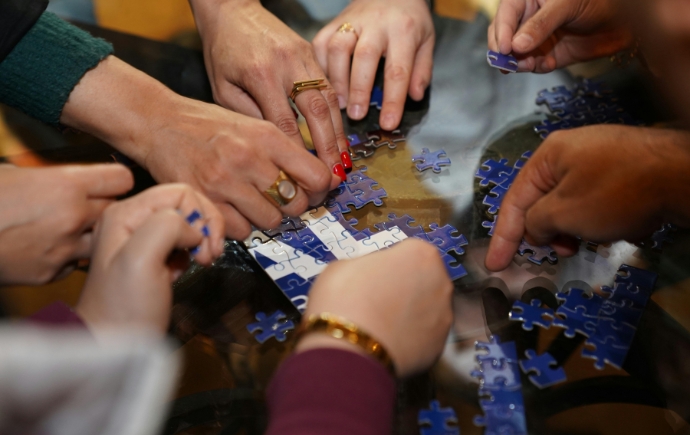
Challenge-Oriented Research and Innovation Policy Consortia
Australia's current research and innovation (R&I) policy framework remains largely traditional, yet a mission-oriented research approach is gaining international recognition as a critical driver of innovation and societal impact. Drawing on the expertise and research relationships with international partners, this project will deepen engagement with international partners, Australian research partners and policymakers.the R&I policy landscape by establishing a new international science-policy network.
Chief Investigators:
Rob Raven
Megan Farrelly
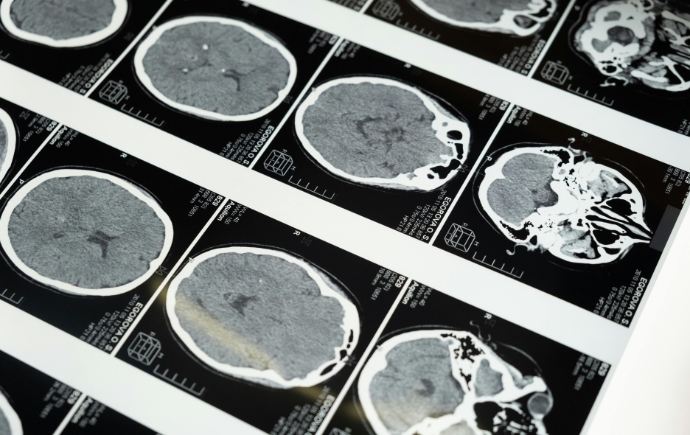
Capacity Accelerator for Psychedelic Research in Asia–Pacific (CAPRAP):
This project will build and accelerate psychedelic science capability across the Asia–Pacific by leveraging the region’s first major conference on psychedelic science – the Conference for Asia–Pacific Psychedelic Science (CAPS) – alongside two targeted pre-conference research workshops. Led by the Monash Clinical Psychedelic Lab and Monash Malaysia, the CAPRAP project will upskill regional researchers in psychedelic trial design, safety governance, field-specific challenges, and methodological rigour, while establishing the Asia-Pacific Psychedelic Exchange (APPEX), a new regional research collaborative. With international speakers, regional stakeholder engagement, scholarships for Malaysian researchers, hybrid participation, and shared resources, the project will catalyse collaboration and generate future multi-country external funding.
Chief Investigators:
Satoshi Ogawa
Paul Liknaitzky

EQUIP Network
The field of Implementation Science, while increasingly prioritising health equity, is hindered by siloed professional groups, limited collaboration, and the exclusion of diverse perspectives, creating a significant gap between research and practice. This project will scale an international network of early and mid-career researchers, practitioners and community members with lived experience expertise, committed to strengthening equity in implementation research and practice.
Chief Investigators:
Helen Skouteris
Sharuna Verghis
















Contact us
For any further information, email: theincubator@monash.edu