
Joanne Tanner
Faculty of Engineering
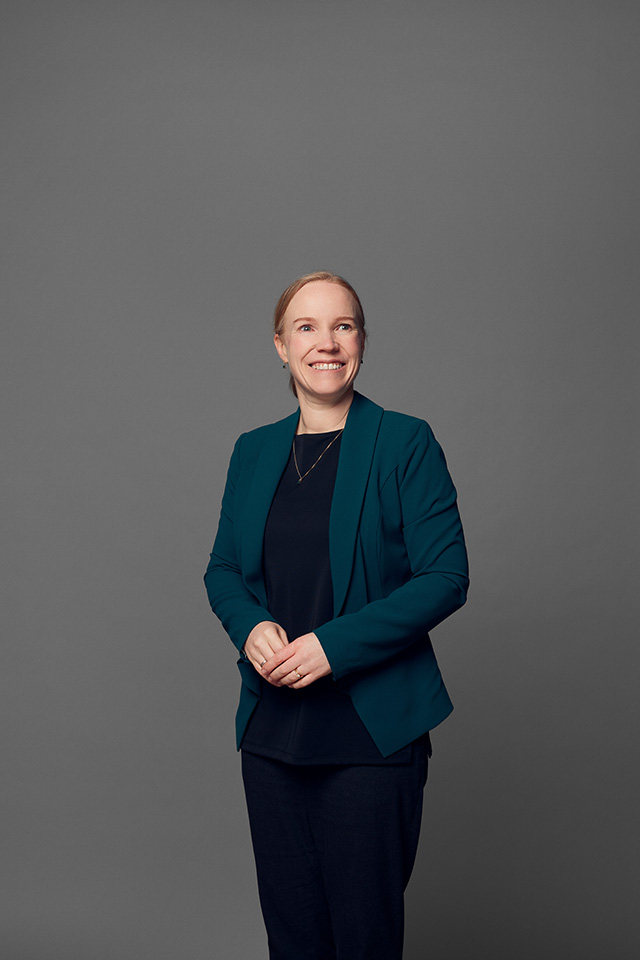
Leading innovation in engineering with pilot plants and industry insights
Joanne teaches students how to embrace uncertainty with confidence and solve real world problems through creative perspective.
What are you doing differently in your field that you believe is driving real change?
I always try to create an authentic experience, no matter what or how I'm teaching. I draw on my industry experience, and take advice from my ongoing industry connections.
I create environments where students can experiment, fail safely, and think critically. For example, our water treatment pilot plant gives them real exposure to operating conditions, troubleshooting, and decision-making under uncertainty. It turns chemical engineering from a theory into a lived experience. I’m using the pilot plant to help students link fundamental theory to practice as we have always done for engineering labs, but also to give them the opportunity to explore digital technologies and digital twins, process control and automation, sensor integration, and data analysis. This helps students see how AI and automation are reshaping the role of the (chemical) engineer and expose them to the technologies they will see from day one of their professional careers.
In the classroom, I emphasise real-world challenges and active learning, drawing on my industry experience and professional network. Students participate in industrial activities such as safety moments and post-incident analysis using real incidents. This nurtures critical thinking and creativity and mimics the real world of engineering. Through my teaching and projects, I emphasise the dynamic and 'unsolvable' nature of most engineering challenges, and teach students to look for and address the real problem, not just the technically solvable symptoms.
I’m introducing generative AI in all my classes as a tool and / or as a collaborator. I am showing students how AI can support ideation, design, coding, and communication, as well as answering technical questions. Rather than treat it as a shortcut, we frame it as a new ‘team member’ with specific strengths and limitations to help students to decide when and how to use it effectively to complement their human contribution.
In the classroom, I emphasise real-world challenges and active learning, drawing on my industry experience and professional network. Students participate in industrial activities such as safety moments and post-incident analysis using real incidents. ”
How do you help students build confidence, not just knowledge?
I think confidence is often the bridge between knowing and doing. I also think students have more confidence in what they are learning when they know it’s authentic. I therefore try to design educational experiences that are clearly industry-relevant and are scaffolded in either the unit or course to build both knowledge and confidence by giving students opportunities to experience real engineering.
I try to create a learning environment where students feel safe to try, fail, reflect, and grow. For example, I run Process Control workshops that use industry safety incidents as examples of real process control failures that students talk through together before we come together to discuss in the context of our unit.
Confidence comes not from knowing everything, but from knowing you can still contribute meaningfully to the conversation and also that it’s ok to ask questions. I buildpractical experiences over multiple semesters in the curriculum to help students learn sequentially and help them develop trust in their own judgment and confidence with real engineering equipment. We talk openly about what didn’t work and why, and students are encouraged to revise and iterate. I emphasise the process as much as the outcome.
I find that students gain confidence when they realise their questions are shared by others, and when they help each other learn. It breaks down the idea that understanding is something only a few have. I also ask them questions, admitting that I don’t know the answers either, and we think about it together. I also try to have guest lecturers from industry visit each of my classes to ensure that the content is relevant and also to show students that this is the case.
By bringing real-world challenges and industry voices into the classroom, I help students see that they are already capable of contributing meaningfully. They leave not just with content knowledge, but with a confidence in their ability to contribute, no matter their current knowledge or background.
What do you hope your students take away from their time with you?
I want them to feel that they are capable and their perspective matters. I hope they learn that meaningful contribution doesn’t require waiting until they’re an ‘expert’. I want them to learn and accept that uncertainty is part of engineering, and that you will never have a perfect design, only a 'done' design.
I also hope they take away that engineering is about people as much as it is about calculations and numbers! Every problem they ever solve will be a socio-technical problem with no real solution, and if it seems like there is a problem with a simple numerical solution, they probably haven't thought about it hard enough or found the real problem!
What legacy or ripple effect do you hope to leave behind?
I hope the legacy I leave is a contribution to a new version of academic culture that values authentic, effective, evidence-based education and strives to lead the world in higher education, not just in research metrics. I hope my enthusiasm and commitment to this goal encourages my colleagues to aim higher, to try new things, to invest in the student experience, and to see teaching as a space for innovation and impact.
I want students to look back and feel that what they were learning from me was grounded in real experience, that it mattered, and that it prepared them to contribute meaningfully from day one.