
Paul Burgess
Faculty of Law
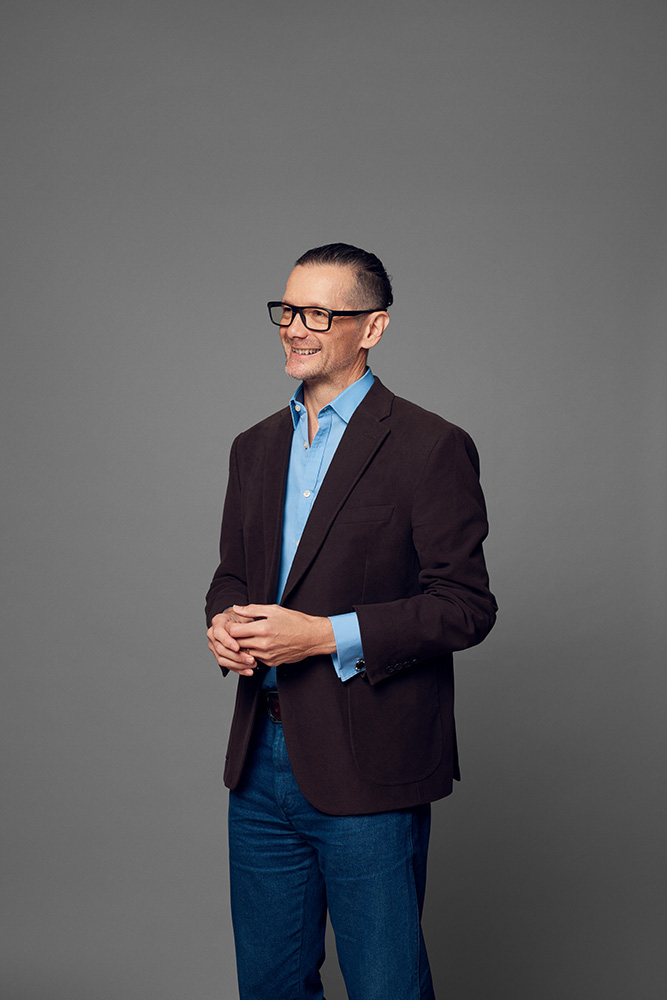
Helping law students find their legal voice
Paul loves it when a student says they thought his (first year) class was going to be boring because it is a compulsory unit, but they found it interesting/exciting/engaging.
What are you doing differently in your field that you believe is driving real change?
In both my compulsory first year unit and my elective upper level units I have integrated technology and AI into classes. The change that I was promoting was one that is absolutely fundamental to contemporary legal practice: embracing technology in a way that results in both efficiency and accuracy.
I drive students to use technology and think about it in ways that will enable them to enter the workforce not only embracing and being comfortable with technology, but also being comfortable innovating with technology. Students are primed to be agents of change, to realise they are the ones in the years immediately following law school that will be expected to drive change in their workplace. Both units are focused on this idea; enabling students to embrace what may be seen as a scary concept.
How do you help students build confidence, not just knowledge?
At both ends of the degree (as I teach in both first year and, generally, in the final year) it is important to make sure students have a voice – and that they are confident in using that voice. In doing this, I am very conscious that students have very different perspectives and may not be comfortable. Whilst being respectful and cognisant of these things, it is vital to create inclusive space and opportunities for young lawyers to use their voice and be heard in order to build their confidence. I do this in every classroom interaction through encouraging students to engage in a dialogue and through modelling behaviours – whilst also pointing to the fact that I was also, for many of the reasons given above, also reluctant to use my own voice.
I drive students to use technology and think about it in ways that will enable them to enter the workforce not only embracing and being comfortable with technology, but also being comfortable innovating with technology. ”
What do you hope your students take away from their time with you? Is there a student moment you’ll never forget, and why?
It is my hope that my students take away a view that the law is not only a broad-church but is also a tremendously exciting place to be and think. This is the case regardless of whether students ultimately go into legal practice or whether they use their skills in some other walk of life.
I always love the moment when a student tells me that they thought my (first year) class was going to be boring based on the subject matter generally and because it is a compulsory unit, but they found it interesting/exciting/engaging. Whilst it is a relatively low bar, the ability to allow students to be open to new experiences and not simply be swayed by an initial perception is always great.
What legacy or ripple effect do you hope to leave behind?
Even areas of the law that may seem to be boring and irrelevant are anything but. In fact, it is the areas that seem less glamorous (for example Public Law) that are the things that have the biggest impact on our day to day lives. In appreciating this simple reality, students will hopefully have a greater appreciation of their role as law-graduates within our wider society.
What does being a 'Changemaker’ mean to you personally?
Being able to do something that has impact beyond the immediate area in which you operate. For example, by impacting the way that a student sees the world can alter the way in which they operate and, as a result, wider changes can follow.
How do you tailor your teaching approach to engage and inspire today's students?
My teaching approach has never been chalk-and-talk. I have always engaged in a dialogue – choosing to have a conversation with students (often to many of them at once) in which we can both contribute equally. In doing this, and as it is a research area, I bring a lot of technology (AI and GenAI) into the conversation as well – and use this as a way to demonstrate both how technology is vital and also how its best practice may apply. Through this sort of mixed approach, I try to give students the tools to work their way to their own answers – this can be through dialogue with me or with one another.
What does being a teacher allow you to do that nothing else can? Was there a moment you realised that your work as an educator goes beyond what happens in the classroom?
There are no other places that I can think of where I am able to influence the futures of many thousands of individuals (who themselves will be able to influence the futures of many thousands of individuals) – especially in teaching in an area like the law. The potential to impact the future when teaching at a place like Monash is truly mind blowing!