2024 Publications Performance
View
2024 Publications Performance
View

In 2024 Monash University researchers produced 209 publications related to SDG 12, with a mean Field-Weighted Citation Impact (FWCI) of 2.3.
What is Field-Weighted Citation Impact?
Field-Weighted Citation Impact (FWCI) refers to the ratio of the actual number of citations received by a research output and the total citations expected based on the average of the subject field. An FWCI value of 1 may be interpreted as having ‘world average impact’. Thus, a publication with an FWCI of more than 1 indicates higher than expected citations based on the global average for similar publications. As FWCI reflects citations received to date, a publication’s FWCI value may fluctuate over time.
 Innovative waste management
View
Innovative waste management
View

Monash University researchers are pioneering sustainable waste management and material innovation to promote responsible consumption and production:


 Food waste solutions
View
Food waste solutions
View
Monash researchers are actively addressing food waste and promoting responsible consumption through innovative technologies and research:


 Monash Business School research on sustainability in consumer behaviour
View
Monash Business School research on sustainability in consumer behaviour
View
The Monash Business School Australian Consumer and Retail Studies Unit, led by Dr Eloise Zoppos, conducted research highlighting the importance of sustainability in consumer behavior in Australia, despite cost-of-living pressures. Key findings include:
 Unit statistics and highlights
View
Unit statistics and highlights
View
In 2024, Monash offered 140 units directly related to SDG 12, with 22322 total enrolments.
Highlighted below are a few of the units at Monash related to Responsible Consumption and Production:
Sweet success for design to make bio-nylon from sugar cane waste
View
A team of Monash chemical engineering students, including Emily-Rose Maroun, Thomas Anderson, Brayden Haney, Huy Hoang, Jess Lam, and Lachlan Stokkel, won the Pratt prize for their design and economic analysis of a plant to convert sugar cane waste into bio-nylon.

The plant, proposed to be located in Bundaberg, Queensland, could produce 49,000 tonnes of sustainable nylon annually, generating a profit of A$30 million. The project highlights the potential for sustainable production and waste reduction.
 Monash fosters sustainable solutions for food waste
View
Monash fosters sustainable solutions for food waste
View
The Monash Business School Fastrack start-up program and Monash University School of Science are fostering sustainable solutions and responsible consumption through innovative projects:


The critical role of corporate sustainability
View
Master's alumna Rosa Aksharanugraha, who studied at the Monash Sustainable Development Institute (MSDI), is leveraging her education to drive corporate sustainability in the oil and gas industry.
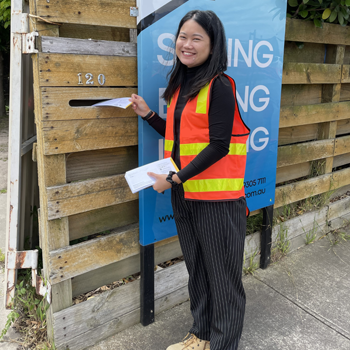
Through the Leadership for Sustainable Development Specialisation, Rosa gained insights into sustainable business practices and the importance of corporate involvement in achieving sustainability goals.
Her work as a communications and engagement consultant focuses on community engagement in infrastructure projects, emphasising the need for renewable energy solutions while considering community impacts.

 From an elective to a career, how working with biomaterial inspired one alum
View
From an elective to a career, how working with biomaterial inspired one alum
View
Mia Tiernan, a Bachelor of Spatial Design alum from Monash University, was inspired by an elective on biomaterials, specifically mycelium, during her degree. This led to a career in sustainable design materials, starting as a Research Assistant at Monash and progressing to a senior production operative role at Biohm in London.
Her work focuses on using mycelium for sustainable construction materials, highlighting the importance of sustainable consumption and production patterns.
Adopting circular economy practices to reduce manufacturing waste
View
Monash University researchers, led by Professor Amrik Sohal from the Monash Business School’s Department of Management, have collaborated with Victoria's manufacturing industry to adopt circular economy (CE) practices, significantly reducing manufacturing waste by 65%. The project involved working with manufacturers in plastics, textiles, general engineering and food sectors to enhance resource efficiency and mitigate negative production effects. The initiative included interviews with 25 leading CE businesses, workshops, and seminars, resulting in a shift in participant attitudes towards the economic benefits of CE practices.
The study highlighted successful strategies such as designing products for longevity and sourcing materials locally, as demonstrated by Jardan, a furniture business that reduced its waste by 65%.
 Advancing circular economy practices in Australia
View
Advancing circular economy practices in Australia
View
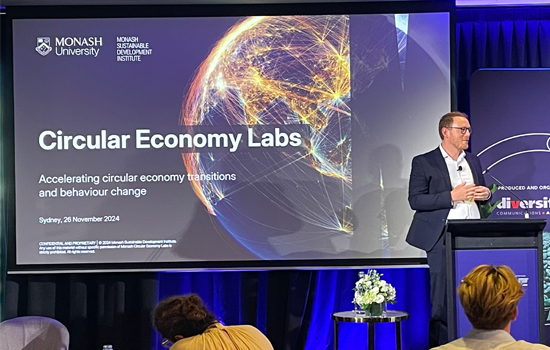
Monash Sustainable Development Institute (MSDI), in collaboration with Monash Business School and CSIRO, is leading initiatives to advance circular economy practices in Australia, focusing on adapting European models, fostering industry innovation, and building partnerships:

Monash University launches its first-ever circular economy framework
View
Monash University has launched its first-ever Circular Economy Framework, led by the Net Zero and Sustainability team, to transition from a linear to a circular model of resource use. The framework, launched at the Clayton campus, focuses on designing out waste, slowing and closing the loop, and regenerating nature.
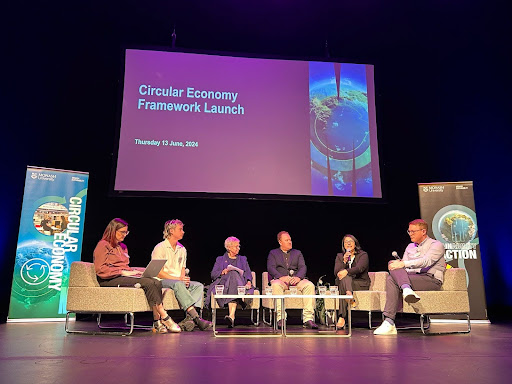
It aims to build resilience, generate economic opportunities, and provide environmental and societal benefits.
The initiative involves collaboration with the Monash community and industry partners over the next five years.
Tackling food waste; the forgotten waste stream
View
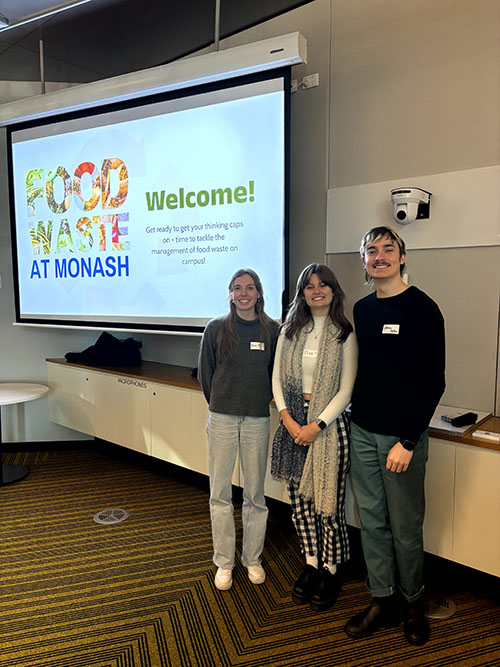
Eliza Negus, an engineering student at Monash University, led a project on campus food waste systems and behaviors as part of the Net Zero Precinct ARC Linkage project at the Clayton Campus. The project utilised a Living Lab experimentation approach to study food waste, a significant yet often overlooked contributor to emissions. The research involved interviews and workshops with campus vendors and staff, leading to recommendations for better food waste management, including education modules, management frameworks, and community engagement.
This interdisciplinary approach aims to support the transition to net zero by combining top-down university support with bottom-up individual contributions.