Engagement
Close

 Decarbonisation strategies for Australia
View
Decarbonisation strategies for Australia
View

The Climateworks Centre at Monash University has developed decarbonisation scenarios and released a report on decarbonising Australia's transport sector, both aimed at reducing emissions and aligning with the Paris Agreement:


 Climate adaptation and inclusive resilience
View
Climate adaptation and inclusive resilience
View
The Monash Business School Green Lab organised a series of roundtables with the US National Academy of Public Administration to tackle climate adaptation challenges, focusing on collaboration for solutions to global warming impacts.
Additionally, Monash University, through the KONEKSI project, is developing disability-inclusive climate resilience models in Indonesia, emphasising community engagement and inclusivity in disaster management.


 Climate change awareness
View
Climate change awareness
View
In 2024 Monash University actively engaged in climate discussion and education through two key activities: hosting the 'Challenges of the Age: Climate Change' event and participating in the Science Comedy Program.




 Climate policy analysis
View
Climate policy analysis
View
Monash University researchers are contributing to climate action through analysis and reporting on Australian climate policy and subnational climate targets:

 Net Zero Precinct: a living lab for sustainable transition
View
Net Zero Precinct: a living lab for sustainable transition
View
The Net Zero Precinct at Monash University, particularly at the Clayton Campus and Monash Technology Precinct, serves as a Living Lab for experimenting with transitions to a net zero future. This initiative, part of the ARC Linkage project, involves diverse stakeholders including researchers, students, industry partners, and local residents.
Key activities include retrofitting homes, enhancing public transport, building circular waste systems, and supporting cycling. The initiative promotes climate action and sustainable urban development, while also exploring clean energy solutions and responsible consumption.
Researchers involved include Jenny Liu, Saba Marjani, Yanda Qu, Mark Yang, Grace Rodgerson, Mariam Salim, Anthony Brady, Eliza Negus, Eliza Harris, Shane French, and Darren Sharp from the Monash Sustainable Development Institute.

 MSDI and partners form Transitions to Sustainable Health Systems consortium
View
MSDI and partners form Transitions to Sustainable Health Systems consortium
View
The Monash Sustainable Development Institute (MSDI) has launched the Transitions to Sustainable Health Systems (TSHS) consortium, bringing together partners from across the health sector to focus on emissions reduction in the Australian health system. The initiative builds on the National Health and Climate Strategy and aims to identify priorities and practical actions for accelerating emissions reduction.
The consortium includes representatives from various health organisations and government departments, and the first workshop emphasised the importance of innovation, leadership, and policy change. The program's first phase will develop a guide and work plan for emissions reduction in the health system.
 Urgent action needed as climate change and refugee health challenges escalate
View
Urgent action needed as climate change and refugee health challenges escalate
View
Professor Jonathan Abrahams, Director of the Monash University Disaster Resilience Initiative, authored a report titled 'Global Health Action Delayed: People’s Health and Wellbeing Denied,' which highlights urgent global public health issues related to climate change and refugee immunisation.
The report underscores the gap between the escalating threats of climate change and the insufficient global investment in solutions, particularly criticising Australia's lack of commitment to global climate funds and its National Health and Climate Strategy. It also addresses the inadequate immunisation of refugees and asylum seekers, calling for culturally sensitive programs and better primary care support.
 Climateworks Centre's 15 years of climate action leadership
View
Climateworks Centre's 15 years of climate action leadership
View
The Climateworks Centre, affiliated with Monash University, has been pivotal in advancing climate action through investment strategies, policy influence, and strategic partnerships:

 Equitable climate action and policy advocacy
View
Equitable climate action and policy advocacy
View
Monash University is actively engaged in promoting climate action and equitable climate policies through financial and policy measures, with a focus on Southeast Asia's transition to a low-carbon economy and international cooperation. Key activities include:
 Climate finance and adaptation
View
Climate finance and adaptation
View
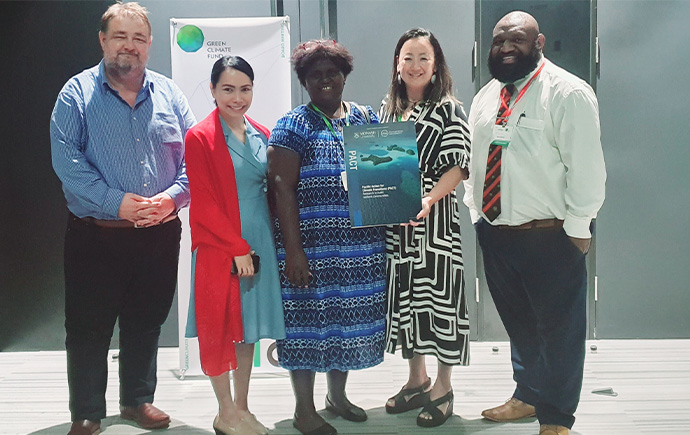
Monash University, through its PACT climate collaboration and Monash Business School, is actively engaging in climate finance and adaptation initiatives to promote climate action and resilience in vulnerable regions:
 Supporting Australia's Net Zero transition
View
Supporting Australia's Net Zero transition
View
Monash University's Climateworks Centre is actively involved in initiatives promoting climate action and sustainable transitions: