
Unearthing the past: Monash and Padua’s digital collaboration unveils renaissance garden secrets
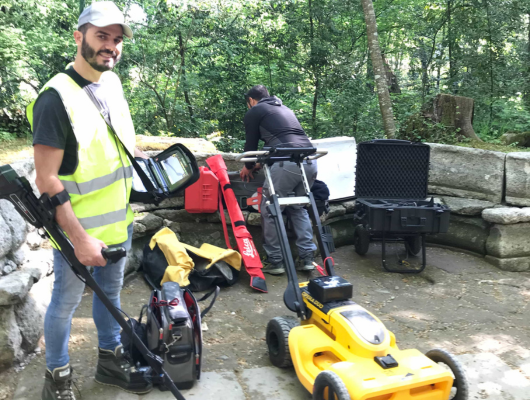
The Sacro Bosco, also known as the Park of the Monsters, is an enigmatic sixteenth century garden in Bomarzo in the region of Lazio in Italy. Renowned for its grotesque sculptures and labyrinthine design, the garden has long captivated scholars and visitors alike. But beneath the surface of this puzzling landscape lay hidden secrets waiting to be discovered. A groundbreaking collaboration between Monash University and the University of Padua, jointly funded by both institutions, would ultimately illuminate these enigmatic secrets.
This groundbreaking project, aptly named ‘Digital Bomarzo Underground’, brought together a diverse team of experts from various disciplines. Luke Morgan, a professor of art history and theory at Monash University, led the project. In collaboration with Associate Professor Cosimo Monteleone, colleagues from the University of Padua's Department of Civil, Environmental and Architectural Engineering, and industry partner Minnucci Associati, an engineering company based in Rome, the team embarked on a quest to uncover the Sacro Bosco's hidden water infrastructure.
"This project is a pilot study, a test case for using technology to understand historical landscapes. The potential is enormous." - Professor Luke Morgan
Professor Morgan, whose expertise lies in landscape history, had long been fascinated by the Sacro Bosco's enigmatic design. He sought to unveil the garden's secrets through non-invasive archaeology, utilising cutting-edge technologies such as drones, photogrammetry, and geo-radar. The team hoped to combine their knowledge and expertise to create a comprehensive digital garden model, including its subterranean features.
Unveiling the Hidden Depths
The project's findings have been nothing short of extraordinary. For the first time in centuries, researchers have gained a better understanding of the Sacro Bosco's intricate waterworks. The team discovered a complex network of pipes, fountains and reservoirs that once brought life to the garden. These findings have challenged previous assumptions about the garden's design and purpose.
"This is a kind of archaeology, but without digging," Professor Morgan explains. "We can see beneath the surface and uncover the garden's hidden infrastructure without disturbing its delicate ecosystem."
The Significance of Water
The discovery of the Sacro Bosco's water infrastructure has shed new light on the garden's symbolism and significance. In Renaissance gardens, water was not merely a functional element; it also held symbolic meaning. It represented life, abundance and power. The Sacro Bosco's elaborate waterworks suggest that the garden was more than just a collection of bizarre sculptures; it was a carefully designed landscape with hidden meanings.
The Digital Bomarzo Underground project is an example of how technology transforms archaeology. By using noninvasive techniques, researchers can now study historical sites in greater detail than ever before. This new approach could revolutionise our understanding of the past and preserve cultural heritage for future generations.
The success of the Digital Bomarzo Underground project is a testament to the power of collaboration. By bringing together experts from diverse fields, the team achieved results that would otherwise have been impossible. This interdisciplinary approach is becoming increasingly important in academia as researchers tackle complex problems requiring various skills and perspectives.
The Digital Bomarzo Underground project results will be detailed in a book, Sacro Bosco di Bomarzo: Landscape and Sculpture in Renaissance Lazio, by Professor Morgan and Dr John Garton from Clark University. The book is due for release with international academic publisher Brepols.
Are you ready to embark on a groundbreaking collaboration? Discover how you can partner with the University of Padua and leverage funding opportunities by visiting the University of Padua Intranet page.