Womens Health

Women's Health challenges through the lifespan
Newborns 0 - 1
 A baby girl’s health can be impacted by a range of factors, including the risk of developing mild to severe disabilities due to prematurity, birth trauma and/or low birth weight, and vulnerability to the quality and consistency of her caregiver’s parenting capacity.
Sleep and settling, feeding and teething problems in babies can be challenging for parents and caregivers to manage. Due to their physical immaturity, babies are also at higher risk of injuries and death due to accidents, abuse and neglect, and exposure to family violence.
-
Girls 1 - 14
 Health conditions such as cancer, diabetes, developmental delays and disabilities, neurodiversity and anxiety can impact girls’ physical and emotional development and wellbeing, and disrupt school attendance, social relationships and overall family functioning.
Social and cultural issues that can affect girls’ health include managing screen time, physical activity levels, bullying, abuse and neglect. As they enter puberty, girls can be vulnerable to body image concerns, disordered eating and menstrual disorders.
-
Young Women 15 - 44 Years
 The most common conditions affecting young women’s health and wellbeing include anxiety and depressive disorders, eating disorders and body image concerns, self-harm, asthma and back pain. Young women also experience higher risk of sexual harm and intimate partner violence, and are more likely to suffer from autoimmune diseases than men.
As they enter their reproductive years, women can experience conditions such as endometriosis, polycystic ovary syndrome, menstrual and pelvic pain. Pregnany and birth, assisted reproduction and infertility are also common health issues for young women.
-
Midlife Women 44 - 56 Years
 Women in midlife commonly experience health conditions such as cancers, osteoarthritis and back pain. Mental health conditions such as anxiety and depression are also prevalent, while weight managent, body image and eating disorders can continue to cause concern.
Midlife women also undergo perimenopause and menopause, often while managing dual caring responsibilities for children and ageing parents. Pelvic floor disorders and incontinence can also be experienced.
-
Older Women 57 - 80+ Years
 For older women, the risk of respiratory illnesses such as chronic obstructive pulmonary disease and lung cancer rises, along with risk of cardiovascular diseases such as heart attack and stroke. Heart disease is the biggest killer of Australian women, yet is often under-recognised and under-diagnosed.
Dementia also emerges in this age group as a significant health condition, while osteoarthritis also remains prevalant. COVID-19 has also recently emerged as a significant health threat to older women, particularly those aged 85 plus.
-
Women's Health research groups
Latest snapshot
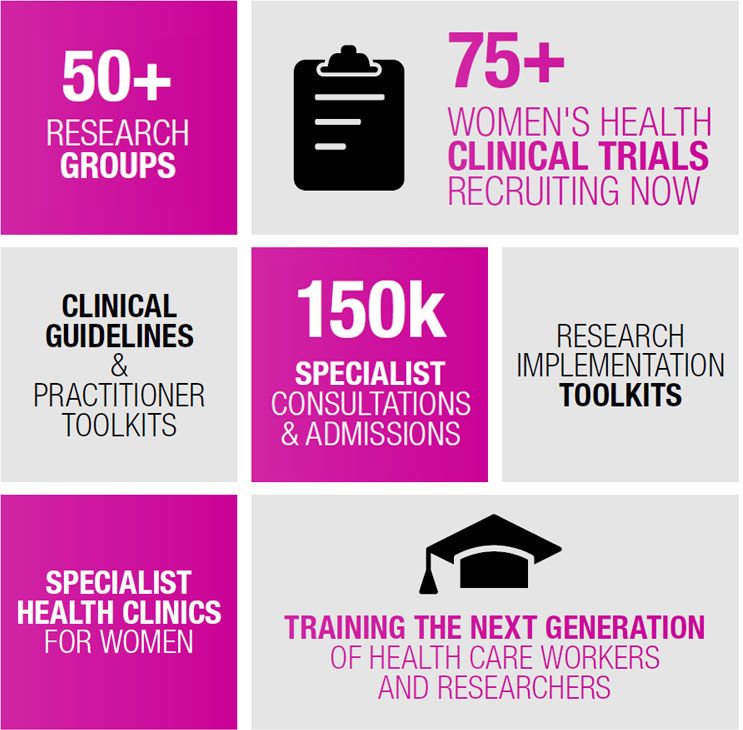
Our impact in action









Women's Health news