
Monash shines at 2026 Eureka Prizes with landmark wins in law reform and women’s health
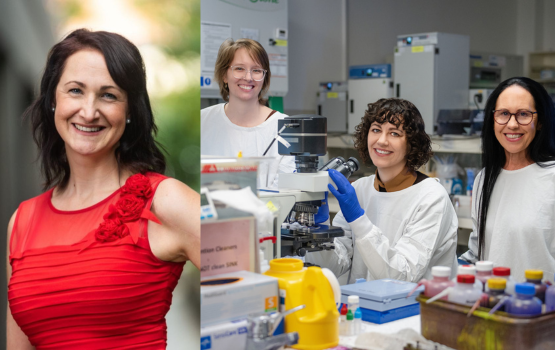
Monash University researchers have been recognised with two prestigious 2026 Australian Museum Eureka Prizes for work transforming genomic medicine and women’s sexual and reproductive health.
Associate Professor Jane Tiller, from the School of Public Health and Preventive Medicine, was awarded the Eureka Prize for Emerging Leader in Science, Technology and Engineering for her decade-long campaign to end genetic discrimination in life insurance.
Professor Catriona Bradshaw, Dr Lenka Vodstrcil and Dr Erica Plummer from the Women’s Microbiome Innovation Group at Monash University and The Alfred were awarded the Eureka Prize for Infectious Diseases Research for research demonstrating that bacterial vaginosis (BV) is sexually transmissible and that treating male partners dramatically reduces recurrence.
The Australian Museum Eureka Prizes are among Australia’s most prestigious science awards, recognising excellence across research and innovation, leadership, science engagement and school science.
Associate Professor Tiller, a legal and genomic expert, has worked to remove insurance discrimination as a barrier to potentially life-saving genetic testing.
Her advocacy united researchers, clinicians, patient groups and policymakers and included leading a three-year research project exploring stakeholder views to inform legislation banning life insurers from using protected genetic test information in underwriting.
“Genetic testing can save lives by identifying people who are at a very high genetic risk of disease that can be prevented or treated early,” Associate Professor Tiller said.
“This includes certain cancers and heart disease. With this genetic risk information, people can access greater surveillance, medication, surgical options or other forms of preventive treatment.”
Until now, concerns about how genetic test results could affect life insurance have deterred some Australians from testing.
“People were making decisions about genetic testing based on insurance fears, not health needs,” Associate Professor Tiller said.
“Choosing not to have genetic testing means people could miss out on critical health information and access to early intervention or prevention, which can be life-saving.
“The new legislation will change that, allowing people to have genetic testing without worrying about the implications for their life insurance in future.”
The legislative ban will come into effect next month, increasing public confidence in genomic testing and opening new opportunities to expand preventive genomic healthcare.
Associate Professor Tiller, who co-leads Monash University’s DNA Screen program, said the reform creates an opportunity to consider expanding population DNA screening, with the longer-term goal of making preventive genomic information available more equitably through the public health system.
“Fear of insurance discrimination is the most significant barrier to genetic testing participation, so this reform creates an unprecedented opportunity to invest in this life-changing health initiative,” Associate Professor Tiller said.
The Women’s Microbiome Innovation Group was recognised for challenging the long-held view that BV, a common condition affecting around one in four women globally, is simply an imbalance of vaginal bacteria and demonstrating the critical role of sexual transmission.
The Monash University and The Alfred StepUp trial, led by Professor Bradshaw, Dr Vodstrcil and Dr Plummer and published in the New England Journal of Medicine, found that simultaneously treating male partners reduced BV recurrence in women by more than 60 per cent.
The finding has reshaped international thinking about BV and is informing changes in clinical practice for a condition associated with serious reproductive complications including preterm birth and miscarriage.
Professor Bradshaw said the team was now working to understand how BV could potentially be prevented.
“We are now looking at the male genital microbiome to figure out how we can prevent women from acquiring BV in the first place,” Professor Bradshaw said.
“We’re also studying the small group of women who weren't cured by partner treatment, aiming to develop more targeted and effective treatment options for them.”
Dr Vodstrcil said the team had also shown male partner treatment was highly acceptable and cost-effective in the Australian healthcare setting, supporting changes to national guidelines.
“Our trial proved that male partners are key to improving BV cure, and this strategy is transforming global practice and policy,” Dr Vodstrcil said.
The two Eureka Prize wins recognise Monash research and leadership translating evidence into real-world change.
To view all 2026 award recipients, visit the Eureka Prizes Winner list.