
The year we re-imagined what science can do
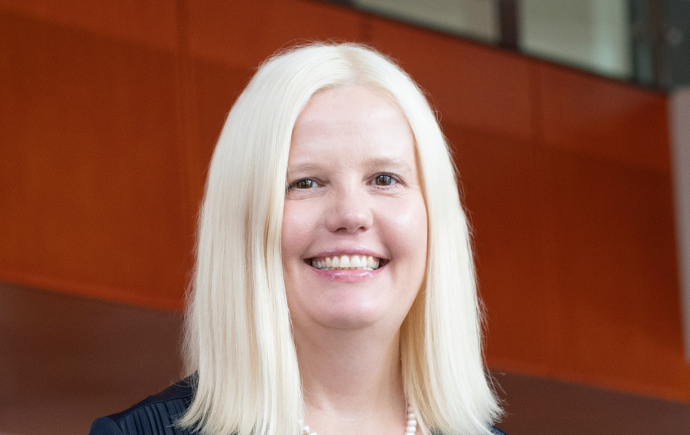
Professor Katya Pas, Deputy Dean Research, Faculty of Science
Monash Science 2025: Breakthroughs shaping a cleaner, safer and smarter future
2025 has been a defining year for Monash Science a year where curiosity ignited innovation, and ideas turned into national and global impact.
From rewriting humanity’s cosmic origin story to engineering virus cocktails that combat superbugs, Monash scientists are advancing solutions to some of the world’s most urgent challenges.
We’ve launched a new Climate Change Science Hub, welcomed a Sustainable Development Education team into the Faculty, and celebrated record-breaking success across Australia’s most competitive research funding schemes.
Our students have even reached for the stratosphere, literally, sending a telescope balloon skyward to explore the Sun.
At Monash Science, we don’t just observe the future, we build it.
Commenting on the year’s achievements Monash Science Deputy Dean Research Professor Katya Pas said:
“Our researchers are addressing the world’s most urgent challenges with imagination, precision, and fearlessness.
“Innovation isn’t just a metric here, it’s our mindset.”
Transforming the planet’s future
Breakthrough hydrogen technologies
Green hydrogen is a cornerstone of a decarbonised future but to deliver it at scale, we must dramatically reduce the cost of production. In a major advancement, Monash science researchers uncovered the fundamental science that could unlock cheaper, more efficient methods for hydrogen generation using abundant materials. This research lays vital groundwork for the clean energy revolution that will fuel industries and economies of tomorrow.
Seaweed secrets rewriting climate models
Kelp forests and marine algae are some of the planet’s most powerful and underestimated climate engineers. Monash scientists revealed the unseen chemical and biological processes shaping how seaweed interacts with the Earth system. Their findings could significantly improve the accuracy of global climate models and guide more effective ocean-based climate solutions.
Caution in ‘green’ fertilisers
As industries push for cleaner agriculture, new ‘green’ fertiliser technologies have surged to market but not all claims stack up. Monash chemists are leading global calls for rigorous testing to prevent unintended environmental harm from poorly understood nitrogen-conversion technologies. Their work ensures climate progress doesn’t come at the cost of soil, waterways or biodiversity.
Packaging and catalysis innovation leading national ARC success
From next-generation catalysts that reduce industrial emissions to packaging that is smarter, stronger and more circular, Monash Science researchers secured national leadership in the ARC Linkage funding round. These projects represent breakthrough solutions that will help industries transition to more sustainable manufacturing systems while preserving global food security.
Protecting health and life
Antibiotic resistance is escalating into one of humanity’s most dangerous health threats. Monash scientists developed a virus phage cocktail capable of targeting drug-resistant bacteria. This precision approach could deliver a lifeline in cases where antibiotics fail, marking a major leap toward the clinic.
New genetic code advances mRNA medicine
Behind every breakthrough therapy lies the molecular machinery that powers it. Researchers at Monash have identified a previously unknown layer of genetic coding that steers mRNA behaviour. With this discovery, the future of personalised medicine, including targeted treatments for cancer and rare disease, is one giant step closer.
Snakes striking faster than thought possible
How do venomous snakes launch deadly strikes faster than the human eye can track? Using high-speed imaging systems, Monash biologists captured the physics of these lightning-fast movements, insights that could improve antivenom design and inform emergency response strategies in regions where snakebite remains fatal.:
Understanding our planet above and below
Deep beneath our feet, massive tectonic forces are at play and Monash geoscientists are decoding them. New modelling reveals where the next catastrophic earthquake could erupt across Southeast Asia, equipping governments and communities with critical foresight to reduce risk and improve resilience.
Students chasing sunlight at the edge of space
What happens when Monash Science students look to the sky? They build a solar telescope and send it into the stratosphere. This student-led mission is more than an experiment — it’s a launchpad for Australia’s next generation of space scientists and engineers.
Rewriting the laws of nature
Quantum particles act like social creatures
Defying expectations, Monash physicists discovered that photons can interact like cooperative agents rather than isolated particles. This behaviour — observed in cutting-edge quantum systems — could usher in more stable and powerful quantum computing architectures.
Our astronomers helped reveal that binary star systems — pairs of stars bound in orbit — are far more common than previously believed. This breakthrough reshapes how we understand stellar evolution and the origins of planets like our own.
Influencing the Nobel landscape
Monash crystallography research stood behind one of the world’s most prestigious recognitions — contributing to the discoveries honoured in the Nobel Prize in Chemistry. It’s a powerful reminder that foundational science shapes global triumphs.
Celebrating research excellence
A powerhouse year of Australian Research Council success strengthened Monash’s position as a national leader in discovery:
- $11M+ in ARC Discovery funding for transformative research that expands human knowledge
- DECRA funding nearly tripled, supporting five emerging stars as they tackle frontier science
- Five ARC Future Fellows — with women leading the way in scientific leadership
- Monash mathematician named Fellow of the American Mathematical Society, joining the global elite in mathematical research
Together, these achievements reflect a research culture defined by ambition, excellence and impact.
Accelerating climate solutions
This year, we launched the Climate Change Science Hub, a new interdisciplinary engine room accelerating climate research across ecosystems, oceans, policy, and planetary systems science. It cements Monash as a major contributor to solving the world’s defining environmental challenge.
We also welcomed a new Sustainable Development Education team, strengthening our capacity to equip future leaders with the scientific and systems expertise needed for a decarbonised and resilient world.
Further information
Silvia Dropulich
Marketing, Media & Communications Manager, Monash Science
T: +61 3 9902 4513 M: +61 435 138 743
Email: silvia.dropulich@monash.edu