
AMR Training Program in Emerging Superbug Threats
Antibiotics together with antifungal drugs are collectively called antimicrobials and they are used in medicine to prevent infection, to save countless lives, if it were not for the creeping ability of bacteria and fungi to develop resistance to our drugs. Over the past thirty years people have not only used antibiotics as a ‘just in case’ medical placebo, but have also used them as cleaning agents in industry, as prophylactic treatments to boost animal growth and for protecting crops. These pre-emptive uses mean that low level doses of antimicrobials are released into our bodies, our soil and water allowing the microbes time and space to develop resistance to established antimicrobial agents. When that happens, infections become very difficult and sometimes even impossible to treat.
The issue of antibiotic resistance is widespread. It kills many and intersects with many other diseases. The World Health Organisation (WHO) predicts that the number of deaths from antimicrobial resistant (AMR) infections will exceed 10 million a year by 2050.
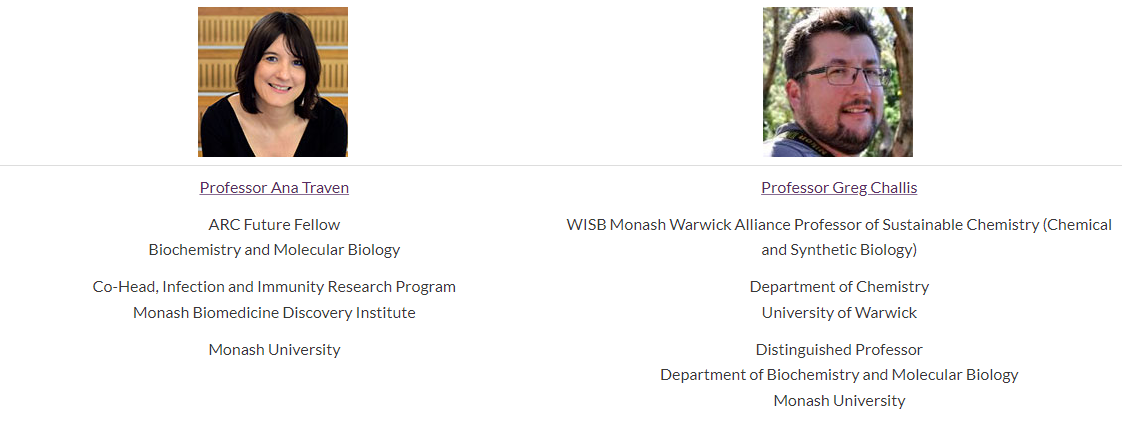
Finding new antimicrobial drugs is now even more important but is not simple, requiring an interdisciplinary approach with expertise from various areas to tackle the issue. One such collaboration is taking place with the Monash Warwick Alliance. Professor Ana Traven Head of Infection Research Program at Monash University and Professor Greg Challis Department of Chemistry, University of Warwick co-lead the Monash Warwick Alliance Interdisciplinary Training Programme in Emerging Superbug Threats.
The Monash-Warwick Alliance Program in Emerging Superbug Threats was launched in January of 2022, with the appointment of 5 postdoctoral fellows (3 at Warwick and 2 at Monash). External funding has been obtained for a second intake of fellows through Philanthropic funding at the University of Warwick and a funding grant awarded through the Australian Research Council at the end of 2021.
The program aims to produce a future-ready workforce to tackle antimicrobial resistance and develop promising approaches for the treatment of the most worrying bacterial and fungal infections. The program consists of multiple collaborative projects focused on developing knowledge that we hope will ultimately drive therapeutic innovation against priority human infections.
Progress to date
A virtual symposium was held on July 5th, 2022 with colleagues at Warwick and Monash, bringing key contributors to the program together and across capabilities in the program to inform future collaborative opportunities. Since then there have been significant developments in the fight against antimicrobial resistance.
One of the projects, led by Professor Ana Traven in collaboration with Professors Greg Challis and Mibel Aguilar has focused on a compound that has activity against priority pathogens. The compound is an antibiotic that bacteria make to compete against other microbes in their natural environment.
Professor Challis's laboratory isolated this compound and showed activity against the bacteria that causes tuberculosis and other pathogens. In Professor Traven's lab the focus is on deadly human fungal pathogens belonging to Candida species. These fungi cause life threatening infections for vulnerable patients with underlying medical conditions who undergo treatments such as chemotherapy and major surgeries, as well as patients in ICU and those suffering from COVID-19. The bacteria-made compound has some promising activities against Candida, with the project now focused on understanding the mechanism of action and how this new knowledge could inform better treatments for serious fungal infections.
The Alliance’s vision is to create a world leading international and interdisciplinary training program with industrial and clinical linkages in AMR for early career researchers. The collaboration proposes to build on and enhance the existing strengths in facilities, expertise and complementarity across Monash and Warwick in the wide range of disciplines and technologies needed to tackle AMR, and to make new scientific discoveries that can help tackle this global crisis.