
Pre-NeurIPS Workshop: Towards Reliable, Efficient and Safe Agentic AI
Pre-NeurIPS Workshop: Towards Reliable, Efficient and Safe Agentic AI
Join leading AI researchers from around the world at Monash University for the Pre-NeurIPS Workshop on Agentic AI, exploring the challenges and opportunities of building reliable, efficient and trustworthy AI systems.
As AI agents become increasingly capable of planning, using tools and acting autonomously, how can we ensure they perform reliably in real-world environments?
The Monash Pre-NeurIPS Workshop on Agentic AI brings together senior researchers, emerging researchers and the Monash NeurIPS community to examine the latest developments in agentic AI.
The workshop will explore:
- Reliability and trustworthiness: Building AI agents that perform consistently and responsibly in real-world applications.
- Efficiency and capability: Understanding the opportunities and challenges of long-horizon planning, tool use and foundation-model agents.
- Future research directions: Identifying approaches to developing AI systems that are both capable and accountable.
The program features invited talks from leading international and Australian researchers, alongside lightning talks showcasing NeurIPS research with Monash-affiliated contributors.
The workshop will explore current challenges in agentic AI, including reliability, AI safety, spatial reasoning, long-horizon planning and tool use.
Invited talks

Angela Yao
National University of Singapore
Spatial Understanding for Agents in the Physical World
Agents are moving off the screen and into the physical world: drones that navigate outdoors, robots that handle objects, and smart glasses that guide a person. For these agents, many instructions are spatial — 'left of what', 'how far', 'from where' — and the answer depends on a viewpoint that keeps changing. Starting from our work on egocentric assistance, I will show how spatial questions are where today’s multimodal models fail most. I will then present CROSS, a training-free approach that diagnoses where spatial reasoning breaks down and repairs it with explicit, verifiable geometric operations that agents can call as tools. I close with what remains open for building spatial agents that are reliable, efficient, and safe.

Tim Baldwin
Mohamed bin Zayed University of Artificial Intelligence (MBZUAI)
Fit-for-purpose AI Safety Research
There is a widening disconnect between AI safety research and the ever-growing capabilities of frontier models and needs of institutions wanting to use those models. In this talk, I will outline some of the dimensions that AI safety research needs to focus on to remain relevant, and outline challenges and possible research opportunities.

Mausam
Indian Institute of Technology Delhi (IIT Delhi)
Traditional AI/ML meets LLMs for Reasoning & Knowledge Tasks
Experiments that explore opportunities for synergy between Traditional AI (e.g., SAT solvers, Bayes Nets), or Traditional ML (e.g., fine-tuned models) with large API-based language models such as GPT-4. I describe several scenarios where such combinations are meaningful and helpful, including reasoning tasks like solving Sudoku and medical diagnosis, and knowledge-tasks like QA and dialog.

Bohan Zhuang
IZhejiang University and Alibaba
Efficient Inference for the Agentic Era
In 2026, AI agents are moving from passive perception to active execution. As context lengths and generation costs keep growing, efficiency has become the main bottleneck to deploying agents at scale. This talk is about efficient inference for agents and presents our team’s recent progress in algorithm–system co-design. At the kernel layer, I will cover efficient attention, namely the sparse and linear attention mechanisms that make long contexts possible. At the engine layer, I will discuss efficient memory and efficient decoding, covering KV-cache compression and management, as well as recent advances in parallel decoding. Building on these, I will present our work on physical AI and show how to make real-time, interactive world simulation practical. Finally, I will look ahead to several open directions, including recursive self-improvement (RSI) for infrastructure optimization and coding world models.

Feng Liu
The University of Melbourne
Can We Trace Unauthorized Training Data/Knowledge in Generative Models?
The rapid development of generative models has raised growing concerns about privacy leakage and unauthorized use of training data. Membership inference attacks (MIAs) have emerged as a promising tool for auditing training data usage, yet their effectiveness can be significantly undermined by modern training practices. In this talk, I will discuss two recent works investigating these challenges in image and text generation. First, I will show how model distillation can weaken conventional MIAs while preserving distribution-level information about the original training data, motivating a shift towards distributional statistics for privacy auditing. Second, I will introduce the problem of data laundering in large language models, where unauthorized data is transformed to conceal its provenance, and discuss how reverse-engineering these transformations can improve detection. Finally, I will highlight the remaining challenges and future directions towards reliable and statistically grounded privacy auditing of generative models.
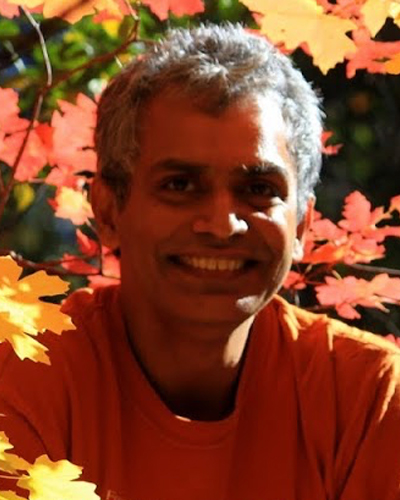
Feng Liu
Arizona State University
Planning, Agentic Systems and Ergodicity
Lightning talks: NeurIPS 2026 research preview
Ahead of NeurIPS 2026 in Sydney, explore ten research papers from Monash researchers and their collaborators through a series of lightning talks.
MATO: Multi-objective Personalized Alignment with Test-time Optimization for Large Language Models
Presenter: Linhao Luo
Authors: Linhao Luo, Thuy-Trang Vu, Van-Anh Nguyen, Junae Kim, Gholamreza Haffari, Dinh Phung
PAVE: Prefill-Conditioned Activation Editing for Hallucination Mitigation in LVLMs
Presenter: Qiuhong Ke
Authors: Jingmin Zhu, Junae Kim, Dinh Phung, Trung Le, Jianfei Cai, Qiuhong Ke
Feedforward Novel View Synthesis for Heterogeneous Cameras
Presenters: Meng Wei
Authors: Meng Wei, Cheng Zhang, Boying Li, Yihang Chen, Jianmin Zheng, Hamid Rezatofighi, Jianfei Cai
OpenView: Empowering MLLMs with Out-of-view VQA
Presenter: Qixiang Chen
Authors: Qixiang Chen, Cheng Zhang, Chi-Wing Fu, Jingwen Ye, Jianfei Cai
Optimizing Multi-bit LLM Watermark Detectability under Controlled Text Quality Degradation
Presenter: Chenxi Gu
Authors: Chenxi Gu, Si Chen, John Grundy, Xiaoning Du
Towards Multi-Human-Value Alignment via Value Localization in LLMs
Presenter: Xueqi Ma
Authors: Xueqi Ma, Yanbei Jiang, Xingjun Ma, James Bailey, Sarah M. Erfani
Permute-then-Adapt: Weak-to-Strong Contrastive Image-Text Adaptation
Presenter: Jinhao Li
Authors: Jinhao Li, Sarah Erfani, Lei Feng, Guangrui Li, James Bailey, Feng Liu
Breaking the Group Size Barrier: Parameter-Efficient Group Dance Generation with Chain-of-Dancers
Presenter: Jin Xu
Authors: Jing Xu, Cunjian Chen, Qiuhong Ke
JRDB-AVR: An Active Visual Reasoning Benchmark for Embodied Agents in Real-World Environments
Presenter: Zhixi Cai
Authors: Zhixi Cai, Fucai Ke, Sukai Huang, Maria Garcia de la Banda, Peter J. Stuckey, Gholamreza Haffari, Hamid Rezatofighi
Model Immunization Beyond Condition Numbers: The Importance of Plateau Regions
Presenter: Quoc Nguyen
Authors: Quoc Nguyen, Trung Le, Dinh Phung, Mehrtash Harandi