Sustainable and resilient health systems
 The healthcare sector is the critical frontline defense against the health impacts of a warming planet, yet it is also a major contributor to global greenhouse gas emissions. If the global healthcare sector were a country, it would rank as the world’s fifth-largest emitter. Building sustainable and resilient health systems is therefore a dual imperative; the sector must rapidly address both the environmental impact of its operations and supply chains, while simultaneously strengthening its capacity to provide high quality healthcare amid escalating pressures, including from a changing climate.
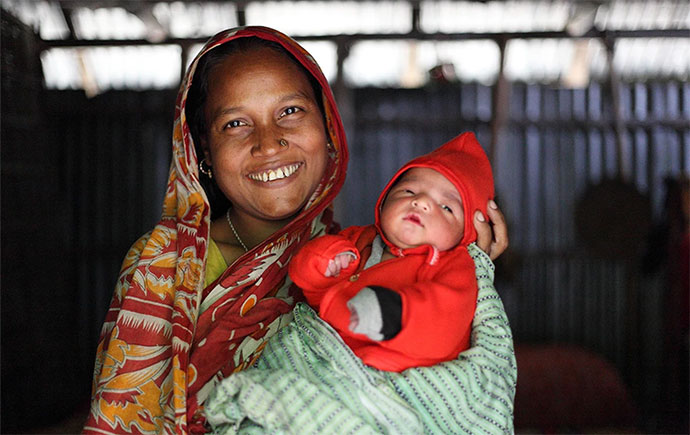
We support the healthcare sector to build climate-resilient, adaptive health systems and take a leadership role in addressing environmental impacts by providing the evidence, guidance, implementation support, and tools necessary to navigate this dual crisis. Our collaborative research explores the vital intersections between environmental sustainability, operational resilience, and safe, high-quality care. We investigate how health systems can address their environmental impact and adapt to climate risks without compromising equitable healthcare delivery across vulnerable populations, including mothers, infants, and children through targeted initiatives like the Maternal Child Health Climate Adaptation and Resilience Network.
Our work targets:
- Health system decarbonisation – Supporting evidence based action and effective governance to address health system and supply chain emissions alongside equitable, safe, resilient and high-quality care.
- Climate resilience and at-risk populations – Investigating how to best design resilient health system operations, specialised models of care (such as Hospital in the Home), and resilient maternal and child health services to safeguard community wellbeing and ensure continuity of care amid a changing climate.
- Health workforce – Exploring healthcare worker beliefs and attitudes towards climate change and healthcare sustainability, ensuring their views and perspectives can be embedded in efforts to decarbonise the healthcare system.
- Climate-health informatics and data standards – Developing the informatics foundations needed to make climate-related impacts on maternal and child health visible and actionable in health data systems, including mapping representation of climate-health outcomes in clinical terminologies such as SNOMED CT and ICD-11, and working towards a standardised minimum dataset for climate-related maternal and child health surveillance across the Asia-Pacific region.
Research leads and co-leads
- Professor Angie Bone – Health and Climate Initiative
- Jess Fritze – Health and Climate Initiative
- Dr Michael Loftus – Health and Climate Initiative
- Associate Professor Zerina Lokmic-Tomkins – Health and Climate Initiative; MCH CARE Network