
Unit statistics and highlights
In 2023, Monash offered 143 units directly related to SDG3 with 11,906 total enrolments.
The units highlighted below are a small sample of the units at Monash relating to good health and well-being:
Monash students in the Department of Occupational Therapy’s Participatory Community Practice program have been working to empower South Gippsland NDIS participants to engage with the Gippsland Southern Health Service (GSHS). The students developed a form for clients to fill out during the intake process, improving information exchange and enhancing therapeutic relationships. The project was handed over to GSHS’s allied health team and showcased at the Monash Peninsula campus.
Further relevant SDGs:


The Gukwonderuk Indigenous engagement unit, Faculty of Medicine, Nursing and Health Sciences, has been instrumental to addressing inequity and improving growth in enrolments and success of Indigenous healthcare students. The program hosts a range of development and support initiatives, including professional networking events with industry partners and mentorship programs, and has also implemented a more equitable selection processes for Indigenous students, particularly in clinical psychology.
Further relevant SDGs:


The Victorian Department of Health selected Monash University as its preferred education provider for a new $20 million program to train Australia’s first paramedic practitioners. The Paramedic Practitioner Master's program, developed by the Department of Paramedicine with Ambulance Victoria and Safer Care Victoria, aims to ease pressure on healthcare services by training practitioners to assess, treat, and refer patients within the community. The initiative is expected to complement existing healthcare roles and strengthen community care.
Further relevant SDGs:

The School of Rural Health has resumed a community-based practice program that places first-year medical students into Gippsland local community organisations, giving them the opportunity to learn how community care and services are provided for people experiencing disadvantage. Students participating in the program gain practical experience and learn about the social determinants of health. Over 20 local organisations hosted students this year, contributing to the program’s success and impact.

Further relevant SDGs:

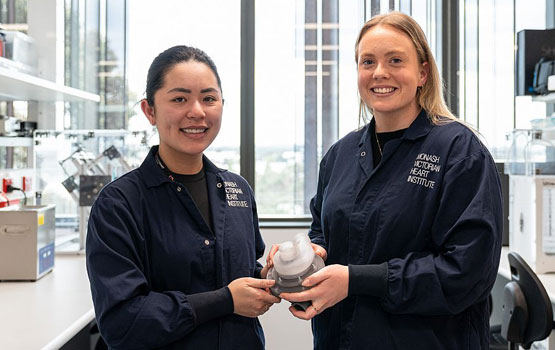
Monash Heart Hack, a multidisciplinary team of more than 30 Monash students, designed an artificial heart to compete in the Heart Hackathon biomedical engineering competition in Dallas, Texas. The Heart Hack team developed a modular total artificial heart design, adjustable for different patient body sizes, which uses magnetic levitation to eliminate mechanical wear and increase the device’s lifespan.
Further relevant SDGs: