
 2023 Publications Performance
View
2023 Publications Performance
View

Monash Research Outputs: 210
Mean Field Weighted Citation Impact (FWCI): 1.3
3 Year Rolling Mean FWCI: 1.52
 Building CapaCITY/É for Sustainable Transportation
View
Building CapaCITY/É for Sustainable Transportation
View
A School of Public Health and Preventive Medicine research team was awarded funding by the National Health and Medical Research Council and the Canadian Institutes of Health Research to explore the effects of implementing bicycling networks and reducing urban speed limits in promoting sustainable cities. The Building CapaCITY/É for Sustainable Transportation (CapaCITY/É) project, which also involves collaboration with the Victorian Government, aims to develop frameworks for successful urban planning and mobility.
Further relevant SDGs:


 Net Zero Precincts: Orienting
View
Net Zero Precincts: Orienting
View
Monash Sustainable Development Institute (MSDI) and Monash Emerging Technologies Research Lab released a report exploring the drivers, barriers, and opportunities for achieving a net zero precinct in the Clayton area. Titled Net Zero Precincts: Orienting, the report combined insights from a transition management and design anthropology perspective, providing valuable insights for policymakers, urban planners, industry, government and community members.
Further relevant SDGs:
 Unit Statistics and Highlights
View
Unit Statistics and Highlights
View
In 2023, Monash offered 82 units directly related to SDG11 with 6546 total enrolments.
The units highlighted below are a small sample of the units at Monash relating to sustainable cities and communities:
 Monash Commission Seminar Series
View
Monash Commission Seminar Series
View
The Monash Commission Seminar Series was held from 14-16 March, and focused on the role of intermediary cities in achieving resilience, impact, and prosperity post-pandemic. The series included a ‘fireside chat’ at the Monash Technology Precinct, where participants discussed innovation districts and sustainable urban futures.
Further relevant SDGs:


 Monash Sustainable Building (MSB) Team Awarded at the Solar Decathlon
View
Monash Sustainable Building (MSB) Team Awarded at the Solar Decathlon
View
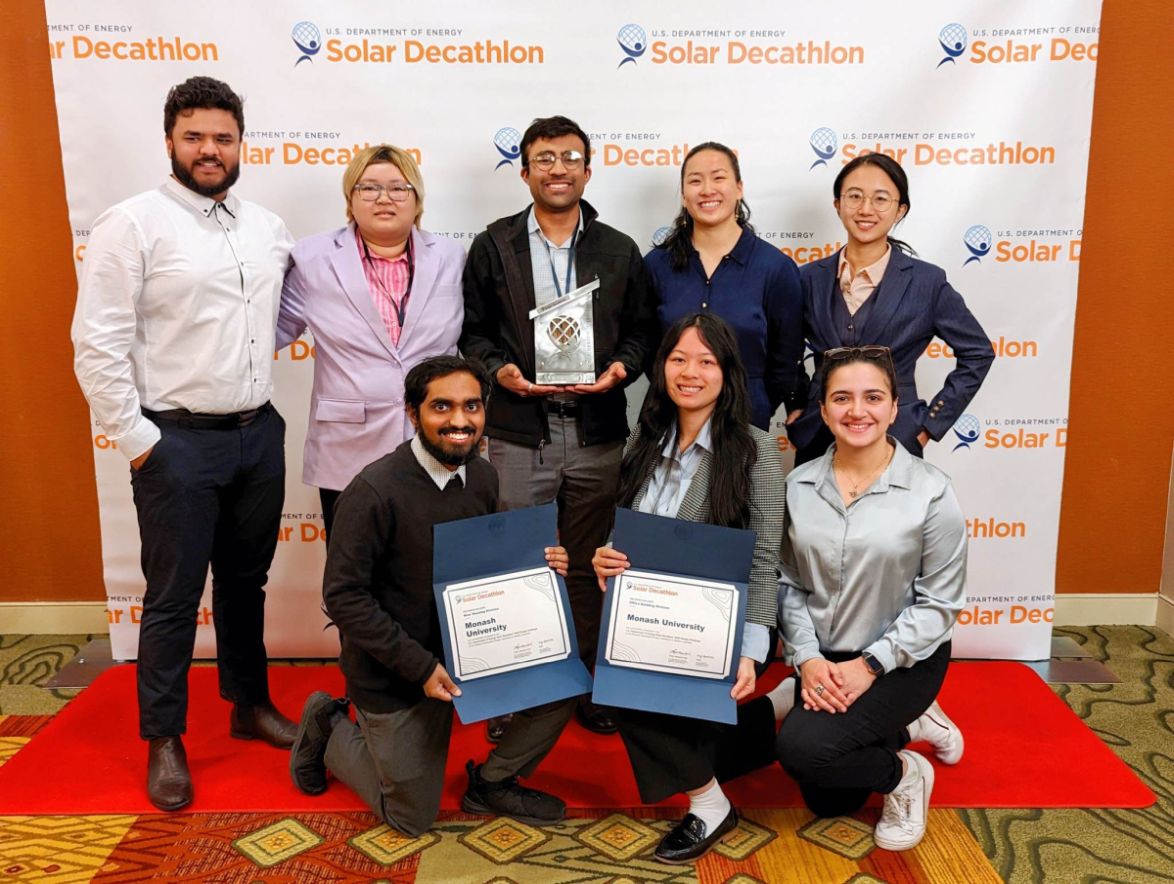
The Monash Sustainable Building (MSB) team achieved second place in the 2023 US Department of Energy Solar Decathlon. The team of 40 students from disciplines across Monash competed in two Design Challenge divisions: “Humming Home”, which was awarded second place in the New Housing division and “Eco Office”, a co-working office and community building, which was a finalist in the Office Building division.
Further relevant SDGs:

 Social Impact Lab
View
Social Impact Lab
View
 Monash at COP28
View
Monash at COP28
View
Monash University was a participant in the the UN Framework Convention on Climate Change Conference, COP28, held in Dubai, United Arab Emirates. The Monash delegation hosted a pavilion focused on sustainable urban futures, featuring discussions on decarbonising built environments, sustainable waste systems, and mobility, with a special focus on Indonesia and India.

Further relevant SDGs:

 Monash at the 6th Pacific Urban Forum
View
Monash at the 6th Pacific Urban Forum
View
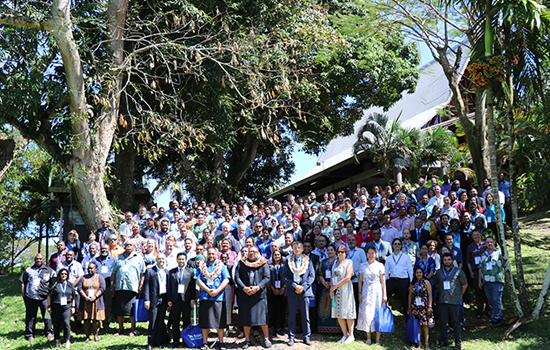
Monash University participated in the 6th Pacific Urban Forum in Suva, Fiji, focusing on sustainable urbanisation, climate resilience, and health in Pacific Island Countries. The forum, co-organised by Monash through the Monash Sustainable Development Institute, addressed themes of SDG localisation, climate change, and stakeholder engagement. Key Monash initiatives including RISE were discussed, emphasising sustainable infrastructure in informal settlements.
Further relevant SDGs:
Asia Pacific Forum for Sustainable Development
View
Monash Sustainable Development Institute (MSDI) representatives participated in the 10th Asia Pacific Forum for Sustainable Development in Bangkok. The delegation showcased MSDI projects relating to the UN Global Sustainable Development Report 2023 and the development of the Voluntary Local Review Handbook for Pacific Cities and Towns, as well as engaging discussions on the local implementation of global goals and urban partnerships in the Pacific.
Further relevant SDGs:
Urban Transformation Talks
View
Monash Indonesia partnered with the Indonesian Institute of Architects and the Indonesian Institute of Urban Designers to host the Urban Transformation Talks webinar series. The events were held throughout 2023 and focused on the challenges and opportunities of transforming cities through sustainable and equitable urban planning and design.
Further relevant SDGs:
 Happy Digital Cities Urban Design Competition
View
Happy Digital Cities Urban Design Competition
View
Monash Indonesia and property developer Sinar Mas Land collaborated to host a research-based urban design competition aimed at fostering innovative ideas for developing Happy Digital Cities. The competition encouraged sustainable urban architecture and design, integrating digital technology to enhance urban living in Indonesia. Winners received cash prizes and scholarships for Monash’s Urban Design postgraduate program.
Further relevant SDGs:
 Annual Travel Survey
View
Annual Travel Survey
View
Monash holds an Annual Travel Survey to understand the travel behaviors of staff and students to its Australian campuses. The University uses the survey findings to inform its transport-related initiatives and support the Net Zero transport targets.

Further relevant SDGs:
Bike Arrival Facilities
View
Monash has a supportive cycling community and bike parking hoops are installed at all of its campuses, making cycling a convenient option for staff and students getting to campus. Secure undercover bike cages and arrival stations are also offered at many locations across Monash campuses. Access to all secure bike cages and arrival stations is free, requiring only registration for access.

Further relevant SDGs:
New Habitat for Native Bees
View
The Monash Sustainability team partnered with urban design studio Oculus Design to design and trial a new mobile pollinator habitat (PoHab) for bees on the University’s Australian campus grounds. The new design can be adapted to every location and pollinator species, making it ideal for supporting the 30 native bee species in the local area.
Further relevant SDGs:



Monash Indonesia masters students showcased their work to promote sustainable innovation as part of their Social Impact Lab (SIL) class. SIL is a signature unit at Monash Indonesia that embodies essential elements from the startup world, such as pitches and mentoring, while addressing social and environmental challenges. SIL projects included mobile apps for health, urban farming, and food waste management, evaluated by a panel of experts.
Further relevant SDGs: