
accordions
Monash is a key partner in the Electric Power Innovation for a Carbon-free Society (EPICS) Centre, a global initiative between Australia, the United States, the United Kingdom and led by CSIRO, Australian Energy Market Operator, the University of Melbourne and Monash University. The EPICS Centre aims to develop transformative computing, economic strategies, engineering solutions, and policy for a renewable energy power grid. Monash's involvement is led by the Department of Electrical and Computer Systems Engineering.

Further relevant SDGs:


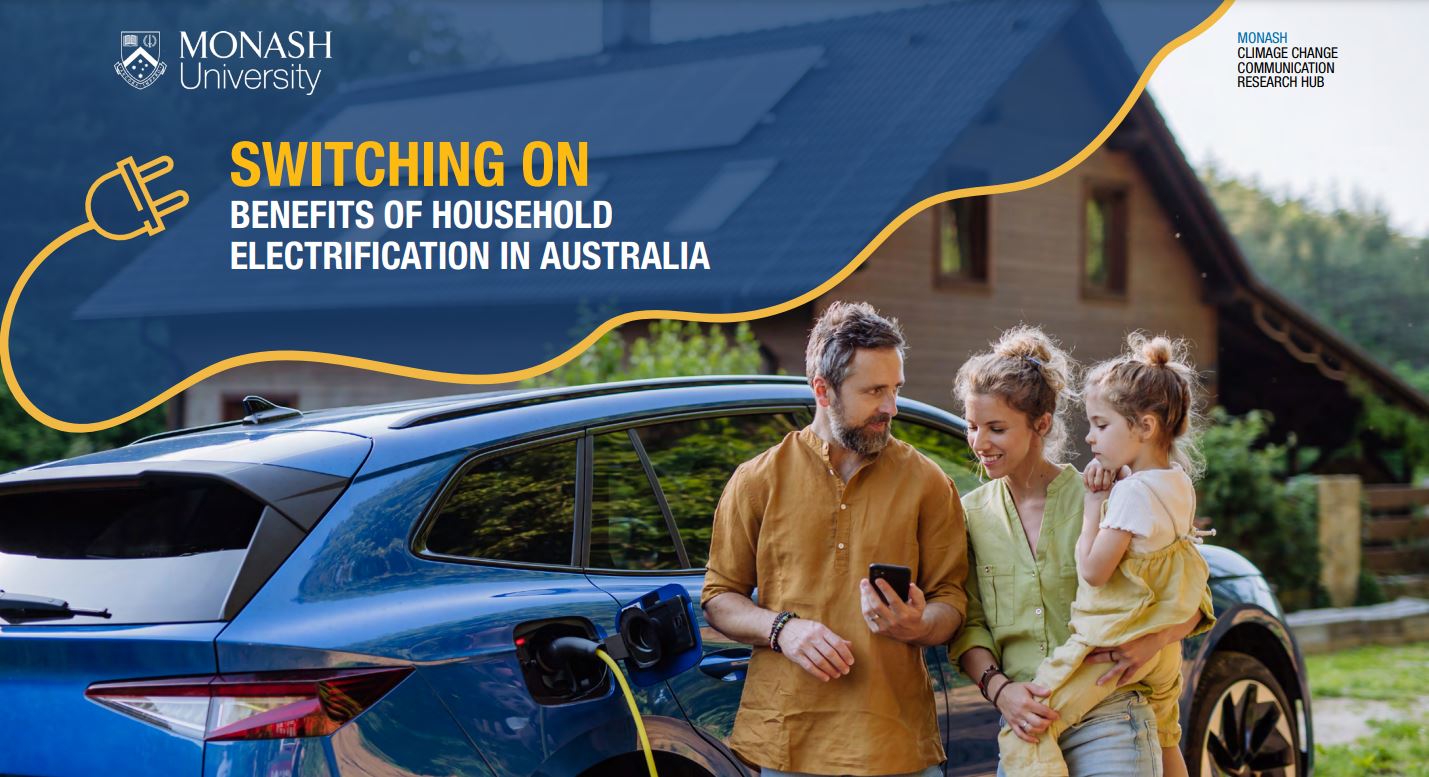
Monash Climate Change Communication Research Hub, Faculty of Arts, released a new report revealing that switching away from gas towards fully electrifying Australian homes could save households $4.9 billion annually, approximately $450 per household. The report provided an analysis of the diverse benefits of electrification of Australian homes, including health improvements, reducing emissions, job creation, and reduced living costs.
Further relevant SDGs:


A new report by Climateworks Centre showed how Australian households could save up to $2,200 a year on energy bills by upgrading homes built before 2003 with better insulation and electrifying appliances and heating. The report found that improving the energy performance of homes would also contribute to reducing Australia’s emissions as well as improving the health of Australians by protecting against extreme weather, poor air quality and energy poverty.
Further relevant SDGs:


Monash University and Woodside Energy renewed their partnership for three years to enable further development of early-stage research and commercialisation to support Australia’s lower-carbon energy transition. Through a joint investment of $22 million, the next phase of the partnership will focus on three new flagship programs involving direct air capture, large-scale ultra-low-cost solar, and biochemical conversion and recycling of mixed gas streams.

Further relevant SDGs:
The Energy Upgrades for Australian Homes (EUAH) project launched at the All Energy Conference in Melbourne in October 2023 to enhance energy efficiency in existing Australian homes. The initiative, led by the Monash Sustainable Development Institute and involving an array of academic and industry partners, focuses on overcoming barriers to energy upgrades through community engagement, policy enablement, and innovative solutions.

Further relevant SDGs:

Monash researchers undertook a study funded by the Woodside Monash Energy Partnership to explore the challenges and priorities of Australia’s emerging hydrogen industry. The study, which involved interviews with 38 stakeholders across industry and government, revealed contrasting perspectives on priorities and focus areas for hydrogen development while also revealing unanimous agreement on the pivotal role of the government.
Further relevant SDGs: