
Alliance Catalyst Funding Rounds
Catalyst Fund Recipients - May 2018
-
Global History enables us to look beyond nation states to understand what connected and bound the world together. The period from 1600 to 1800 was a crucial watershed in human history. For the first time, the world was bound together by maritime trade routes that encircled the globe, tying diverse states together. In this connected world, the embassy formed one of the most important mechanisms for cross-cultural contact.
Through the Alliance, Associate Professor Adam Clulow, History Program, Monash University and Dr Guido van Meersbergen, Leverhulme Trust Early Career Fellow, Global History and Culture Centre, University of Warwick will produce the first scholarly examination of a key early modern embassy, led by Sir William Norris to Mughal India across a three-year period from 1699 to 1702. Georgia O’Connor, a MA student in the School of Philosophical, Historical and International Studies at Monash is currently writing a thesis on Norris and will also play a pivotal role.
The project goal is to produce the first scholarly edition of the Norris Embassy Diaries. Transcribing and analysing the Norris papers present a significant challenge as the manuscript and accompanying project is so large that it can only be done through collaborative efforts with both universities. To make this project possible, it will pool together specialised knowledge, skills, and resources.
Once published, the transcription will contribute to a greater understanding of the relationship between Asia and Europe in the early modern period, and will complement existing work by other academics on East and Southeast Asia. It will also enable the collaborative team to produce new research and deliver direct educational benefit to students through a series of masterclasses, a Masters-led research project and development of a website that will provide a platform for further research collaboration and teaching of global history.
Principle applicants

Adam Culow
Monash University
Leverhulme Trust Early Career Fellow,
Department of History, University of WarwickCo-applicants
Carolyn James, Associate Professor, Department of History, Monash University
Professor Giorgio Riello, Faculty of Arts, University of Warwick
-
Gastric cancer is a major global health issue. It is the third leading cause of cancer deaths worldwide, with almost one million new cases arising each year and a five-year survival rate of 20-30%. Exploring new ways to provide better diagnosis and treatment of this potentially deadly disease is something medical professionals over the world are seeking to achieve.
Through the Alliance, the team of Dr Terry Kwok-Schuelein, Senior Lecturer in Biochemistry and Molecular Biology from Monash University and Dr Mark Achtman, Professor from the Warwick Medical School at the University of Warwick have the unique opportunity to explore one of the most common human pathogens, Helicobacter pylori (or H. pylori in short). H. pylori resides in the stomach of almost 50% of the human population. Although H. pylori infection does not cause illness in most infected people, the bacterium can trigger damage to the stomach lining and cause long-term inflammation or even tissue deterioration, leading to 50% of gastric cancer cases worldwide. The questions surrounding whether it is predestined in our genes for H. pylori infection to cause disease, or whether a disease outcome is influenced by the genes of the bacterium, or both, forms the basis of this collaborative global study.
Through the Alliance, Dr Kwok-Schuelein and Dr Achtman will lead a team to share skills, expertise and knowledge to tackle this global health issue. By combining bacterial genomics expertise at Warwick with the H. pylori pathogenesis and human genomics expertise at Monash, a unique opportunity has been created to assess the role of the relationship between human and H. pylori genetics in the development of H. pylori-associated disease.
The knowledge gained will achieve significant steps forward in the identification of carriers of the H. pylori bacteria who are at risk of adverse health outcomes even before symptoms appear. It will also assist in the selection of who should be targeted for eradication therapy and endoscopy.
Principle applicants

Senior Lecturer, Biochemistry and Molecular Biology, Monash University
Professor, Warwick Medical School, University of Warwick
Co-applicants
Dr Rebecca Gorrell, Research Fellow, Biochemistry & Molecular Biology, Monash University,
Dr Lawrence Young, Professor Warwick Medical School, University of Warwick
-
Tuberculosis (TB) is a major global public health problem affecting millions of people around the world. In times of increasing population mobility, TB will never be completely removed until it is eliminated globally. The World Health Organisation has plans to eliminate tuberculosis within the next 15 years and has published a framework giving top priority to high-incidence population groups who experience significant marginalisation and human rights violations, such as migrants and refugees.
Due to increased border mobility and conflict, South-East Asian countries particularly struggle to document diagnosed cases of TB. The University of Warwick and Monash University plan to work together in the development of a system that will not only enhance early TB detection of future outbreaks for migrants and refugees in Malaysia and Thailand, it will also act as the primary source of data collection for diagnosed cases.
The project led by Dr Jason Madan from the Warwick Medical School and Dr Shaun Lee from the School of Pharmacy at Monash University will utilise knowledge and expertise from both institutions. In particular, Warwick Medical School will draw upon their vast experience in Health Technology Assessment research, economic modelling and health economics expertise applied to TB. Monash University plan to tap into resources from the Asian Centre for Evidence Synthesis Population, Implementation and Clinical Outcomes (PICO) at Monash University Malaysia to leverage their skills in Health Technology Assessment, health economics, population health and policy development. It is highly anticipated the outcome of the system will then provide a platform for international partners to collaborate in the quest of improving the population’s well-being as a whole.
Principle applicants

Associate Professor, School of Pharmacy, Monash University
Professor in Health Economics, Warwick Clinical Trial Unit, Division of Health Sciences, University of Warwick
Co-applicants
Dr Nathorn Chaiyakunapruk, Professor, School of Pharmacy, Monash University
Dr Peter Auguste, Research Fellow, Warwick Medical School, University of Warwick
Catalyst Fund Recipients - October 2018
-
Up to 70% of the adult population in both the UK and Australia have experienced trauma at some point in their lives. A significant proportion of this group develop a disabling psychological condition known as Post-traumatic stress disorder (PTSD). Characterised by hyperarousal, persistent re-living of trauma events, avoidance of trauma-related stimuli, and negative alterations in cognitions and mood, PTSD now affects up to 10% of the UK and Australian population and is considered a common mental health disorder.
Central to PTSD and its treatment outcomes is the notion that PTSD sufferers may experience memory disruptions relating directly to the trauma event, and the general remembering of personal life experiences (Jobson et al., 2014). With trauma survivors often being required to provide evidence in legal investigations, and memory featuring prominently as evidence, debate amongst professionals continues as to whether those with PTSD provide accurate memories. With many unanswered questions relating to the cognitive mechanisms underpinning memory distortions in PTSD, and the extent to which those with PTSD can determine the (un)reliability of their memories there is need for a novel and valid methodology to better understand the development and phenomenology of false memories in PTSD sufferers.
With critical input from a team of experts, Dr Laura Jobson from the Monash Institute of Cognitive and Clinical Neuroscience at Monash University, and Dr Kimberley Wade from the Psychology Department at the University of Warwick will lead a new research initiative that will substantially advance the understanding of trauma, PTSD and false memory. The exciting collaboration positions the two universities in an exclusive position to be a world-first research program investigating false memory in PTSD. Importantly the work will have clear translation into legal policy and practise, as well as include an educational component and strategic plans to engage government and third sector organisations. In the longer term, Dr Jobson and Dr Wade hope to see an improved understanding of false memory in PTSD, a greater understanding of how facts, ideas and suggestions may modify memory in those with PTSD, guidelines to improve questioning and use of evidence of those with PTSD, a firm platform to attract external funding and longer term educational pathways.
Principle applicants
Senior Lecturer, Monash Institute of Cognitive and Clinical Neuroscience, Monash University

Department of Psychology, University of Warwick
Co-applicants
Professor Martin Conway, Department of Psychology, City University London
-
Modern landfills generally require a layer of compacted clay in order to isolate contaminants from the surrounding environment and minimise the escape of leachate (a liquid that has passed through a permeable and contaminated substance). While the short-term hydraulic performance of these sites is well known, their long-term hydraulic performance is not. With highly erratic weather patterns affecting the moisture content of the earth structures, it is believed that compacted clay layers can become highly vulnerable and their hydraulic performance unstable.
Dr Ahmad Mousa, Senior Lecturer in the Faculty of Engineering at Monash University and Dr Gary Fowmes, Associate Professor in the Faculty of Engineering at the University of Warwick will address this issue by looking at developing a framework to forecast the hydraulic performance of engineered waste containment barriers under different weather patterns. The international research team will provide expertise in the experimental evaluation of internal erosion, the performance of waste containment facilities and probable quantification of georisk. This joint effort will enable both universities to strategically position themselves at the forefront of research addressing hydraulic instability and the long-performance of earth structures, as well as provide an opportunity for collaboration and synergy between a current Monash PhD student and second year Warwick PhD student.
The outcomes of the project will greatly enhance the likelihood of the future development of these facilities and equally place the team to pursue further research funding in this critical area. This collaboration effort can expand the knowledge in hydraulic performance prediction to earth structures especially barrier systems.
Principle applicants
Senior Lecturer, Faculty of Engineering, Monash University

Associate Professor, Faculty of Engineering, University of Warwick
Co-applicants
Dr Susilawati Susilawati, Faculty of Engineering, Monash University
Dr Hamidreza Namazi, Faculty of Engineering, Monash University
Dr Mohad M Nezhad, Faculty of Engineering, University of Warwick
-
Business is pushing the planet to the brink of environmental disaster: biodiversity is being lost at mass-extinction rates, agricultural systems are under strain and pollution of the air and sea has become an increasingly pressing threat to human health. Coupled with climate change, rising inequality and entrenched poverty, these interconnected sustainability issues – referred to as ‘wicked’ problems or grand societal challenges – are triggering social instability and conflict.
Earth Systems Governance (ESG) provides a framework for developing new insights into governing the coupled socio-ecological system. An important area of research is identifying and understanding the role and impact of different actors and agents in defining who governs the earth system and how. Incremental approaches to pursuing sustainability by individual businesses are insufficient for delivering change at the speed and scale necessary to solve the pressing sustainability risks identified by the World Economic Forum and the United Nations Sustainable Development Goals.
Beyond the role of individual businesses, we witness the emergence of a range of private-actor networks and initiatives designed to transform companies’ underlying business models. Many of these private actor networks are founded on key philosophies, codes and principles, and offer concrete action frameworks, business templates and other practical guidance. We define these networks as ‘purpose ecosystems’, which share the focus on a broader ‘purpose’ as a key characteristic.
Led by Associate Professor Stubbs and Associate Professor Dahlmann, this project will engage with a range of small-large businesses and industry bodies and movements to understand how they are mobilising purpose ecosystems for competitive and sustainable outcomes, in order to activate a more coordinated business approach to address ‘wicked’ sustainability problems. The project draws on the synergies between the PIs’ and CAs’ research strengths across the fields of business and management, governance, and sustainable development. It will leverage Monash’s and Warwick’s collective research capacity in ESG and purpose ecosystems to establish a collaborative research hub, involving both university and industry partners, and develop external grant applications.
Principle applicants
Associate Professor, School of Social Sciences, Monash University
Associate Professor, Warwick Business School, University of Warwick
Co-applicants
Dr Megan Farrelly, Associate Professor, School of Social Sciences, Monash University
Professor Rob Raven, Professor, Sustainable Development Institute, Monash University
Dr Keith Hyams, Reader, Department of Politics and International Studies, University of Warwick
Professor Dave Griggs, Honorary Professor, School of Cross-Faculty Studies, University of Warwick
-
Smart wearable devices such as smartwatches and smart bands have been widely adopted by users, who find it convenient to use them to perform various tasks such as making phone calls or sending text messages. However recent research led by the University of Warwick has demonstrated that these same devices are vulnerable to a wide variety of cyber-attacks due to their intrinsic characteristics, resulting in unprecedented security challenges such as privacy leakage, financial loss, and even malicious invasion of other connected devices.
One of the most frequently used attacker approaches is to leverage the motion sensors of these smart wearable devices to track the movements of the users, commonly known as motion-based eavesdropping attacks. Previous work has shown that motion sensor data changes when entering passwords on a smartwatch, and with crowdsourcing and deep sequence learning, attackers can successfully infer both PIN and Android Pattern Locks (APLs) that are entered on smart watches, even without access to the physical devices.
This project, led by Dr Li and Dr Wen is multi-disciplinary, integrating the knowledge, techniques and tools in mobile computing, software engineering and ubiquitous computing. The team will build on previous research to replicate existing and introduce new types of motion-based eavesdropping attacks to smart wearable devices, enabling them to invent deep learning-based approaches to automatically detect such attacking apps from the users' smart devices. This research is expected to have a huge impact on our society by providing real-time protection for users of smart wearable devices to be free of motion-based eavesdropping attacks.
Principle applicants
Lecturer, Cyber Security and Systems, Monash University
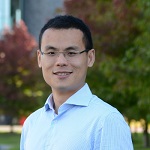
Assistant Professor, Department of Computer Science, University of Warwick
Co-applicants
Dr Chunyang Chen, Lecturer, Cyber Security and Systems, Monash University
Professor Feng Hao, Professor, Department of Computer Science, University of Warwick
-
Electrodeposition is the electrochemical formation of a metal on an electrode surface by the reduction of the corresponding metal ions from an electrolyte. By controlling the voltage or the current, it is therefore possible to produce a wide range of nanoparticles (NP) of varying shapes and sizes, each of which exhibits different reaction kinetics and reactivity in catalytic processes. The reactivity of nanoparticles offers enormous potential for technological applications in energy storage and energy conversion as well as in fuel cell technologies and in carbon dioxide capture.
Ionic liquids (ILs) are organic salts remaining liquid even under ambient temperatures. This means that electrolytes based on ionic liquids can enable deposition of far more reactive metals, such as sodium, magnesium and iron, than conventional aqueous electrolytes which opens up tremendous opportunities for the energy sector.
However, to enable the controlled formation of NPs with narrow size distributions and their subsequent use for electrocatalytic applications in ionic liquids, we need to fully understand the precise mechanism of metal atom assembly into NPs in ionic liquids at the molecular level. This represents a tremendous challenge from the theoretical chemistry point of view as it involves the establishment of computational simulation methodology that correctly captures the electrostatic and dynamic interactions of metal ions and atoms in the ionic liquid electrolyte, as well as the molecule-surface interactions between the electrode, metal NPs, and ionic liquid molecules, for which literature data is scarce.
This research project unites Dr Maurer, an expert in computational modelling of interface chemistry at the University of Warwick and Dr Pas, an expert in ionic liquid chemistry at Monash University, in close collaboration with experimental colleagues at Warwick and Monash. The teams will tackle the grand challenge of electrochemical nanocatalysis in ionic liquid-based electrolytes, by developing a combined computational modelling – experimental characterisation strategy to direct the electrochemical formation of NPs from ionic liquids for their subsequent use in catalytic applications.
Principle applicants
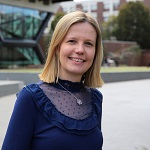
Associate Professor, School of Chemistry, Monash University

Dr Reinhard Maurer
Assistant Professor, Department of Chemistry, University of Warwick
Co-applicants
Professor Douglas MacFarlane, Professor, School of Chemistry, Monash University
Professor Julie Macpherson, Professor, Department of Chemistry, University of Warwick
Visiting Fellow