Research
Close

 2023 Publications Performance
View
2023 Publications Performance
View

Monash Research Outputs: 2,937
Mean Field Weighted Citation Impact (FWCI): 2.42
3 Year Rolling Mean FWCI: 2.35
 NHMRC Investigator Grants
View
NHMRC Investigator Grants
View
A total of 34 Monash research projects were awarded a combined total of more than $62.9 million in the National Health and Medical Research Council (NHMRC) Investigator Grants scheme in 2023.
Funding was awarded across a diverse range of faculties and disciplines, including 29 projects from the Faculty of Medicine, Nursing and Health Sciences, four from the Faculty of Pharmacy and Pharmaceutical Sciences and one from the Faculty of Science.
NHMRC Investigator Grants provide the highest performing researchers at all career stages with consolidated funding, specifically for research across the four pillars of health and medical research: biomedical, clinical, public health and health services research.
Further relevant SDGs:

 National Critical Research Infrastructure Funding
View
National Critical Research Infrastructure Funding
View
Monash was awarded more than $18 million under the Medical Research Future Fund’s (MRFF) National Critical Research Infrastructure program. The MRFF National Critical Research Infrastructure initiative aims to fund research infrastructure of critical importance which will be used to conduct world-class health and medical research in areas where medical needs have not yet been met. The funding was allocated for four Monash-led projects relating to:
Further relevant SDGs:

 mitoHOPE Program
View
mitoHOPE Program
View
A pilot program led by researchers in Medicine, Nursing and Health Sciences to support families with certain forms of mitochondrial disease was awarded $15 million in funding by the Medical Research Future Fund. The mitoHOPE (Healthy Outcomes Pilot and Evaluation) Program, the first of its kind in Australia and only the second in the world, aims to prevent mitochondrial disease in children by using donor mitochondrial DNA. The project is being undertaken in collaboration with Murdoch Children’s Research Institute and other research partners.
Further relevant SDGs:
 Challenges Facing Female Rural Surgeons
View
Challenges Facing Female Rural Surgeons
View
A study led by Monash Rural Health in Bendigo surveyed 36 female rural general surgeons in Australia, revealing insights into the demographics and challenges faced by this group. The study highlights the need for increased recruitment and flexible training options to better reflect gender proportions and accommodate life commitments.
Further relevant SDGs:


 Measuring Two Decades of Global Smoke Pollution
View
Measuring Two Decades of Global Smoke Pollution
View
School of Public Health and Preventive Medicine researchers led the world’s first study on the increase in pollution from landscape fires across the globe over the past two decades, revealing that over 2 billion people are exposed to at least one day of potentially health-impacting environmental hazards annually. The study, published in Nature, utilised advanced methodologies to estimate exposure to air pollution and ozone from fires and found that exposure levels in low-income countries were about four-fold higher than in high income countries, highlighting the need for improved air quality monitoring and interventions.
Further relevant SDGs:



 Health and Climate Initiative
View
Health and Climate Initiative
View
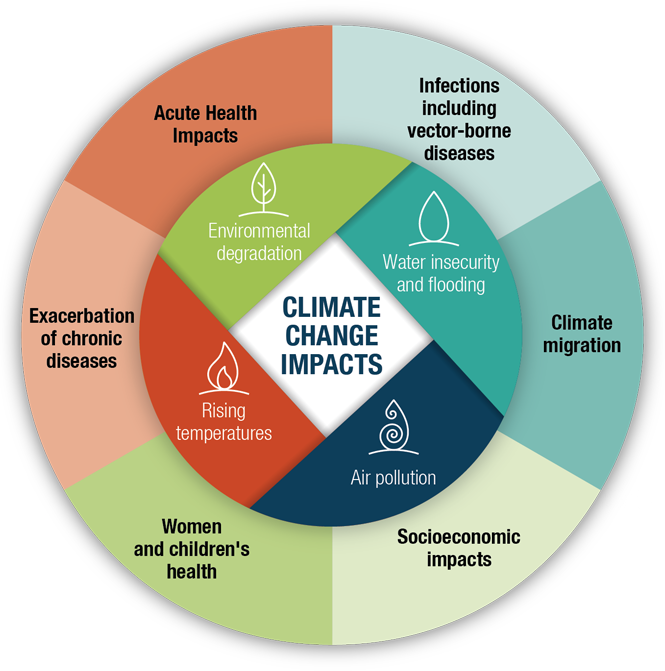
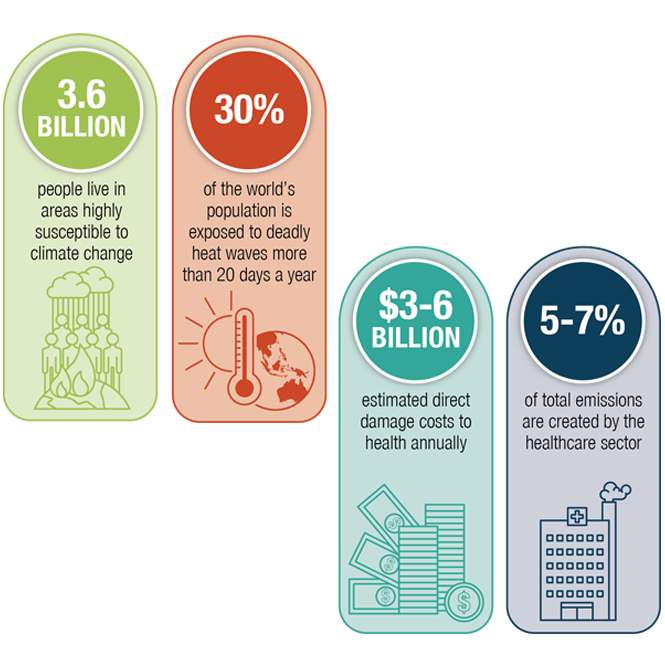
The Faculty of Medicine, Nursing and Health Sciences launched the Health and Climate Initiative, focusing on challenges at the intersection of health and climate change. The initiative leverages the faculty’s world-class capabilities in health and climate research and education to drive collaboration to reduce the impact of a changing climate on health and to address carbon-intensive healthcare systems.
Further relevant SDGs:
 Using Genetic Sequencing to Investigate Antibiotic Resistance
View
Using Genetic Sequencing to Investigate Antibiotic Resistance
View
Researchers from Alfred Health and Monash Central Clinical School conducted a study published in Nature Communications, using new genetic sequencing technology to understand and prevent the spread of antibiotic resistance in hospitals. The study focused on superbugs resistant to carbapenem antibiotics, identifying mechanisms of resistance spread and developing strategies for early detection and prevention.
Further relevant SDGs:
 MoU to Improve Public Health in Sarawak
View
MoU to Improve Public Health in Sarawak
View
Monash University Malaysia and the Sarawak Infectious Disease Centre signed a Memorandum of Understanding to collaborate on research and human capital development in communicable and non-communicable diseases in Malaysia. This partnership focuses on areas such as indigenous health, digital health, disease and environmental surveillance, and natural product development.
Further relevant SDGs:
 SoundSmiles App
View
SoundSmiles App
View
An app designed by Wadjak/Ballardong Noongar man and Faculty of Information Technology Associate Dean (Indigenous) Professor Christopher Lawrence to improve ear health and mental wellbeing among Indigenous children was awarded almost $1.5 million from Western Australia’s Future Health Research and Innovation Fund. The app, co-designed with local Aboriginal medical services, Curtin University and Ear Science Institute Australia, engages children through mobile technology to monitor and enhance their health and wellbeing.
Further relevant SDGs:
 Improving the Health and Wellbeing of Sexual and Gender-Minority People
View
Improving the Health and Wellbeing of Sexual and Gender-Minority People
View
Researchers in Monash University Malaysia’s Jeffrey Cheah School of Medicine and Health Sciences led a pilot trial to evaluate the effectiveness of a culturally adapted online Dialectical Behavior Therapy (DBT) skills group for sexual and gender minority adults dealing with stigma, discrimination, and marginalisation. This intervention aimed to address mental health issues by incorporating unique cultural stressors faced by LGBTIQ+ people and teaching mindfulness, emotion regulation, and distress tolerance skills.
Further relevant SDGs:
 HIV Prevention Challenges for International Migrants
View
HIV Prevention Challenges for International Migrants
View
School of Translational Medicine researchers contributed to a landmark global study that highlighted the challenges international migrants face in accessing HIV prevention measures like pre-exposure prophylaxis (PrEP) in Australia and overseas. The study, published in The Lancet Public Health, identified a variety of barriers to HIV prevention that included lack of awareness, cost, discrimination, and system navigation difficulties.
Further relevant SDGs:
