
Health sector faces pressure to clean up its climate act
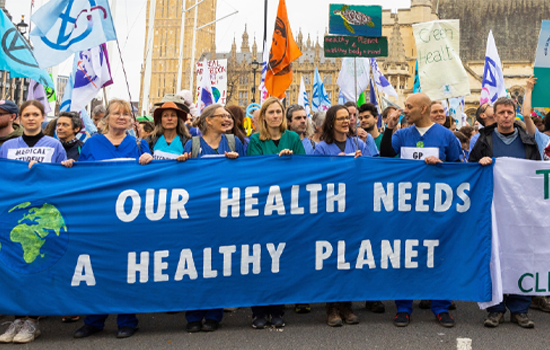
Healthcare is on the frontline of the climate crisis. Clinicians are seeing firsthand the impacts of extreme heat, smoke, flooding, displacement, and disease. But at the same time, the sector itself contributes significantly to global warming.
"Sustainability is an incredibly important part of healthcare, and we’re recognising this more and more as climate change gets worse, and those effects will be reflected in the health of our populations," said Lucy, nurse and past participant in Monash University's Sustainable Healthcare in Practice course.
"I live and work in areas that have endured bush fires, floods, droughts, and heat waves, and we always see how that impacts our patients. And so if we can do something about that from within our organisations, it’s one of the most important things that we need to be doing.”
The good news is that change is possible, and already underway. Healthcare workers across Australia are finding ways to reduce waste, cut emissions, and embed sustainability into everyday care. With the right tools and training, the sector can lead by example, protecting both people and the planet.
Healthcare is both a casualty and a contributor
As the climate crisis accelerates, health systems face a confronting truth: they must reduce their environmental impact while preparing to care for communities already affected by climate change.
Globally, Australia’s healthcare sector is responsible for around 7% of the nation’s total emissions. If global healthcare were a country, it would be the fifth-largest emitter in the world. Beyond carbon emissions, the sector also generates substantial plastic waste, especially from single-use medical items. Plastic production accounted for about 4% of global greenhouse gas emissions in 2015 and is expected to rise significantly by 2050. Recycling medical plastics remains challenging due to infection control requirements and complex materials, so reducing waste is becoming a major focus for sustainable healthcare.
Action is underway, but not at scale
According to Planetary Health expert Professor Tony Capon,
Sustainable healthcare is healthcare that meets the needs of current generations without compromising the needs of future generations. It's resource efficient, it's accessible to people who need care, and importantly, it has a minimal environmental footprint.”
Many healthcare professionals are already taking steps to reduce their footprint. From cutting single-use plastics in operating theatres to rethinking energy systems and transport, the sector is slowly shifting. The Australian Government’s National Health and Climate Strategy now calls for a net zero health system, backed by targets from groups like the AMA, ANMF and Doctors for the Environment Australia.
And there’s growing demand for practical guidance. “Healthcare staff are calling on leaders to pay more attention to sustainable healthcare,” says Capon. “It helps attract and retain staff too – especially since the pandemic.”
But most clinicians aren’t trained in how to implement sustainability initiatives, navigate change processes, or communicate environmental risks in their settings. The appetite for action is strong, but the tools and support are often missing.
Education plays a critical role
Upskilling health professionals is key to making sustainable healthcare standard practice. Bridging this skills gap was the inspiration for Sustainable Healthcare in Practice, a short course designed to build climate literacy across the health workforce.
It’s grounded in real-world examples, with modules on behaviour change, systems thinking, and decarbonisation pathways. For those new to the topic, Sustainable Healthcare Fundamentals is a self-paced online course introducing key sustainability concepts in a healthcare context.
Course participant and registered nurse Lucy, said,
The program gave me a lot of evidence-based knowledge that’s really supported my move towards sustainable healthcare in the organisations I work with. And it’s also helped me to lead others on that journey.”
The time for change is now
Health systems face increasing pressure from climate-related shocks like extreme weather, pandemics, and resource shortages. Business as usual is no longer an option. The healthcare sector’s duty of care now extends beyond patients to include reducing its own environmental impact and preparing for future challenges. This shift is already underway, but it requires more than goodwill. It demands new skills, knowledge, and leadership to embed sustainability into everyday practice and decision-making. Without education tailored to these challenges, clinicians and health organisations risk being unprepared for the scale and complexity of change ahead.
As Gitanjali Bedi, Course Convener and Facilitator for Sustainable Healthcare in Practice, explains,
Healthcare professionals have a unique opportunity and responsibility to lead climate action within their workplaces. By building knowledge and practical skills, they can drive meaningful change that protects both planetary and human health. Education empowers us to move beyond awareness to real solutions.”
That’s why building climate and systems literacy in the health workforce is more critical now than ever. Equipping professionals with practical tools and evidence-based strategies will help health services reduce emissions, manage risks, and promote resilience for the communities they serve.