ASPREE

Supporting older people with maintaining good health, independence, and quality of life
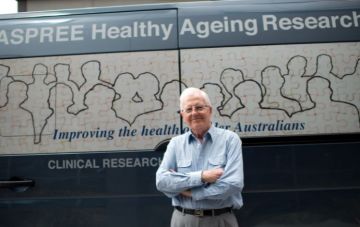
The ASPREE Project is a long-term, multi-centre, bi-national study into how aspirin supports the health of older adults. Although aspirin is the most widely used preventive drug, its benefit as a daily low-dose medication among older populations was largely unknown.
The ASPREE Project comprises two components: ASPREE and ASPREE eXTension.
ASPREE (ASPirin in Reducing Events in the Elderly) was a placebo-controlled clinical trial used to determine whether daily low-doses of aspirin in healthy older adults would prevent or delay age-related illnesses. The study found that aspirin did not prolong life free of disability or significantly reduce risks of a first heart attack or stroke.
The ASPREE study has provided significant value on international aspirin prescribing guidelines. The study’s results have been adopted by the American College of Cardiology and American Heart Association’s revised primary prevention aspirin guidelines.
ASPREE-XT (ASPREE - eXTension) specifically explores the long-lasting effects of low-dose aspirin on diseases such as cancer through an ongoing observational study. It aims to identify factors that influence physical and cognitive health.
Funded by Australian and US governments, the ASPREE Project is led by Monash University and the Berman Centre for Outcomes and Clinical Research in the US.